Hinney Bernd, Walter Anna, Aghlmandi Soheila, Andreou Christina, Borgwardt Stefan
Department of Psychiatry (UPK), University of Basel, Basel, Switzerland.
Basel Institute for Clinical Epidemiology and Biostatistics, University Hospital Basel, Basel, Switzerland.
Front Psychiatry. 2021 Jan 14;11:614659. doi: 10.3389/fpsyt.2020.614659. eCollection 2020.
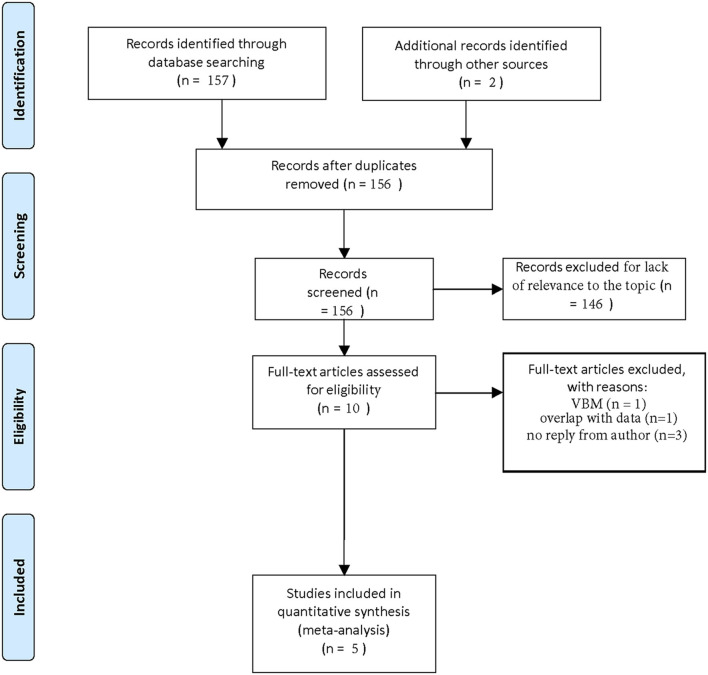
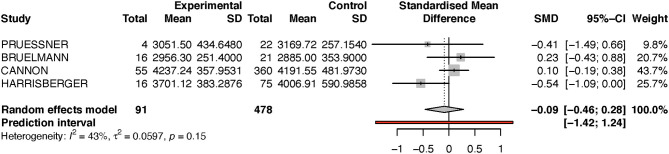
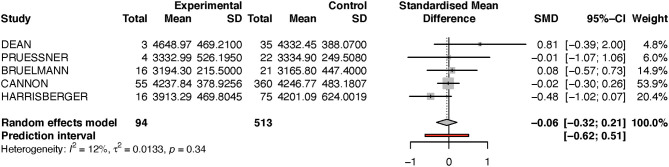
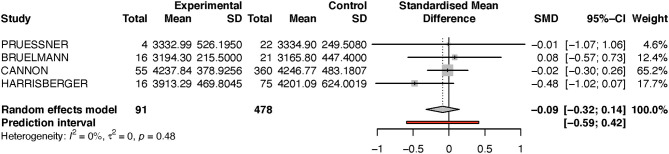
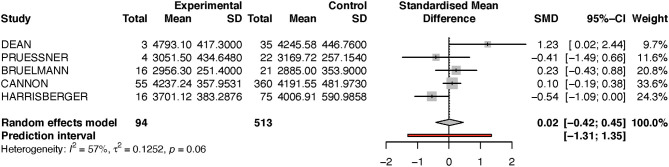
Schizophrenia has a prodromal phase of several years in most patients, making it possible to identify patients at clinical high risk (CHR) for developing the disorder. So far, these individuals are identified based on clinical criteria alone, and there is no reliable biomarker for predicting the transition to psychosis. It is well-established that reductions in brain volume, especially in the hippocampus, are associated with schizophrenia. Therefore, hippocampal volume may serve as a biomarker for psychosis. Several studies have already investigated hippocampal volume in CHR groups. Based on these studies, the present meta-analysis compares the baseline left and right hippocampal volume of CHR patients who developed a psychosis with that of CHR patients without such a transition. Our results show no statistically significant effect of the hippocampal volume on the transition risk for psychosis.
大多数精神分裂症患者有长达数年的前驱期,这使得识别有临床高风险(CHR)发展为该疾病的患者成为可能。到目前为止,这些个体仅根据临床标准来识别,并且没有可靠的生物标志物来预测向精神病的转变。众所周知,脑容量减少,尤其是海马体的脑容量减少,与精神分裂症有关。因此,海马体体积可能作为精神病的生物标志物。已有多项研究调查了临床高风险组的海马体体积。基于这些研究,本荟萃分析比较了发展为精神病的临床高风险患者与未发生这种转变的临床高风险患者的基线左右海马体体积。我们的结果显示,海马体体积对精神病转变风险没有统计学上的显著影响。