von Stülpnagel Celina, van Baalen Andreas, Borggraefe Ingo, Eschermann Kirsten, Hartlieb Till, Kiwull Lorenz, Pringsheim Milka, Wolff Markus, Kudernatsch Manfred, Wiegand Gert, Striano Pasquale, Kluger Gerhard
Division of Pediatric Neurology, Developmental Medicine and Social Pediatrics, Department of Pediatrics and Epilepsy Center, Dr. von Hauner Children's Hospital, Ludwig-Maximilians-University, Munich, Germany.
Institute for Transition, Rehabilitation and Palliation, Paracelsus Medical University, Salzburg, Austria.
Front Neurol. 2021 Jan 14;11:622510. doi: 10.3389/fneur.2020.622510. eCollection 2020.
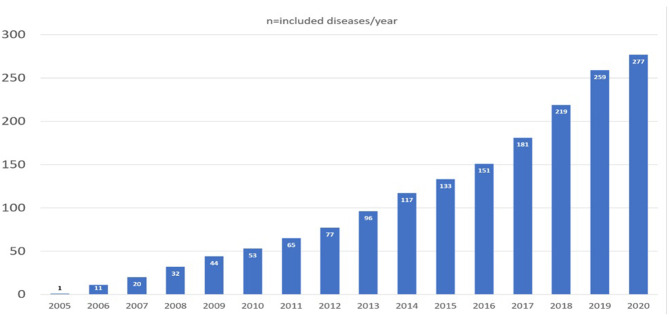
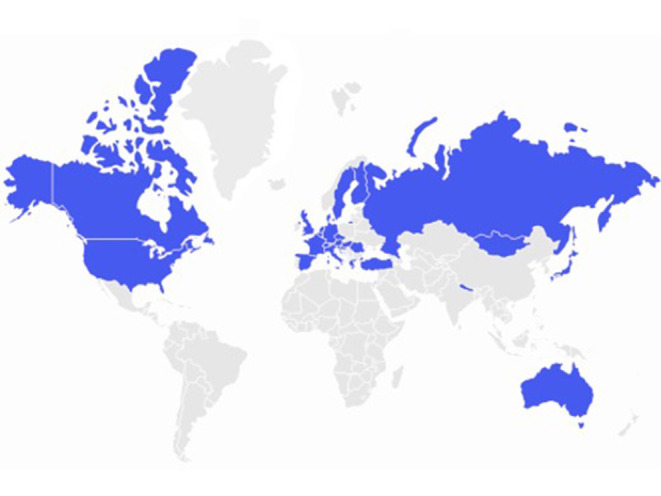
In 2005, twork for herapy in are pilepsies (NETRE)-was initiated in order to share treatment experiences among clinicians in patients with rare epilepsies. Here we describe the structure of the rapidly growing NETRE and summarize some of the findings of the last 15 years. NETRE is organized in distinct groups (currently >270). Starting point is always a patient with a rare epilepsy/ epileptic disorder. This creates a new group, and next, a medical coordinator is appointed. The exchange of experiences is established using a data entry form, which the coordinator sends to colleagues. The primary aim is to exchange experiences (retrospectively, anonymously, MRI results also non-anonymously) of the epilepsy treatment as well as on clinical presentation and comorbidities NETRE is neither financed nor sponsored. Some of the relevant results: (1) first description of FIRES as a new epilepsy syndrome and its further investigation, (2) in , the assignment to gain- vs. loss-of-function mutations has a major impact on clinical decisions to use or avoid treatment with sodium channel blockers, (3) the important aspect of avoiding overtreatment in patients, due to loss of effects of anticonvulsants after 12 months, (4) pathognomonic MRI findings in patients, (5) the first description of pathognomonic chewing-induced seizures in patients, and the therapeutic effect of statins as anticonvulsant in these patients, (6) the phenomenon of another reflex epilepsy-bathing epilepsy associated with a mutation. Of special interest is also a NETRE group following twins with genetic and/or structural epilepsies [including vanishing-twin-syndrome and twin-twin-transfusion syndrome) [= "Early Neuroimpaired Twin Entity" (ENITE)]. NETRE enables clinicians to quickly exchange information on therapeutic experiences in rare diseases with colleagues at an international level. For both parents and clinicians/scientist this international exchange is both reassuring and helpful. In collaboration with other groups, personalized therapeutic approaches are sought, but the present limitations of currently available therapies are also highlighted. Presently, the PATRE Project (PATient based phenotyping and evaluation of therapy for Rare Epilepsies) is commencing, in which information on therapies will be obtained directly from patients and their caregivers.
2005年,发起了罕见癫痫治疗经验交流网络(NETRE),以便在罕见癫痫患者的临床医生之间分享治疗经验。在此,我们描述快速发展的NETRE的结构,并总结过去15年的一些研究结果。NETRE由不同的小组组成(目前超过270个)。起始点始终是一名患有罕见癫痫/癫痫性疾病的患者。这创建了一个新的小组,接下来,会指定一名医学协调员。经验交流通过协调员发送给同事的数据录入表来进行。主要目的是交流癫痫治疗的经验(回顾性、匿名,MRI结果也不匿名)以及临床表现和合并症。NETRE既没有资金支持也没有赞助。一些相关结果如下:(1)首次将FIRES描述为一种新的癫痫综合征并进行进一步研究;(2)在……中,功能获得性与功能丧失性突变的分类对使用或避免使用钠通道阻滞剂治疗的临床决策有重大影响;(3)由于抗惊厥药物在12个月后失效,避免对……患者进行过度治疗的重要方面;(4)……患者的特征性MRI表现;(5)首次描述……患者中由咀嚼诱发的特征性癫痫发作,以及他汀类药物作为抗惊厥药对这些患者的治疗效果;(6)另一种与……突变相关的反射性癫痫——沐浴性癫痫现象。特别值得关注的还有一个NETRE小组,跟踪患有遗传性和/或结构性癫痫的双胞胎[包括消失双胎综合征和双胎输血综合征][=“早期神经受损双胎实体”(ENITE)]。NETRE使临床医生能够在国际层面迅速与同事交流罕见病治疗经验。对于患者父母和临床医生/科学家而言,这种国际交流既令人安心又很有帮助。通过与其他小组合作,寻求个性化治疗方法,但同时也凸显了当前可用疗法的局限性。目前,罕见癫痫基于患者的表型分析与治疗评估(PATRE)项目正在启动,将直接从患者及其护理人员那里获取治疗信息。