Calderón Víctor V, Bonnelly Roberto, Del Rosario Camila, Duarte Albert, Baraúna Rafael, Ramos Rommel T, Perdomo Omar P, Rodriguez de Francisco Luis E, Franco Edian F
Instituto Tecnológico de Santo Domingo (INTEC), Santo Domingo, Dominican Republic.
Institute of Biological Sciences, Federal University of Pará-UFPA, Belem, Brazil.
Front Microbiol. 2021 Jan 13;11:519169. doi: 10.3389/fmicb.2020.519169. eCollection 2020.
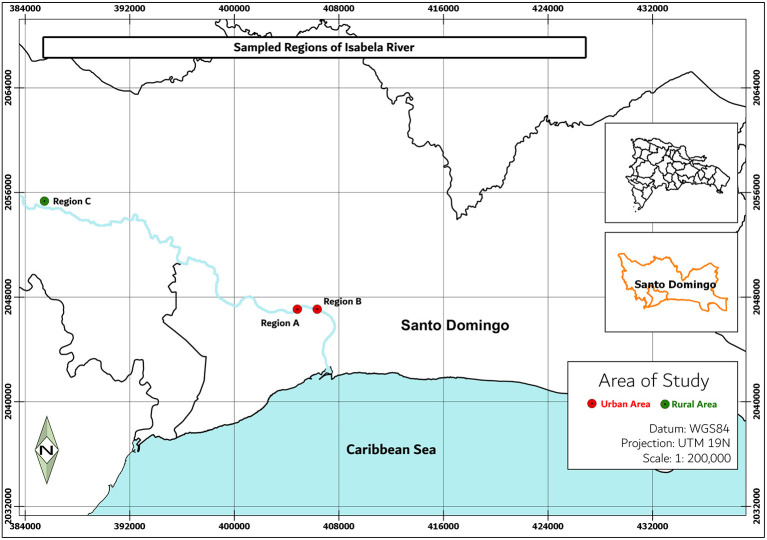
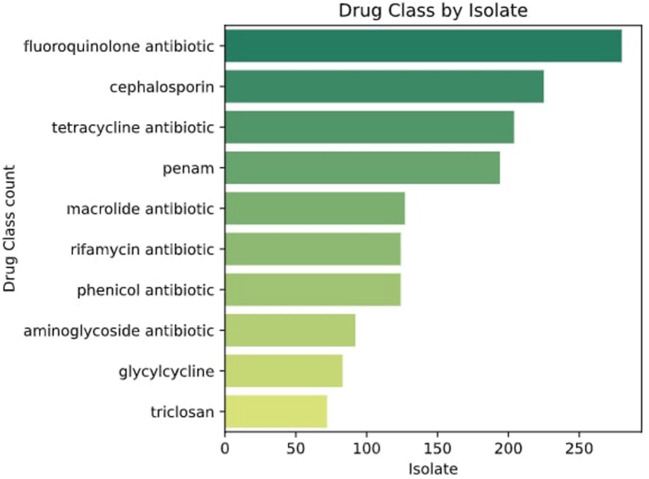
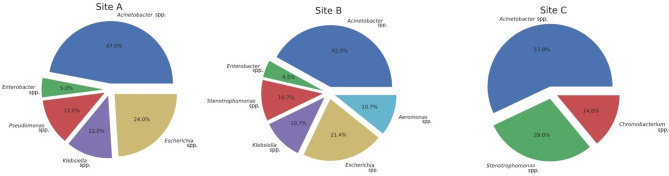
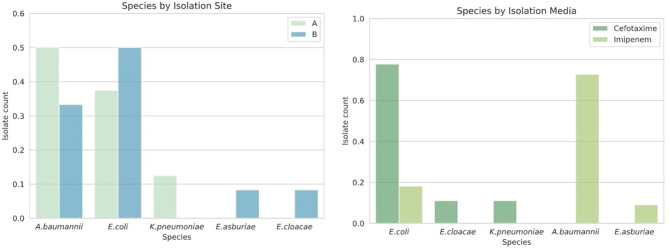
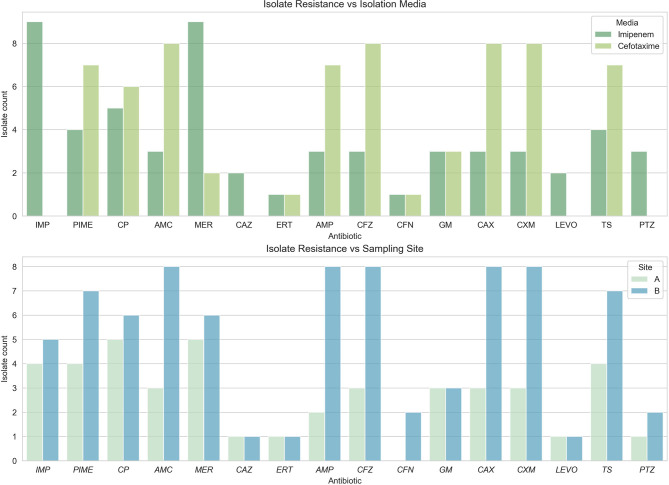
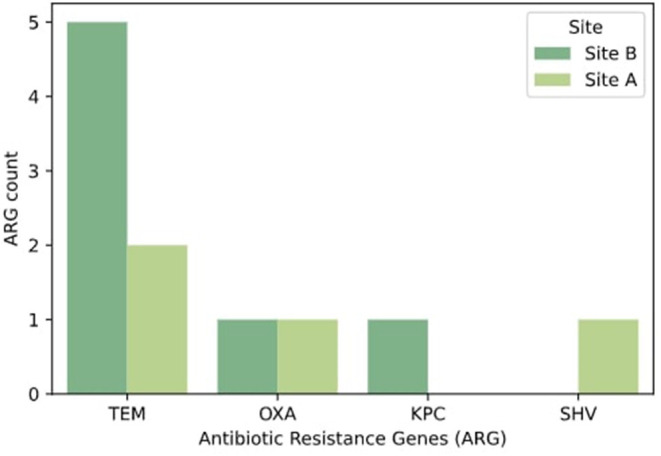
Bacteria carrying antibiotic resistance genes (ARGs) are naturally prevalent in lotic ecosystems such as rivers. Their ability to spread in anthropogenic waters could lead to the emergence of multidrug-resistant bacteria of clinical importance. For this study, three regions of the Isabela river, an important urban river in the city of Santo Domingo, were evaluated for the presence of ARGs. The Isabela river is surrounded by communities that do not have access to proper sewage systems; furthermore, water from this river is consumed daily for many activities, including recreation and sanitation. To assess the state of antibiotic resistance dissemination in the Isabela river, nine samples were collected from these three bluedistinct sites in June 2019 and isolates obtained from these sites were selected based on resistance to beta-lactams. Physico-chemical and microbiological parameters were in accordance with the Dominican legislation. Matrix-assisted laser desorption ionization-time of flight mass spectrometry analyses of ribosomal protein composition revealed a total of 8 different genera. Most common genera were as follows: (44.6%) and (18%). Twenty clinically important bacterial isolates were identified from urban regions of the river; these belonged to genera ( = 9), ( = 8), ( = 2), and ( = 1). Clinically important multi-resistant isolates were not obtained from rural areas. Fifteen isolates were selected for genome sequencing and analysis. Most isolates were resistant to at least three different families of antibiotics. Among beta-lactamase genes encountered, we found the presence of bla, bla, bla, and bla through both deep sequencing and PCR amplification. Bacteria found from genus and demonstrated ample repertoire of antibiotic resistance genes, including resistance from a family of last resort antibiotics reserved for dire infections: carbapenems. Some of the alleles found were KPC-3, OXA-1, OXA-72, OXA-132, CTX-M-55, CTX-M-15, and TEM-1.
携带抗生素抗性基因(ARGs)的细菌在河流等流水生态系统中自然普遍存在。它们在人为水域中传播的能力可能导致具有临床重要性的多重耐药细菌的出现。在本研究中,对圣多明各市一条重要城市河流伊莎贝拉河的三个区域进行了ARGs检测。伊莎贝拉河周边社区没有完善的污水处理系统;此外,这条河的水每天都被用于许多活动,包括娱乐和卫生。为评估伊莎贝拉河中抗生素抗性传播的状况,2019年6月从这三个不同地点采集了9份样本,并根据对β-内酰胺类抗生素的抗性选择了从这些地点分离出的菌株。理化和微生物参数符合多米尼加法律。核糖体蛋白质组成的基质辅助激光解吸电离飞行时间质谱分析显示共有8个不同的属。最常见的属如下:(44.6%)和(18%)。从河流城市区域鉴定出20株具有临床重要性的细菌分离株;这些分离株属于(=9)、(=8)、(=2)和(=1)属。未从农村地区获得具有临床重要性的多重耐药分离株。选择了15株分离株进行基因组测序和分析。大多数分离株对至少三种不同的抗生素家族具有抗性。在检测到的β-内酰胺酶基因中,通过深度测序和PCR扩增发现了bla、bla、bla和bla。从和属中发现的细菌表现出丰富的抗生素抗性基因库,包括对用于治疗严重感染的最后一类抗生素(碳青霉烯类)的抗性。发现的一些等位基因有KPC-3、OXA-1、OXA-72、OXA-132、CTX-M-55、CTX-M-15和TEM-1。