Romano Alessandra, Casazza Marco, Gonella Francesco
Sezione di Ematologia, Dipartimento di Chirurgia Generale e Specialità Medico Chirurgiche (CHIRMED), Università degli Studi di Catania, Catania, Italy.
Division of Hematology, U.O.C di Ematologia, Azienda Ospedaliero Universitaria Policlinico "G.Rodolico - San Marco", Catania, Italy.
Front Microbiol. 2021 Jan 15;11:600254. doi: 10.3389/fmicb.2020.600254. eCollection 2020.
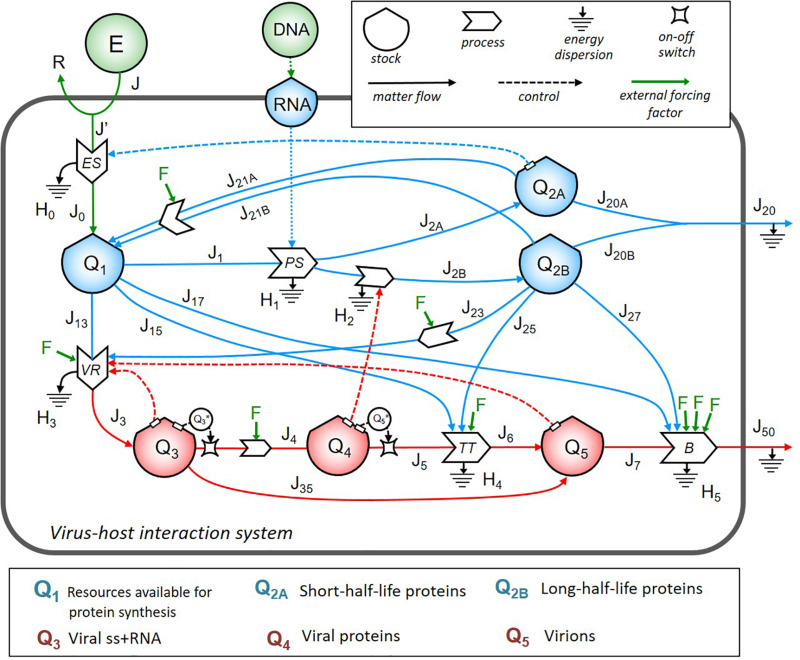
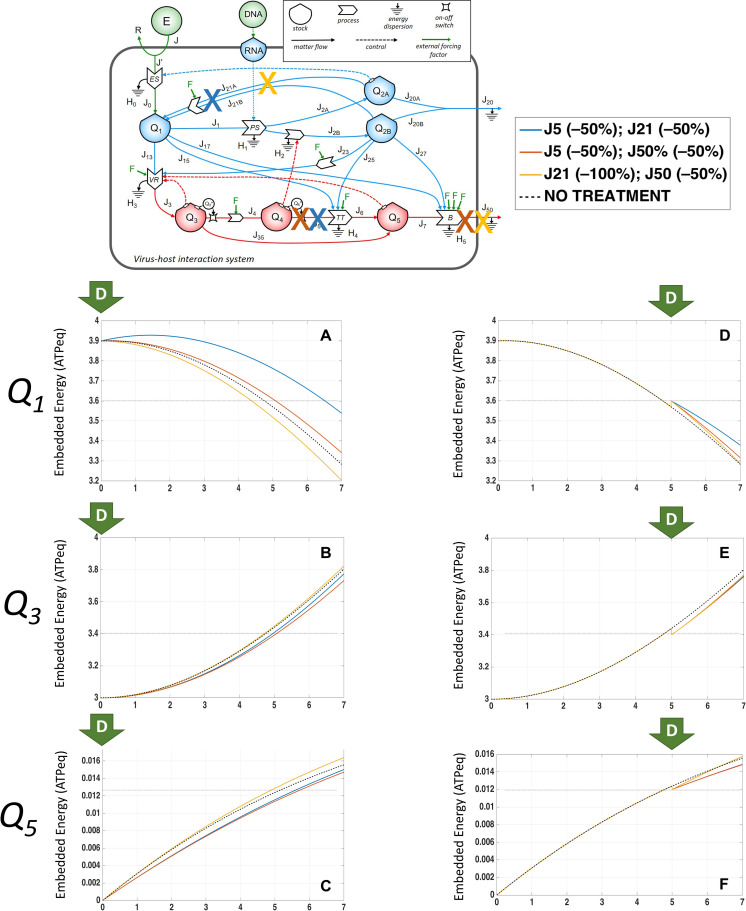
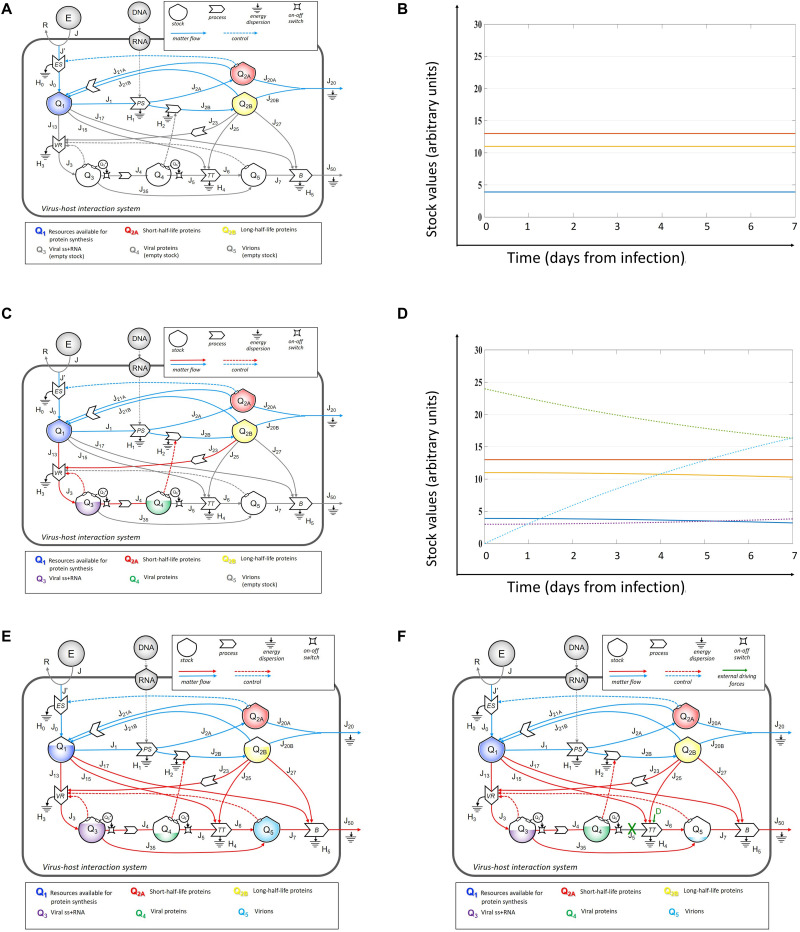
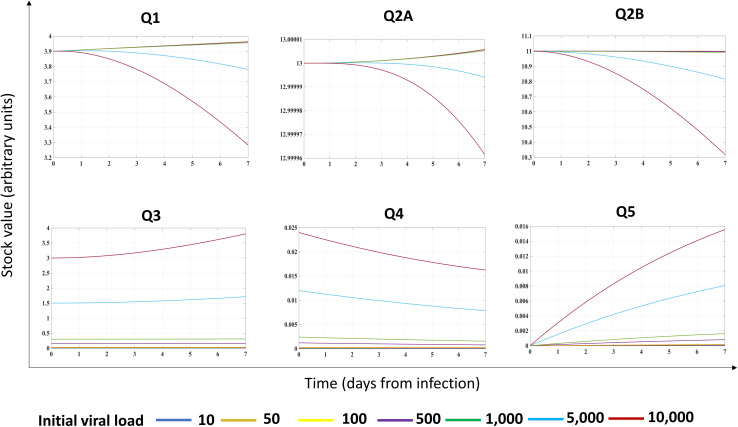
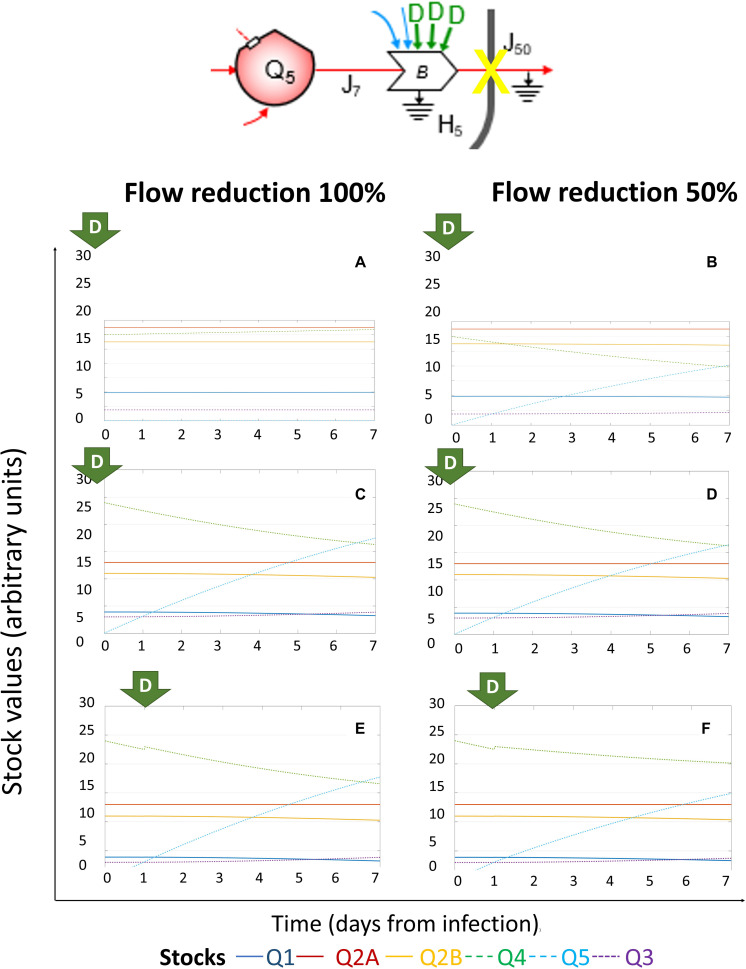
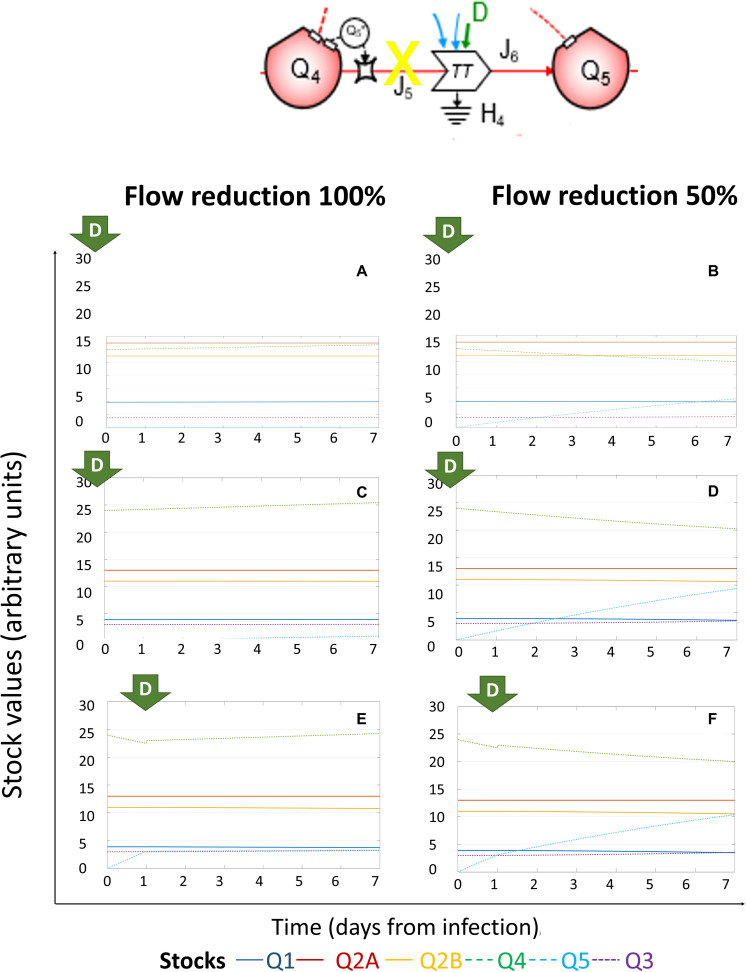
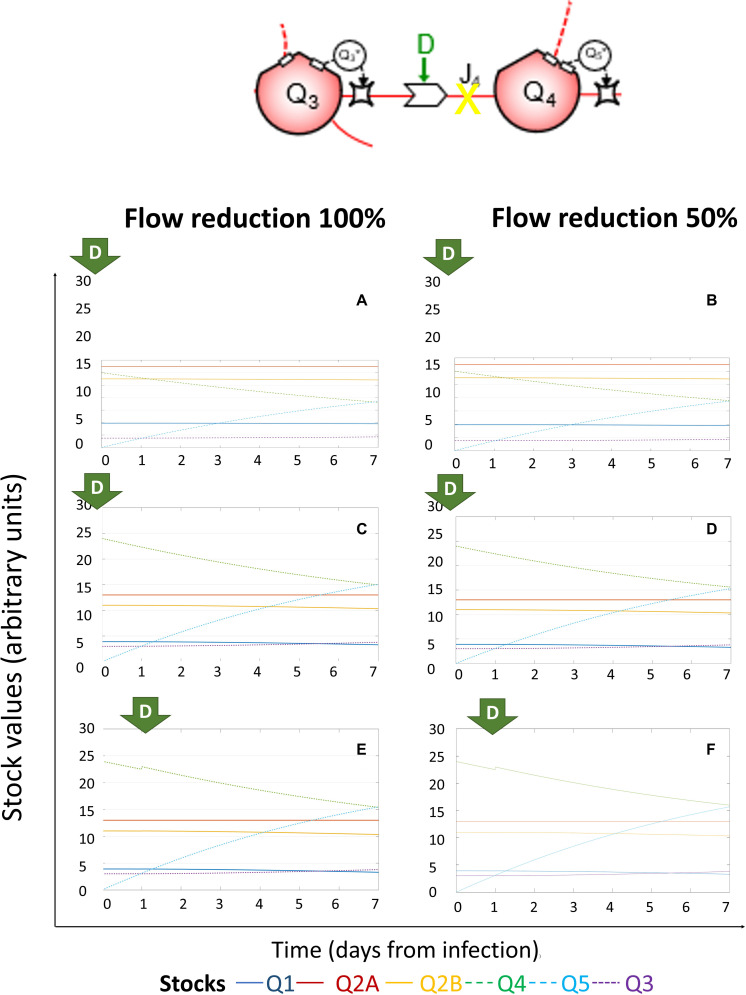
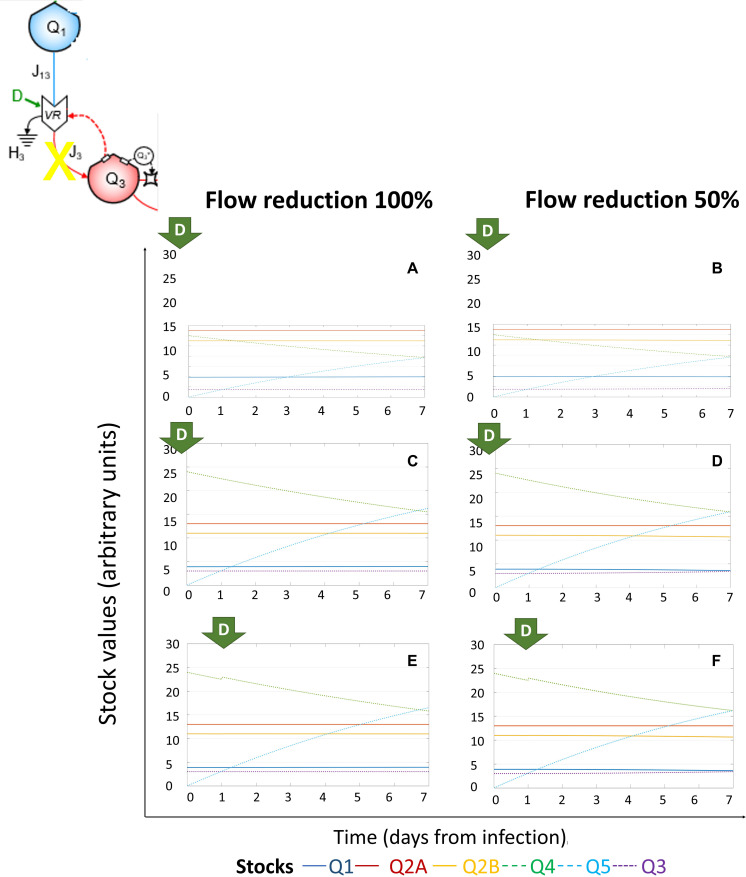
Positive single-strand ribonucleic acid [(+)ssRNA] viruses can cause multiple outbreaks, for which comprehensive tailored therapeutic strategies are still missing. Virus and host cell dynamics are tightly connected, generating a complex dynamics that conveys in virion assembly to ensure virus spread in the body. Starting from the knowledge of relevant processes in (+ss)RNA virus replication, transcription, translation, virions budding and shedding, and their respective energy costs, we built up a systems thinking (ST)-based diagram of the virus-host interaction, comprehensive of stocks, flows, and processes as well-described in literature. In ST approach, stocks and flows are expressed by a proxy of the energy embedded and transmitted, respectively, whereas processes are referred to the energy required for the system functioning. In this perspective, healthiness is just a particular configuration, in which stocks relevant for the system (equivalent but not limited to proteins, RNA, DNA, and all metabolites required for the survival) are constant, and the system behavior is stationary. At time of infection, the presence of additional stocks (e.g., viral protein and RNA and all metabolites required for virion assembly and spread) confers a complex network of feedbacks leading to new configurations, which can evolve to maximize the virions stock, thus changing the system structure, output, and purpose. The dynamic trajectories will evolve to achieve a new stationary status, a phenomenon described in microbiology as integration and symbiosis when the system is resilient enough to the changes, or the system may stop functioning and die. Application of external driving forces, acting on processes, can affect the dynamic trajectories adding a further degree of complexity, which can be captured by ST approach, used to address these new configurations. Investigation of system configurations in response to external driving forces acting is developed by computational analysis based on ST diagrams, with the aim at designing novel therapeutic approaches.
正链核糖核酸[(+)ssRNA]病毒可引发多次疫情,目前仍缺乏全面的针对性治疗策略。病毒与宿主细胞动态紧密相连,形成复杂动态过程,该过程在病毒粒子组装中得以体现,以确保病毒在体内传播。基于对(+ss)RNA病毒复制、转录、翻译、病毒粒子出芽和释放相关过程及其各自能量消耗的了解,我们构建了一个基于系统思维(ST)的病毒-宿主相互作用示意图,涵盖文献中详细描述的存量、流量和过程。在ST方法中,存量和流量分别由嵌入和传输的能量代理表示,而过程则指系统运行所需的能量。从这个角度来看,健康只是一种特定配置,其中与系统相关的存量(等同于但不限于蛋白质、RNA、DNA以及生存所需的所有代谢物)保持恒定,且系统行为稳定。在感染时,额外存量(例如病毒蛋白、RNA以及病毒粒子组装和传播所需的所有代谢物)的存在赋予了一个复杂的反馈网络,导致新的配置,这些配置可进化以最大化病毒粒子存量,从而改变系统结构、输出和目的。动态轨迹将进化以达到新的稳定状态,当系统对变化具有足够弹性时,在微生物学中这种现象被描述为整合与共生,否则系统可能停止运行并死亡。作用于过程的外部驱动力的应用会影响动态轨迹,增加进一步的复杂性,这可以通过ST方法来捕捉,用于处理这些新配置。通过基于ST图的计算分析来研究系统对外部驱动力作用的响应配置,旨在设计新的治疗方法。