Su Wen-Jing, Lu Pei-Zhi, Wu Yong, Kalpana Kumari, Yang Cheng-Kun, Lu Guo-Dong
Department of Toxicology, School of Public Health, Guangxi Medical University, Nanning, China.
Cancer Science Institute of Singapore, National University of Singapore, Singapore, Singapore.
Front Oncol. 2021 Jan 14;10:583053. doi: 10.3389/fonc.2020.583053. eCollection 2020.
Deregulated purine metabolism is critical for fast-growing tumor cells by providing nucleotide building blocks and cofactors. Importantly, purine antimetabolites belong to the earliest developed anticancer drugs and are still prescribed in clinics today. However, these antimetabolites can inhibit non-tumor cells and cause undesired side effects. As liver has the highest concentration of purines, it makes liver cancer a good model to study important nodes of dysregulated purine metabolism for better patient selection and precisive cancer treatment.
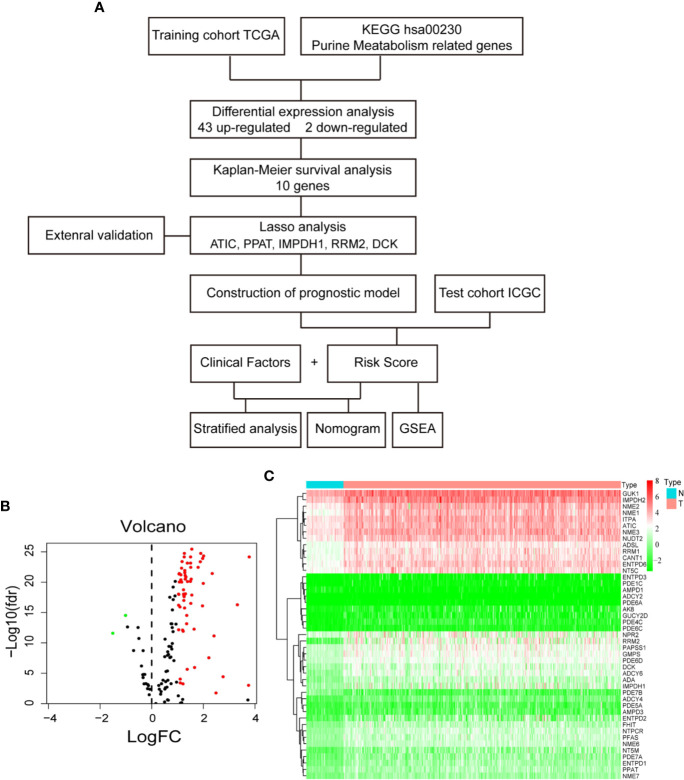
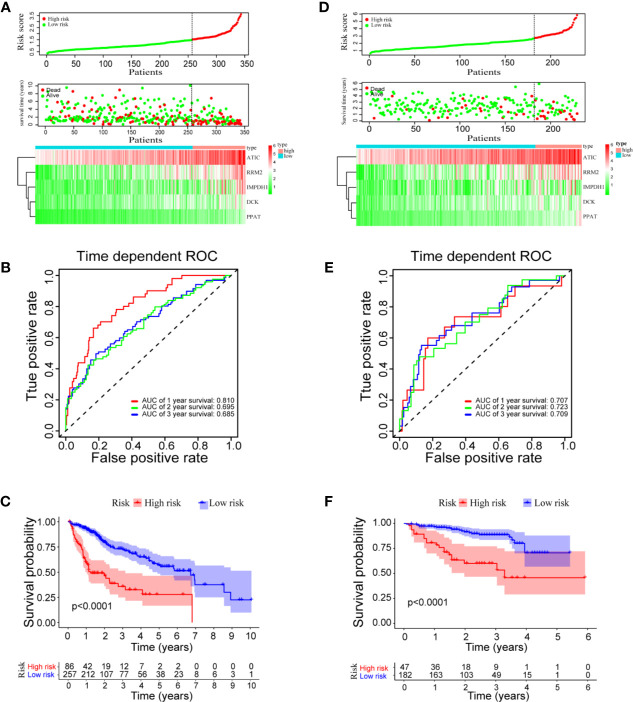
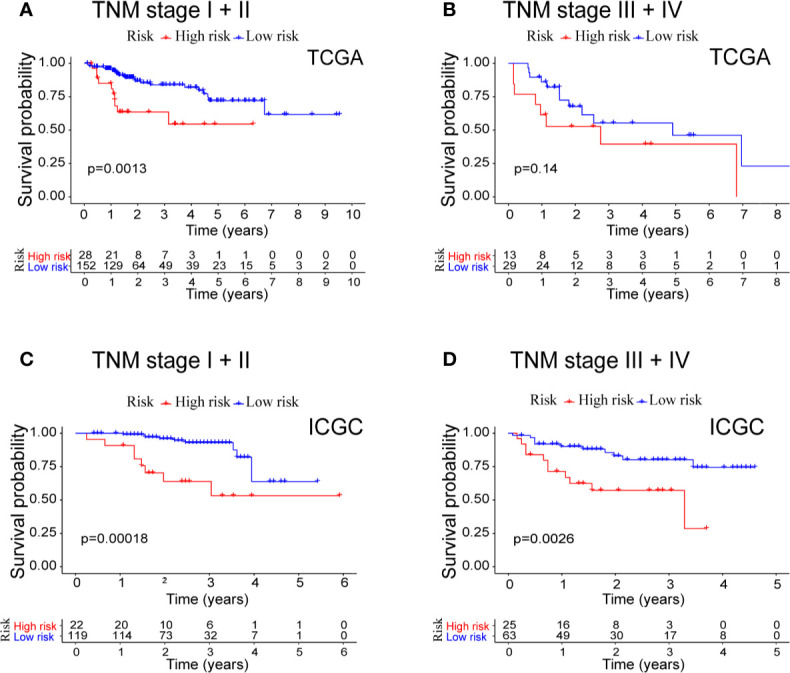
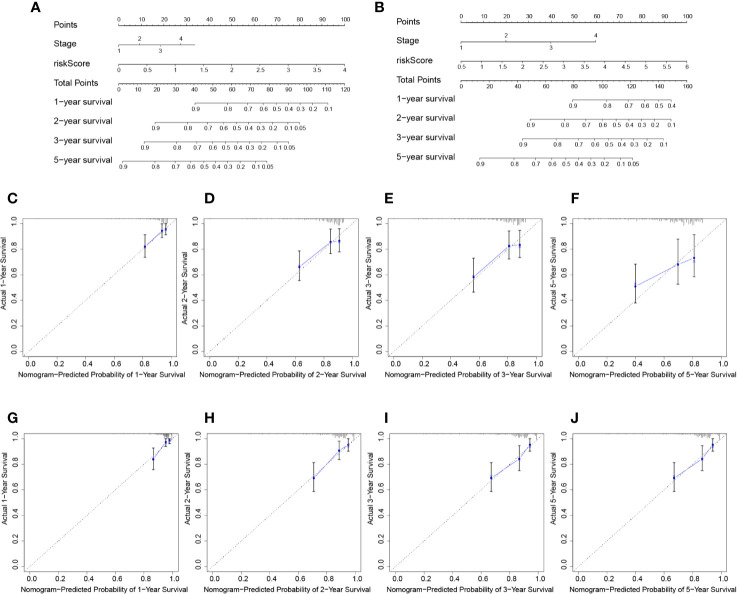
By using a training dataset from TCGA, we investigated the differentially expressed genes (DEG) of purine metabolism pathway (hsa00230) in hepatocellular carcinoma (HCC) and determined their clinical correlations to patient survival. A prognosis model was established by Lasso-penalized Cox regression analysis, and then validated through multiple examinations including Cox regression analysis, stratified analysis, and nomogram using another ICGC test dataset. We next treated HCC cells using chemical drugs of the key enzymes to determine targetable candidates in HCC.
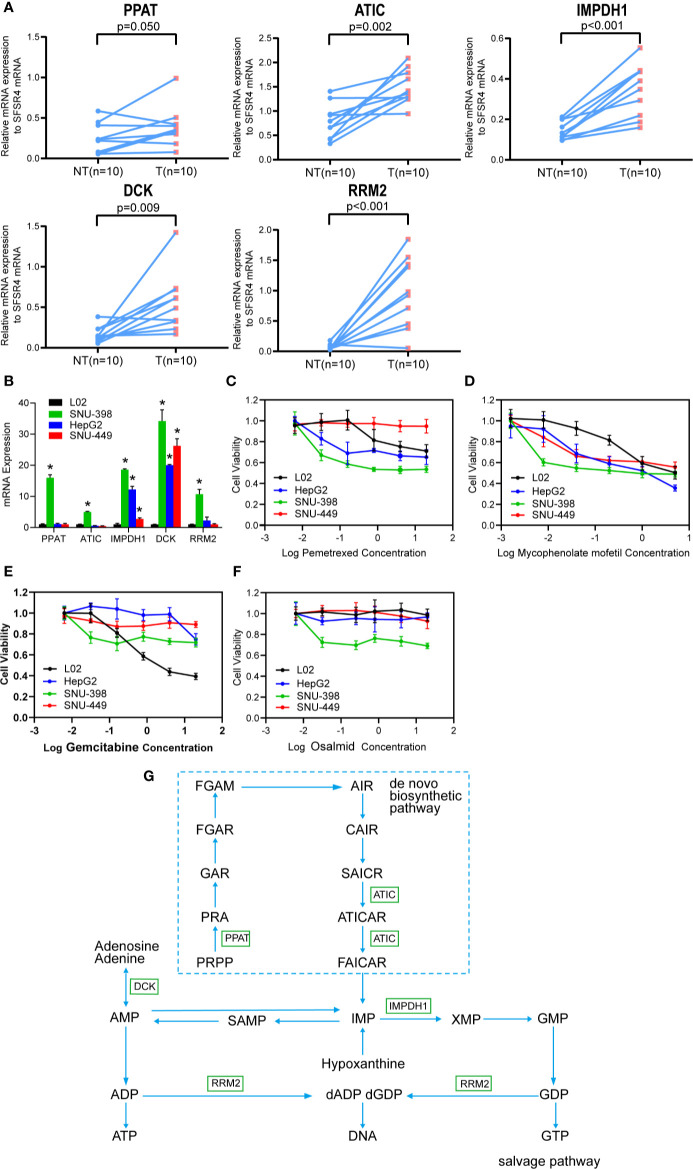
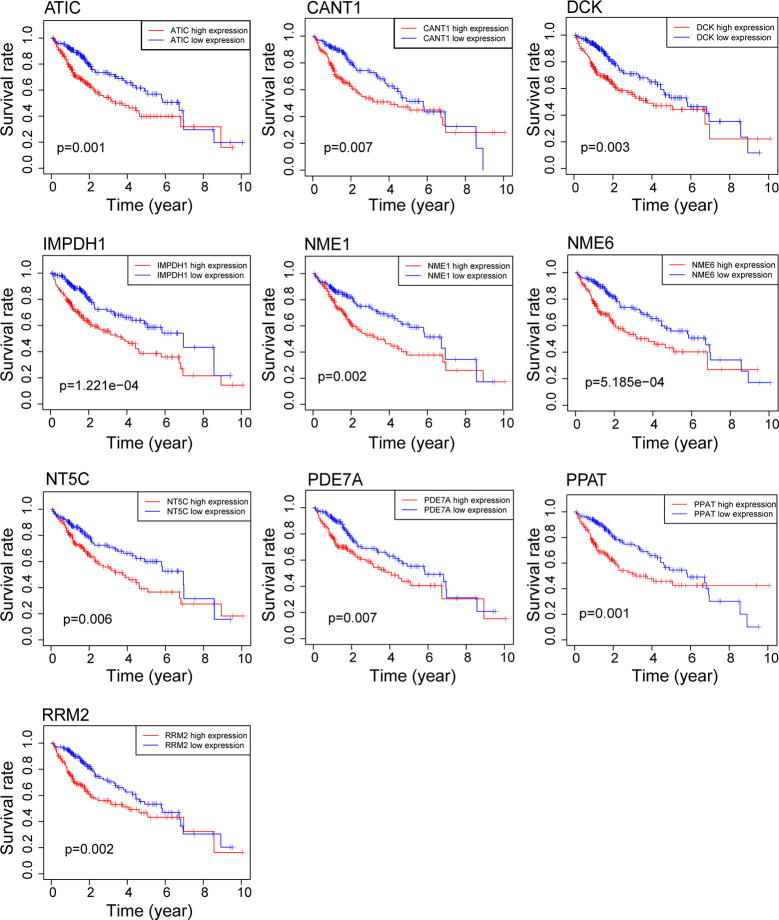
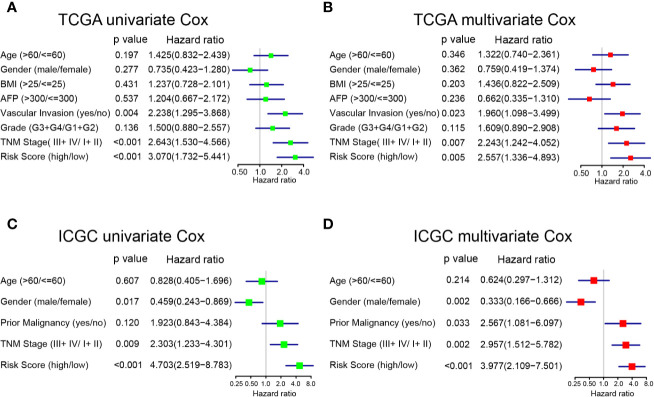
The DEG analysis found 43 up-regulated and 2 down-regulated genes in the purine metabolism pathway. Among them, 10 were markedly associated with HCC patient survival. A prognostic correlation model including five genes (PPAT, DCK, ATIC, IMPDH1, RRM2) was established and then validated using the ICGC test dataset. Multivariate Cox regression analysis found that both prognostic risk model (HR = 4.703 or 3.977) and TNM stage (HR = 2.303 or 2.957) independently predicted HCC patient survival in the two datasets respectively. The up-regulations of the five genes were further validated by comparing between 10 pairs of HCC tissues and neighboring non-tumor tissues. cellular experiments further confirmed that inhibition of IMPDH1 significantly repressed HCC cell proliferation.
In summary, this study suggests that purine metabolism is deregulated in HCC. The prognostic gene correlation model based on the five purine metabolic genes may be useful in predicting HCC prognosis and patient selection. Moreover, the deregulated genes are targetable by specific inhibitors.
嘌呤代谢失调对于快速生长的肿瘤细胞至关重要,因为它能提供核苷酸构建模块和辅助因子。重要的是,嘌呤抗代谢物属于最早开发的抗癌药物,至今仍在临床上使用。然而,这些抗代谢物会抑制非肿瘤细胞并导致不良副作用。由于肝脏中嘌呤浓度最高,肝癌成为研究嘌呤代谢失调重要节点的良好模型,有助于更好地进行患者选择和精准癌症治疗。
通过使用来自TCGA的训练数据集,我们研究了肝细胞癌(HCC)中嘌呤代谢途径(hsa00230)的差异表达基因(DEG),并确定了它们与患者生存的临床相关性。通过Lasso惩罚Cox回归分析建立了预后模型,然后使用另一个ICGC测试数据集通过包括Cox回归分析、分层分析和列线图在内的多项检验进行验证。接下来,我们使用关键酶的化学药物处理HCC细胞,以确定HCC中可靶向的候选物。
DEG分析发现嘌呤代谢途径中有43个上调基因和2个下调基因。其中,10个与HCC患者生存显著相关。建立了一个包括五个基因(PPAT、DCK、ATIC、IMPDH1、RRM2)的预后相关模型,然后使用ICGC测试数据集进行验证。多变量Cox回归分析发现,预后风险模型(HR = 4.703或3.977)和TNM分期(HR = 2.303或2.957)分别在两个数据集中独立预测HCC患者的生存。通过比较10对HCC组织和相邻非肿瘤组织,进一步验证了这五个基因的上调。细胞实验进一步证实,抑制IMPDH1可显著抑制HCC细胞增殖。
总之,本研究表明HCC中嘌呤代谢失调。基于五个嘌呤代谢基因的预后基因相关模型可能有助于预测HCC预后和患者选择。此外,失调的基因可被特定抑制剂靶向。