Ramstad Erica, Storebø Ole Jakob, Gerner Trine, Krogh Helle B, Holmskov Mathilde, Magnusson Frederik L, Moreira-Maia Carlos R, Skoog Maria, Groth Camilla, Gillies Donna, Zwi Morris, Kirubakaran Richard, Gluud Christian, Simonsen Erik
Psychiatric Research Unit, Region Zealand, Slagelse, Denmark.
Child and Adolescent Psychiatric Department, Region Zealand, Denmark.
Scand J Child Adolesc Psychiatr Psychol. 2018 Jul 10;6(1):52-71. doi: 10.21307/sjcapp-2018-003. eCollection 2018.
There is little evidence in the literature on the association between methylphenidate treatment and psychotic symptoms in children and adolescents with attention-deficit/hyperactivity disorder (ADHD).
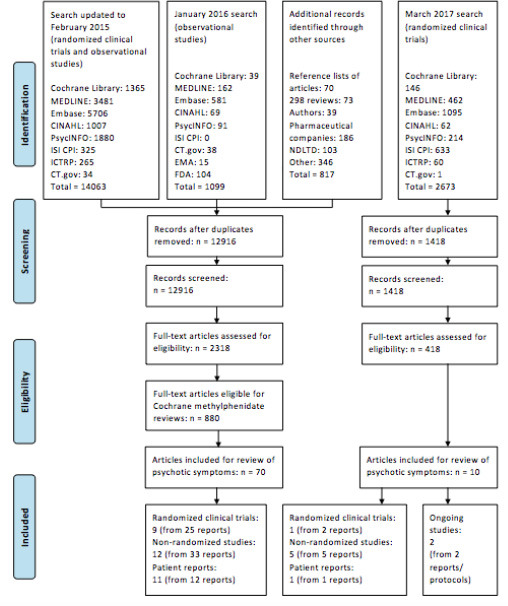
We examine the occurrence of psychotic symptoms during methylphenidate treatment of children and adolescents with ADHD. The data arise from our two Cochrane systematic reviews on methylphenidate, reported elsewhere.
Electronic databases were searched up to January 2016 (for observational studies) and March 2017 (for randomized trials). We summarized data as risk ratios and pooled prevalences. Trial Sequential Analysis was used to control for random errors. We assessed the risk of bias and the quality of evidence according to Cochrane guidelines.
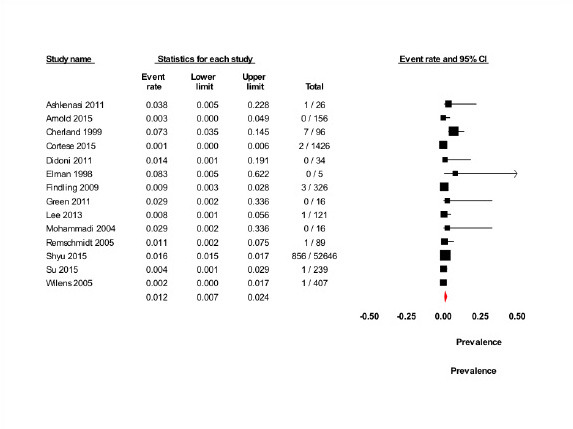
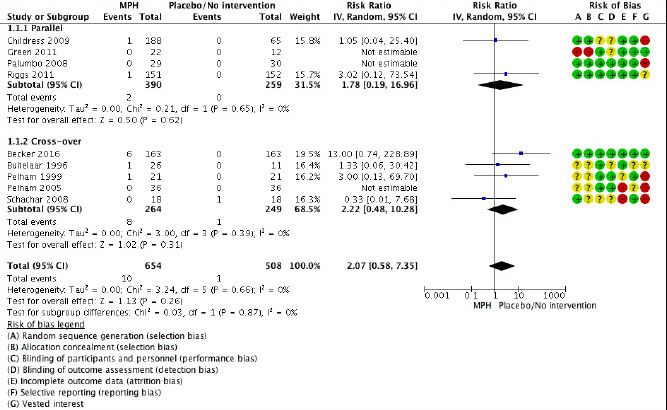
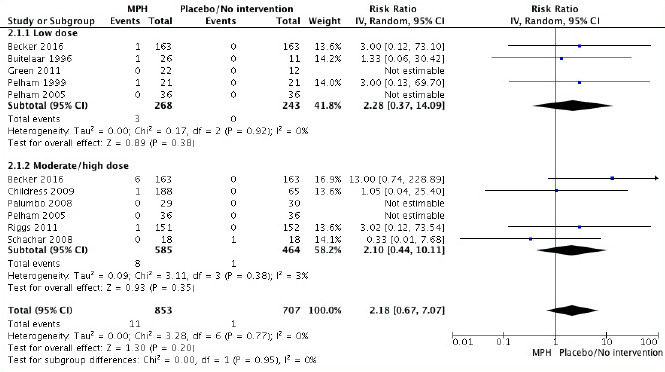
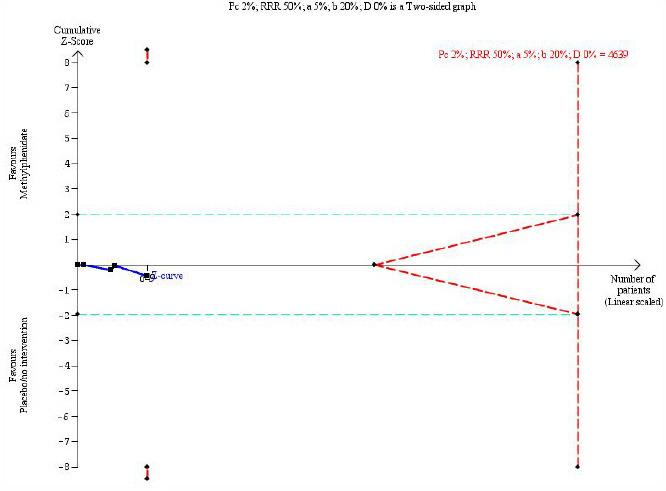
Ten randomized trials (1103 participants), 17 non-randomized studies (76,237 participants) and 12 patient reports or series (18 patients) were identified. In the randomized trials, there was no significant difference in the risk of developing psychotic symptoms [10 of 654 (pooled prevalence, 2.5%) methylphenidate versus 1 of 508 (pooled prevalence, 1.7%) placebo patients; risk ratio, 2.07; 95% confidence interval, 0.58 to 7.35]. Nine of 10 trials had a high risk of bias, and according to the Trial Sequential Analysis, the required information size was not achieved, that is, the meta-analysis was considerably underpowered. There were 873 instances of psychotic symptoms in the non-randomized studies among 55,603 participants (pooled prevalence, 1.2%; 95% confidence interval, 0.7 to 2.4). In the comparative cohort study, methylphenidate significantly increased the risk for any psychotic disorder by 36% (risk ratio, 1.36; 95% confidence interval, 1.17 to 1.57). The overall risk of bias was rated as critical for this study.
Because of sparse data and low quality of evidence, we cannot confirm or refute whether methylphenidate increases the risk of psychotic symptoms in children and adolescents with ADHD. This possible adverse event may affect 1.1% to 2.5%, and physicians, patients and caregivers should be aware of this to ensure proper treatment in case of occurrence during methylphenidate treatment.
关于哌甲酯治疗与注意缺陷多动障碍(ADHD)儿童及青少年精神症状之间的关联,文献中的证据较少。
我们研究ADHD儿童及青少年在接受哌甲酯治疗期间精神症状的发生情况。数据来源于我们在其他地方报告的两项关于哌甲酯的Cochrane系统评价。
检索电子数据库至2016年1月(用于观察性研究)和2017年3月(用于随机试验)。我们将数据总结为风险比和合并患病率。采用试验序贯分析来控制随机误差。我们根据Cochrane指南评估偏倚风险和证据质量。
共纳入10项随机试验(1103名参与者)、17项非随机研究(76237名参与者)以及12份病例报告或病例系列(18名患者)。在随机试验中,出现精神症状的风险无显著差异[654名接受哌甲酯治疗的患者中有10名(合并患病率2.5%),508名接受安慰剂治疗的患者中有1名(合并患病率1.7%);风险比为2.07;95%置信区间为0.58至7.35]。10项试验中有9项存在高偏倚风险,根据试验序贯分析,未达到所需的信息量,即荟萃分析的效能严重不足。在非随机研究的55603名参与者中,有873例精神症状实例(合并患病率1.2%、;95%置信区间为0.7至2.4)。在比较队列研究中,哌甲酯使任何精神障碍的风险显著增加36%(风险比为1.36;95%置信区间为1.17至1.57)。该研究的总体偏倚风险被评为严重。
由于数据稀少且证据质量低,我们无法证实或反驳哌甲酯是否会增加ADHD儿童及青少年出现精神症状的风险。这种可能的不良事件可能影响1.1%至2.5%,医生、患者及护理人员应予以关注,以确保在哌甲酯治疗期间出现这种情况时能进行适当治疗。