Lu Xiaofan, Ji Caoyu, Jiang Liyun, Zhu Yue, Zhou Yujie, Meng Jialin, Gao Jun, Lu Tao, Ye Junmei, Yan Fangrong
State Key laboratory of Natural Medicines, China Pharmaceutical University, Nanjing, China.
Research Center of Biostatistics and Computational Pharmacy, China Pharmaceutical University, Nanjing, China.
Cell Prolif. 2021 Mar;54(3):e12979. doi: 10.1111/cpr.12979. Epub 2021 Jan 31.
Due to limited immunological profiles of high-grade serous ovarian cancer (HGSOC), we aimed to characterize its molecular features to determine whether a specific subset that can respond to immunotherapy exists.
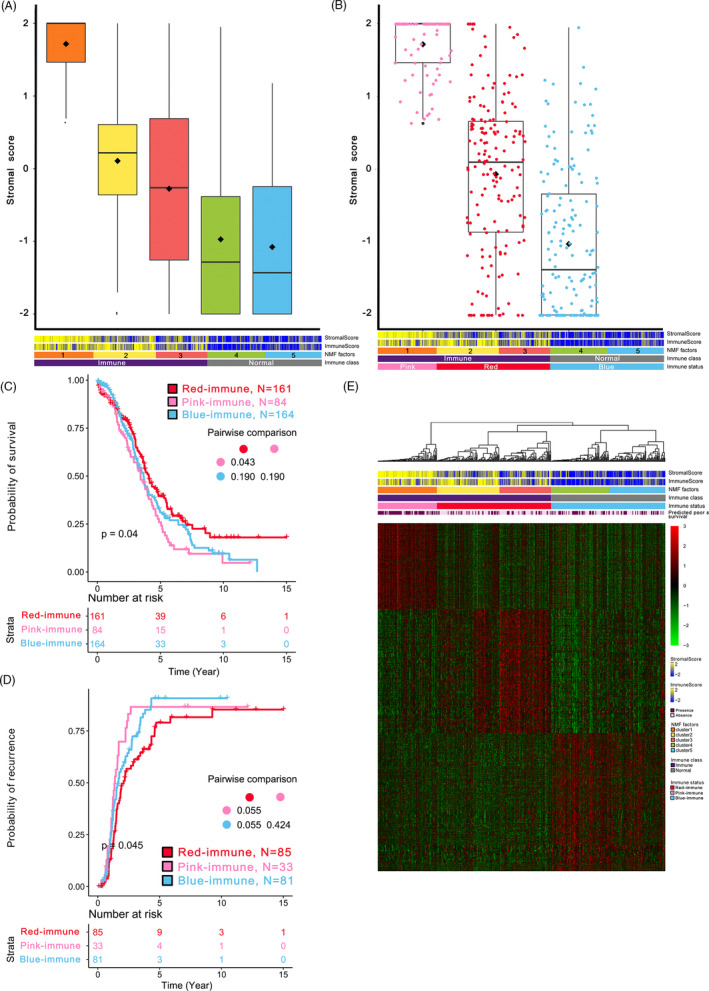
A training cohort of 418 HGSOC samples from TCGA was analysed by consensus non-negative matrix factorization. We correlated the expression patterns with the presence of immune cell infiltrates, immune regulatory molecules and other genomic or epigenetic features. Two independent cohorts containing 482 HGSOCs and in vitro experiments were used for validation.
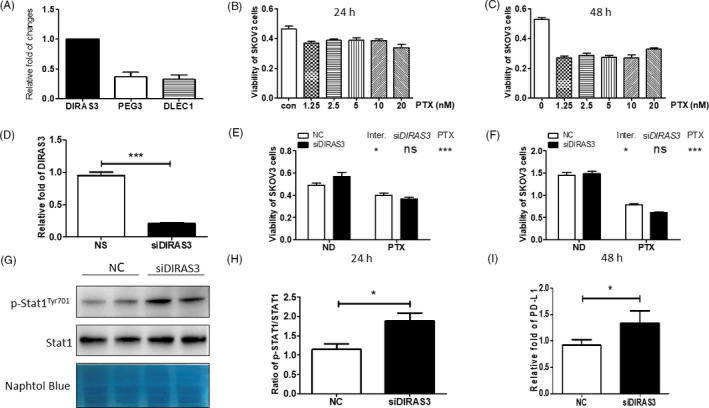
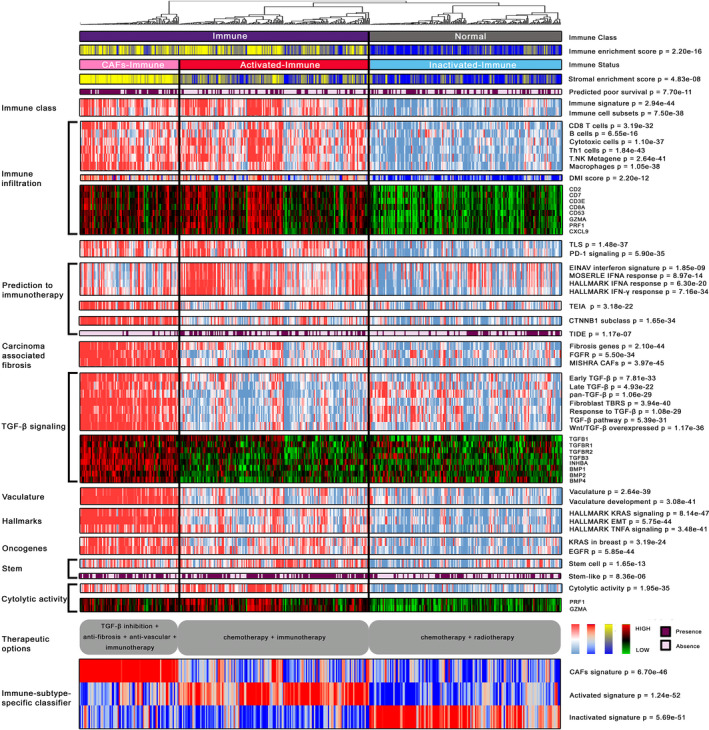
We identified immune and non-immune groups where the former was enriched in signatures that reflect immune cells, infiltration and PD-1 signalling (all, P < 0.001), and presented with a lower chromosomal aberrations but increased neoantigens, tumour mutation burden, and microsatellite instability (all, P < 0.05); this group was further refined into two microenvironment-based subtypes characterized by either immunoactivation or carcinoma-associated fibroblasts (CAFs) and distinct prognosis. CAFs-immune subtype was enriched for factors that mediate immunosuppression and promote tumour progression, including highly expressed stromal signature, TGF-β signalling, epithelial-mesenchymal transition and tumour-associated M2-polarized macrophages (all, P < 0.001). Robustness of these immune-specific subtypes was verified in validation cohorts, and in vitro experiments indicated that activated-immune subtype may benefit from anti-PD1 antibody therapy (P < 0.05).
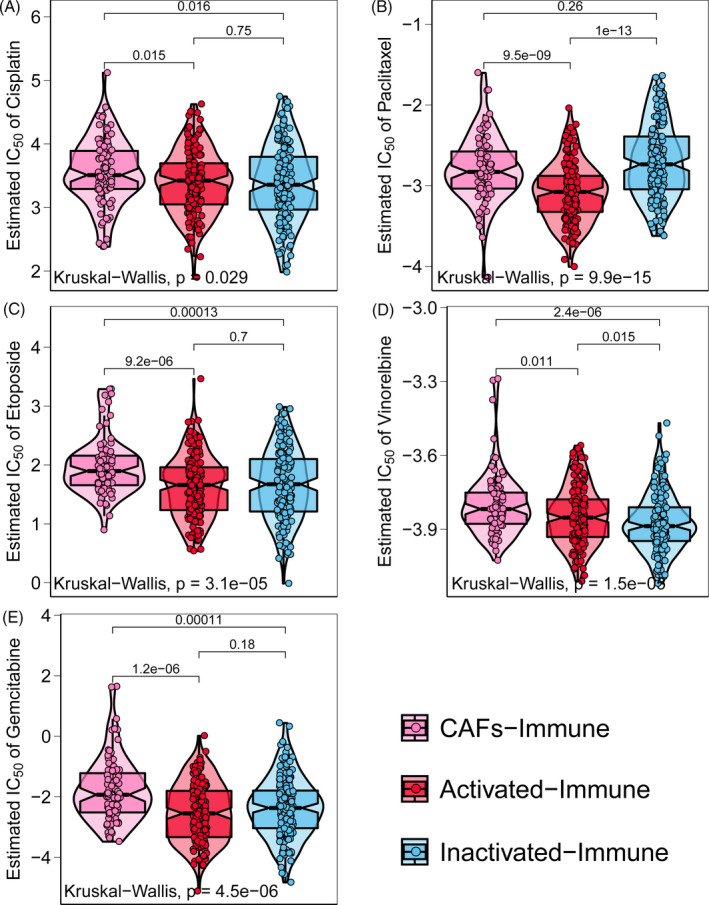
Our findings revealed two immune subtypes with different responses to immunotherapy and indicated that some HGSOCs may be susceptible to immunotherapies or combination therapies.
由于高级别浆液性卵巢癌(HGSOC)的免疫特征有限,我们旨在表征其分子特征,以确定是否存在可对免疫疗法产生反应的特定亚组。
通过一致性非负矩阵分解分析了来自TCGA的418个HGSOC样本的训练队列。我们将表达模式与免疫细胞浸润、免疫调节分子以及其他基因组或表观遗传特征的存在情况进行了关联。使用两个包含482个HGSOC的独立队列和体外实验进行验证。
我们识别出免疫组和非免疫组,前者富含反映免疫细胞、浸润和PD-1信号传导的特征(所有P < 0.001),且染色体畸变较低,但新抗原、肿瘤突变负担和微卫星不稳定性增加(所有P < 0.05);该组进一步细分为两种基于微环境的亚型,其特征分别为免疫激活或癌相关成纤维细胞(CAF),且预后不同。CAF-免疫亚型富含介导免疫抑制和促进肿瘤进展的因子,包括高表达的基质特征、TGF-β信号传导、上皮-间质转化和肿瘤相关的M2极化巨噬细胞(所有P < 0.001)。这些免疫特异性亚型的稳健性在验证队列中得到了验证,体外实验表明激活的免疫亚型可能从抗PD1抗体治疗中获益(P < 0.05)。
我们的研究结果揭示了对免疫疗法有不同反应的两种免疫亚型,并表明一些HGSOC可能对免疫疗法或联合疗法敏感。