Zheng Runhui, Zhou Jing, Song Bin, Zheng Xia, Zhong Ming, Jiang Li, Pan Chun, Zhang Wei, Xia Jiaan, Chen Nanshan, Wu Wenjuan, Zhang Dingyu, Xi Yin, Lin Zhimin, Pan Ying, Liu Xiaoqing, Li Shiyue, Xu Yuanda, Li Yimin, Tan Huo, Zhong Nanshan, Luo Xiaodan, Sang Ling
Hematology Department, The First Affiliated Hospital of Guangzhou Medical University, 510120, Guangzhou, China.
State Key Lab of Respiratory Diseases, Guangzhou Institute of Respiratory Health, Department of Pulmonary and Critical Care Medicine, The First Affiliated Hospital of Guangzhou Medical University, 510120, Guangzhou, China.
Exp Hematol Oncol. 2021 Feb 1;10(1):6. doi: 10.1186/s40164-021-00202-9.
Coronavirus disease 2019 (COVID-19) is associated with coagulation abnormalities which are indicators of higher mortality especially in severe cases.
We studied patients with proven COVID-19 disease in the intensive care unit of Jinyintan Hospital, Wuhan, China from 30 to 2019 to 31 March 2020.
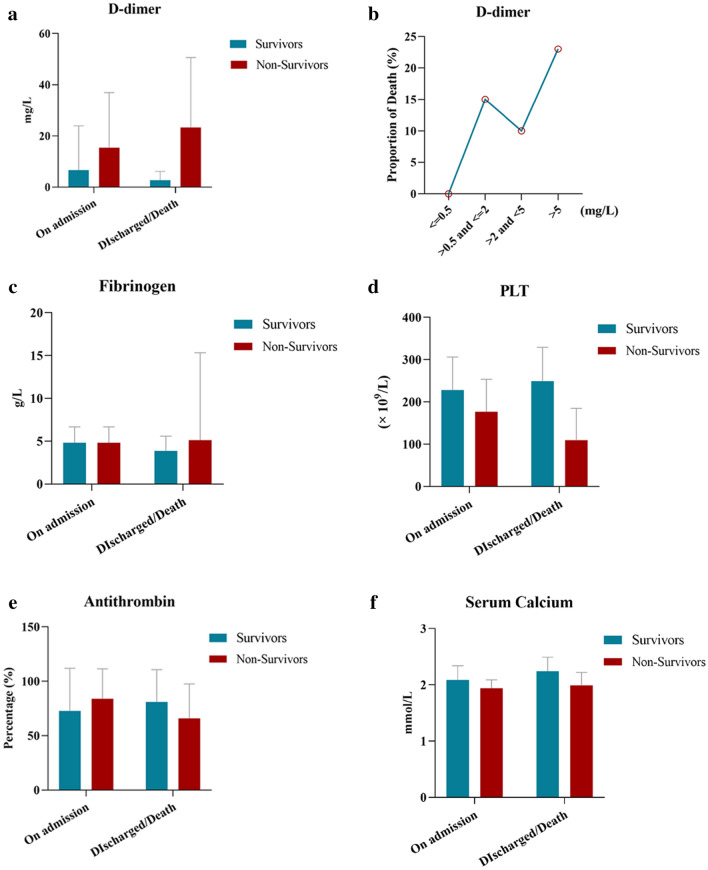
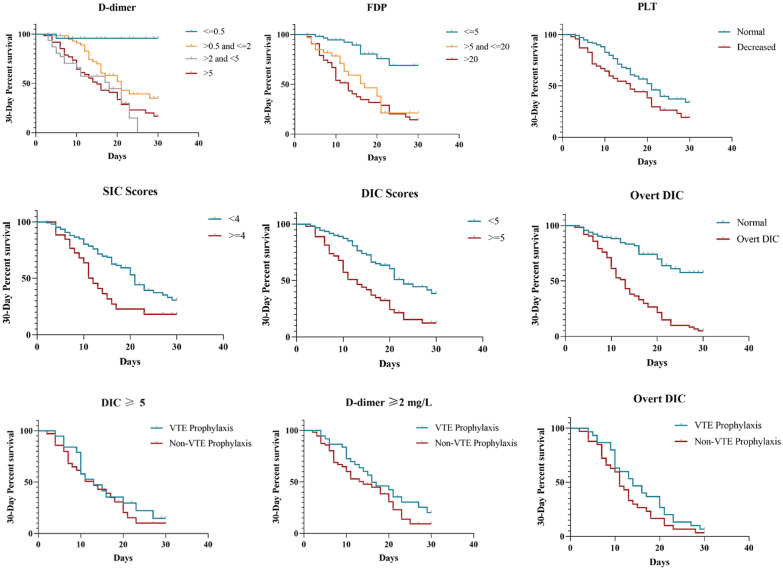
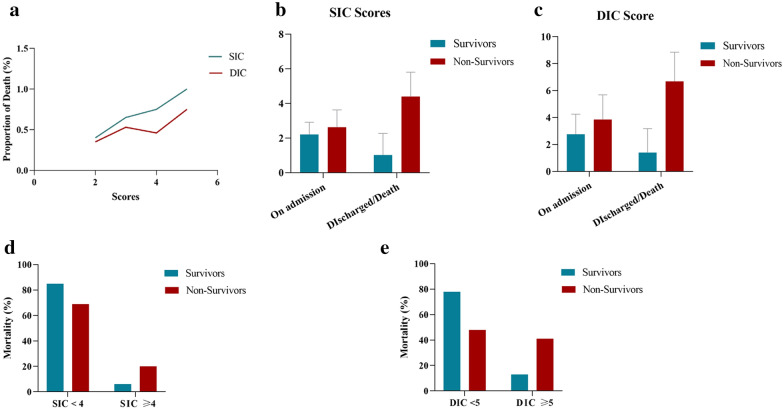
Of 180 patients, 89 (49.44 %) had died, 85 (47.22 %) had been discharged alive, and 6 (3.33 %) were still hospitalised by the end of data collection. A D-dimer concentration of > 0.5 mg/L on admission was significantly associated with 30 day mortality, and a D-dimer concentration of > 5 mg/L was found in a much higher proportion of non-survivors than survivors. Sepsis-induced coagulopathy (SIC) and disseminated intravascular coagulation (DIC) scoring systems were dichotomised as < 4 or ≥ 4 and < 5 or ≥ 5, respectively, and the mortality rate was significantly different between the two stratifications in both scoring systems. Enoxaparin was administered to 68 (37.78 %) patients for thromboembolic prophylaxis, and stratification by the D-dimer concentration and DIC score confirmed lower mortality in patients who received enoxaparin when the D-dimer concentration was > 2 than < 2 mg/L or DIC score was ≥ 5 than < 5. A low platelet count and low serum calcium concentration were also related to mortality.
A D-dimer concentration of > 0.5 mg/L on admission is a risk factor for severe disease. A SIC score of > 4 and DIC score of > 5 may be used to predict mortality. Thromboembolic prophylaxis can reduce mortality only in patients with a D-dimer concentration of > 2 mg/L or DIC score of ≥ 5.
2019冠状病毒病(COVID-19)与凝血异常有关,凝血异常是死亡率升高的指标,尤其是在重症病例中。
我们研究了2019年12月30日至2020年3月31日在中国武汉金银潭医院重症监护病房确诊为COVID-19的患者。
180例患者中,89例(49.44%)死亡,85例(47.22%)存活出院,6例(3.33%)在数据收集结束时仍住院。入院时D-二聚体浓度>0.5mg/L与30天死亡率显著相关,非幸存者中D-二聚体浓度>5mg/L的比例远高于幸存者。脓毒症诱导的凝血病(SIC)和弥散性血管内凝血(DIC)评分系统分别分为<4或≥4以及<5或≥5,在这两个评分系统中,两种分层之间的死亡率有显著差异。68例(37.78%)患者接受依诺肝素进行血栓栓塞预防,根据D-二聚体浓度和DIC评分分层证实,当D-二聚体浓度>2mg/L或DIC评分≥5时,接受依诺肝素治疗的患者死亡率较低。低血小板计数和低血清钙浓度也与死亡率有关。
入院时D-二聚体浓度>0.5mg/L是重症疾病的危险因素。SIC评分>4和DIC评分>5可用于预测死亡率。血栓栓塞预防仅能降低D-二聚体浓度>2mg/L或DIC评分≥5的患者的死亡率。