Cao Yun-Gang, Li Yan, Shen Jie, Shao Meng-Meng, Lin Xian-Da, Zhu Juan-Juan, Huang Xiao-Yan, Cheng Zi-Cheng, Yan Jue-Yue, Chen Ke-Yang
Department of Neurology, The Second Affiliated Hospital and Yuying Children's Hospital of Wenzhou Medical University, College West Road No. 109, Wenzhou, 325027, Zhejiang, China.
Department of Rehabilitation and Neurology, The First Affiliated Hospital of Wenzhou Medical University, Wenzhou, Zhejiang, China.
Neurol Sci. 2021 May;42(5):1653-1659. doi: 10.1007/s10072-021-05061-0. Epub 2021 Feb 1.
To explore the activity changes in neurology clinical practice that have occurred in tertiary public hospitals during the COVID-19 pandemic.
Outpatient and inpatient data from the neurology department were extracted from the electronic medical record system of three tertiary Grade A hospitals in Wenzhou. Data were analyzed across 5 months following the beginning of the pandemic (from January 13 to May 17) and compared with the same period in 2019. Data on reperfusion therapy for acute infarction stroke were extracted monthly from January to April.
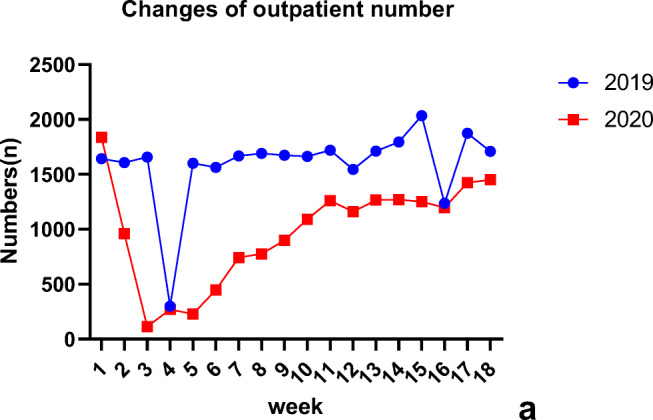
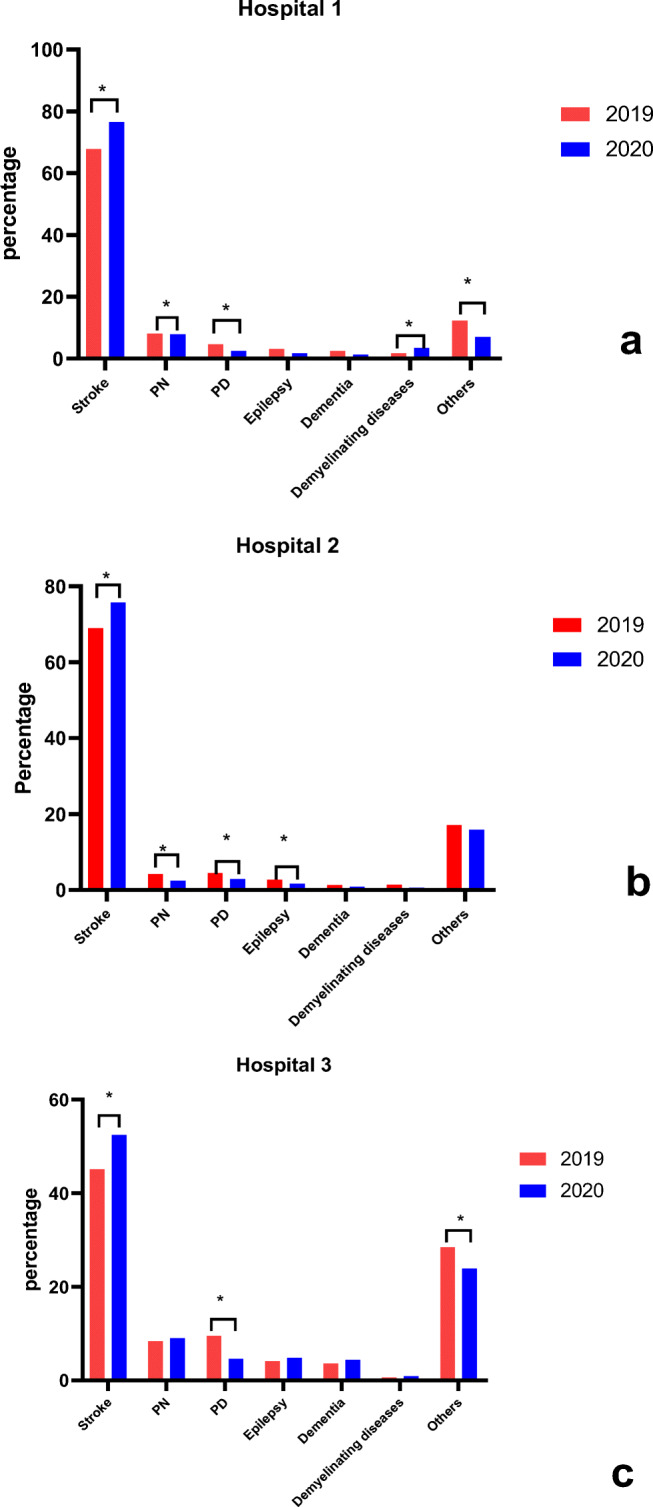
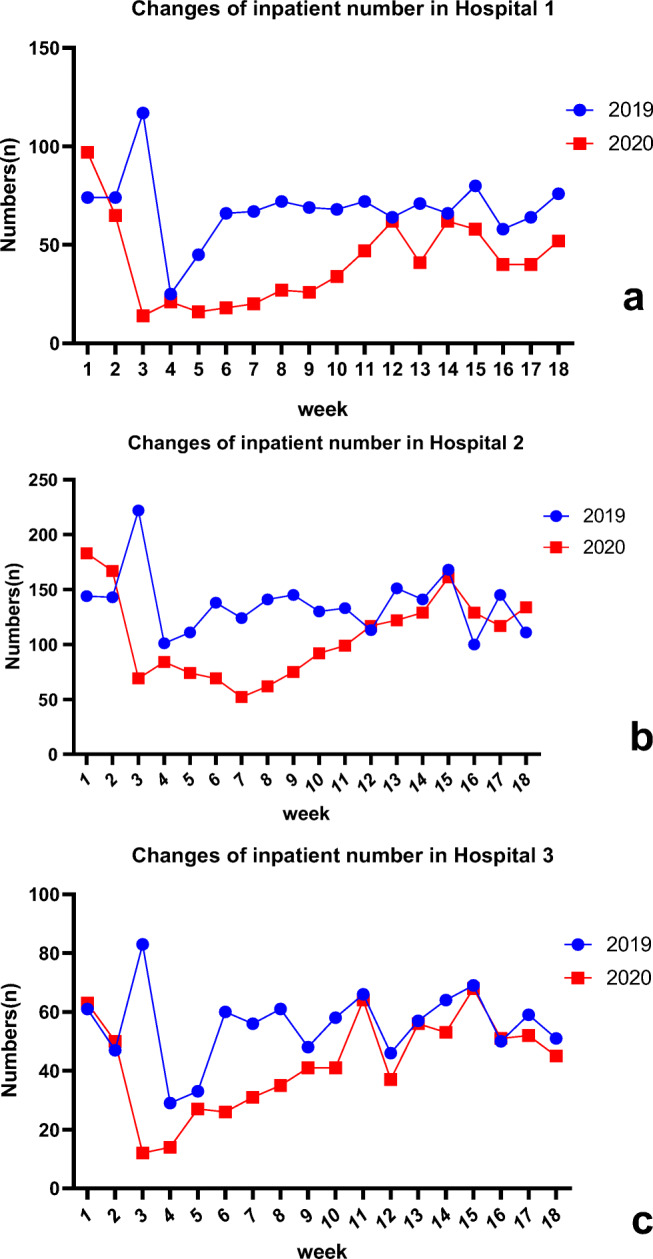
The number of outpatients declined from 102,300 in 2019 to 75,154 in 2020 (26.54%), while the number of inpatients in the three tertiary Grade A hospitals decreased from 4641 to 3437 (25.94%). The latter trend showed a significant drop from the 3rd week to the 7th week. The number of patients in these hospitals decreased significantly, and a significant drop was seen in the neurology department. As usual, stroke was the most common disease observed; however, anxiety/depression and insomnia increased dramatically in the outpatient consultation department.
The results of our study revealed the effects of the COVID-19 pandemic in the clinical practice of neurology in Wenzhou during the outbreak. Understanding the pandemic's trends and impact on neurological patients and health systems will allow for better preparation of neurologists in the future.
探讨新型冠状病毒肺炎(COVID-19)大流行期间三级公立医院神经内科临床业务的活动变化情况。
从温州三家三级甲等医院的电子病历系统中提取神经内科门诊和住院患者数据。分析疫情开始后的5个月(从1月13日至5月17日)的数据,并与2019年同期进行比较。每月提取1月至4月急性梗死性卒中再灌注治疗的数据。
门诊患者数量从2019年的102300例降至2020年的75154例(下降26.54%),而三家三级甲等医院的住院患者数量从4641例降至3437例(下降25.94%)。后一趋势在第3周至第7周出现显著下降。这些医院的患者数量显著减少,神经内科也出现了显著下降。像往常一样,卒中是观察到的最常见疾病;然而,门诊咨询中焦虑/抑郁和失眠显著增加。
我们的研究结果揭示了COVID-19大流行在疫情期间对温州神经内科临床业务的影响。了解大流行的趋势及其对神经科患者和卫生系统的影响,将有助于神经科医生在未来做好更好的准备。