Faculty of Veterinary Medicine, Institute of Preclinical Veterinary Sciences, Department of Veterinary Microbiology, University of Life Sciences, Akademicka 12, 20-033, Lublin, Poland.
Mycopathologia. 2021 May;186(2):163-176. doi: 10.1007/s11046-021-00529-1. Epub 2021 Feb 1.
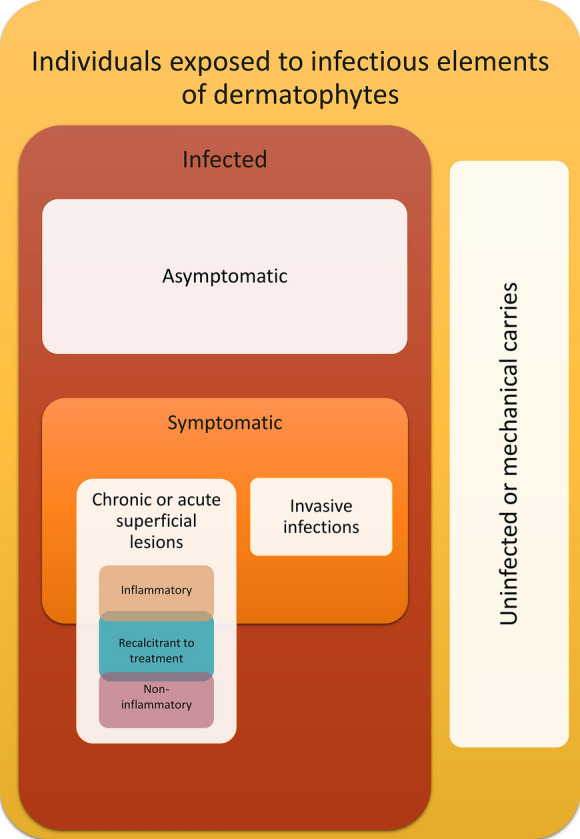
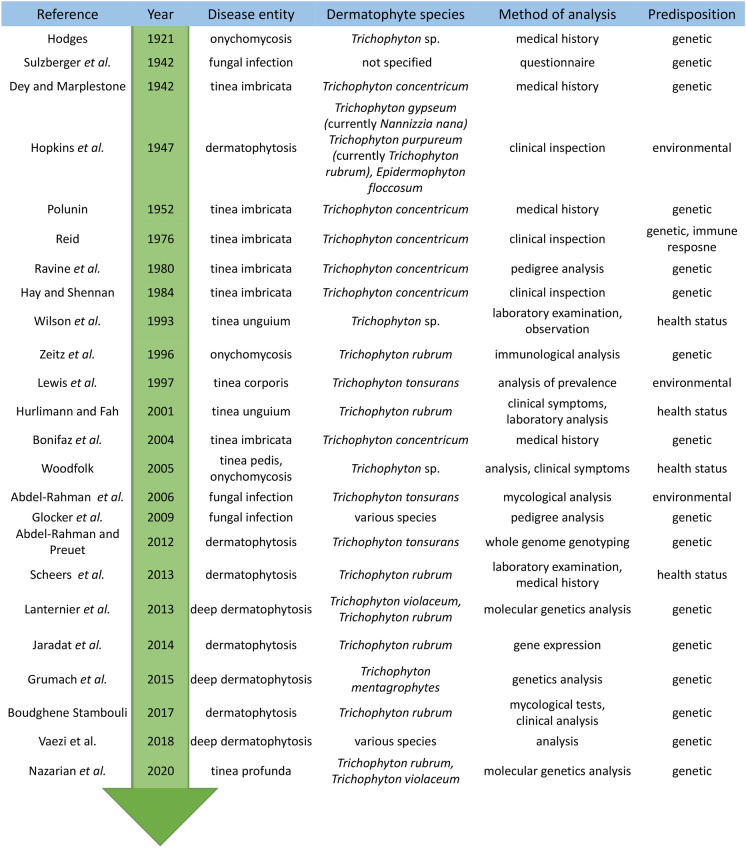
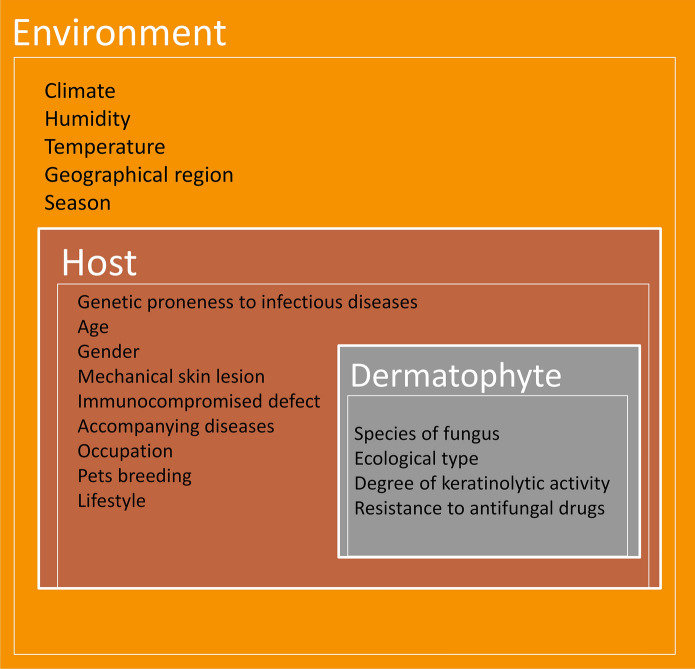
Dermatophytosis is a widespread disease with high prevalence and a substantial economic burden associated with costs of treatment. The pattern of this infectious disease covers a wide spectrum from exposed individuals without symptoms to those with acutely inflammatory or non-inflammatory, chronic to invasive, and life-threatening symptoms. Moreover, the prevalence of cutaneous fungal infections is not as high as might be expected. This curious disparity in the dermatophyte infection patterns may suggest that there are individual factors that predispose to infection, with genetics as an increasingly well-known determinant. In this review, we describe recent findings about the genetic predisposition to dermatophyte infections, with focus on inheritance in families with a high frequency of dermatophyte infections and specific host-pathogen interactions. The results of studies indicating a hereditary predisposition to dermatophytoses have been challenged by many skeptics suggesting that the varied degree of pathogenicity and the ecological diversity of this group of fungi are more important in increasing sensitivity. Nonetheless, a retrospective analysis of the hereditary propensity to dermatophytoses revealed at least several proven genetic relationships such as races, CARD9 deficiency, HLA-DR4 and HLA-DR8 type and responsible genes encoding interleukin-22, β-defensin 2 and 4 as well as genetic defects in dectin-1, which increased the prevalence of the disease in families and were involved in the inheritance of the proneness in their members. In future, the Human Genome Diversity Project can contribute to elucidation of the genetic predisposition to dermatophytoses and provide more information.
皮肤癣菌病是一种广泛存在的疾病,其患病率高,且与治疗费用相关的经济负担巨大。这种传染病的模式涵盖了广泛的范围,从无症状的暴露个体到急性炎症或非炎症、慢性到侵袭性和危及生命的症状。此外,皮肤真菌感染的患病率并不像预期的那么高。这种皮肤癣菌感染模式的奇特差异可能表明存在个体易感染的因素,而遗传是一个越来越被人熟知的决定因素。在这篇综述中,我们描述了皮肤癣菌感染遗传易感性的最新发现,重点介绍了具有高频率皮肤癣菌感染家族的遗传以及特定的宿主-病原体相互作用。许多怀疑论者对表明皮肤癣菌病具有遗传易感性的研究结果提出了质疑,他们认为该组真菌的致病性程度不同和生态多样性在提高敏感性方面更为重要。尽管如此,对皮肤癣菌病遗传倾向的回顾性分析至少揭示了几个已证实的遗传关系,如种族、CARD9 缺乏、HLA-DR4 和 HLA-DR8 类型以及编码白细胞介素-22、β-防御素 2 和 4 的相关基因,以及 dectin-1 的遗传缺陷,这些都增加了疾病在家族中的流行,并参与了其成员易感性的遗传。未来,人类基因组多样性计划可以有助于阐明皮肤癣菌病的遗传易感性,并提供更多信息。