Jusuf Sebastian, Mansour Michael K
Department of Medicine, Harvard Medical School, Boston, MA 02115, USA.
Division of Infectious Diseases, Massachusetts General Hospital, Boston, MA 02114, USA.
J Fungi (Basel). 2024 Jul 11;10(7):476. doi: 10.3390/jof10070476.
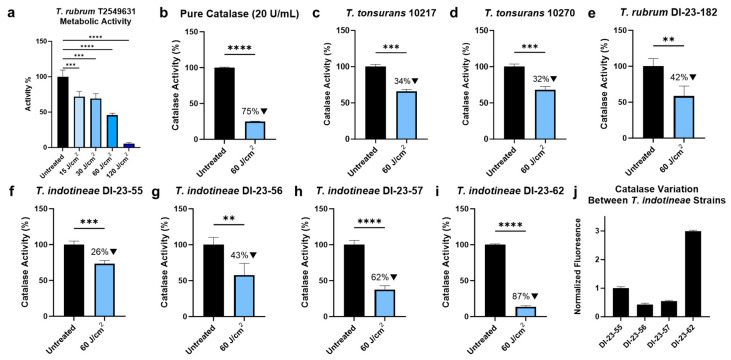
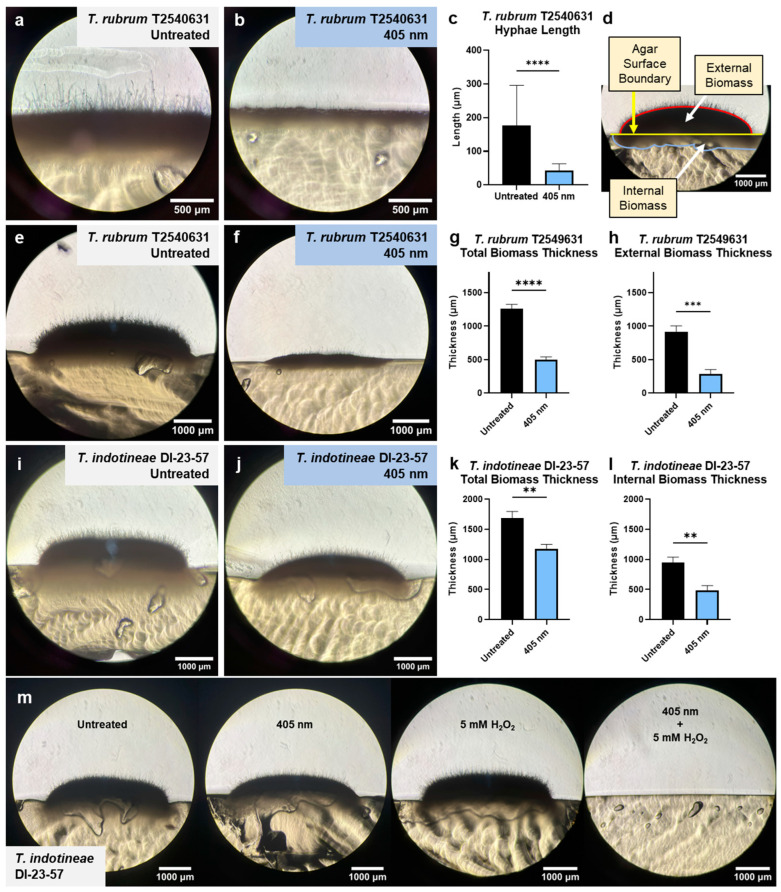
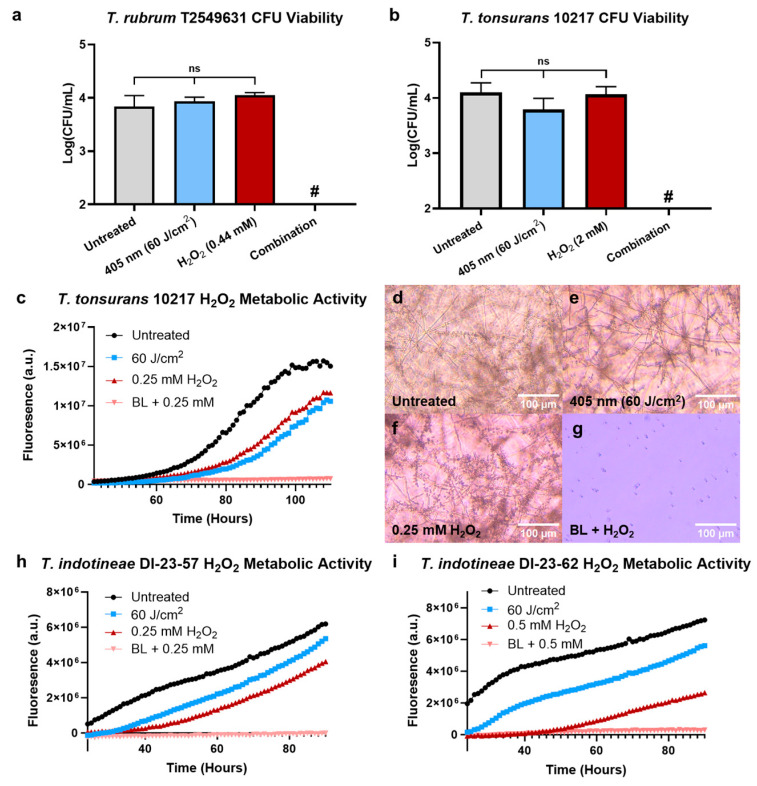
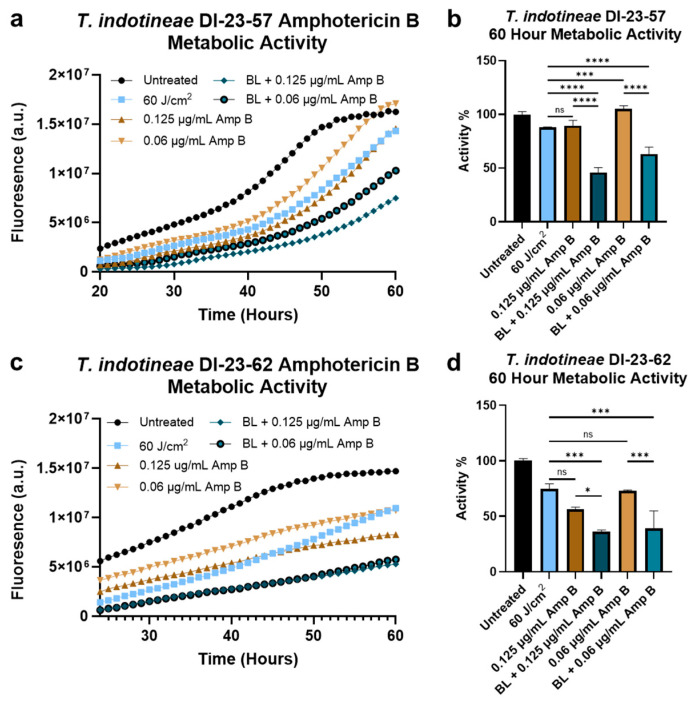
As the leading cause of fungal skin infections around the globe, dermatophytes are responsible for a multitude of skin ailments, ranging from athlete's foot to ringworm. Due to the combination of its growing prevalence and antifungal misuse, antifungal-resistant dermatophyte strains like have begun to emerge, posing a significant global health risk. The emergence of these resistant dermatophytes highlights a critical need to identify alternative methods of treating dermatophyte infections. In our study, we utilized a 405 nm LED to establish that blue light can effectively inactivate catalase within a variety of both susceptible and resistant dermatophytes. Through this catalase inactivation process, light-treated dermatophytes were found to exhibit increased sensitivity to reactive oxygen species (ROS)-producing agents, improving the performance of antimicrobial agents such as HO and amphotericin B. Our findings further demonstrate that light-induced catalase inactivation can inhibit the formation and polarized growth of hyphae from dermatophytes, suppressing biomass formation. Thus, by increasing ROS sensitization and inhibiting hyphal development, catalase-deactivating blue light offers a potential non-invasive and non-drug-reliant method of managing dermatophyte infections, opening new avenues for the potential treatment of these common infections in conjunction with existing treatments.
作为全球真菌性皮肤感染的主要原因,皮肤癣菌可引发多种皮肤疾病,从足癣到癣。由于其患病率不断上升以及抗真菌药物的滥用,像这样的耐抗真菌皮肤癣菌菌株已开始出现,对全球健康构成重大风险。这些耐药皮肤癣菌的出现凸显了识别治疗皮肤癣菌感染替代方法的迫切需求。在我们的研究中,我们利用405纳米发光二极管确定蓝光可有效使多种敏感和耐药皮肤癣菌中的过氧化氢酶失活。通过这种过氧化氢酶失活过程,发现经光处理的皮肤癣菌对产生活性氧(ROS)的药物表现出更高的敏感性,提高了如过氧化氢和两性霉素B等抗菌药物的性能。我们的研究结果进一步表明,光诱导的过氧化氢酶失活可抑制皮肤癣菌菌丝的形成和极性生长,抑制生物量形成。因此,通过增加ROS敏感性和抑制菌丝发育,使过氧化氢酶失活的蓝光提供了一种潜在的非侵入性且不依赖药物的管理皮肤癣菌感染的方法,为结合现有治疗方法潜在治疗这些常见感染开辟了新途径。