Pharmaceutical Sciences Division, School of Pharmacy, University of Wisconsin, Madison, WI 53705, USA.
Université Paris-Saclay, CEA, CNRS, Institute for Integrative Biology of the Cell (I2BC), 91198 Gif-sur-Yvette, France.
Nucleic Acids Res. 2021 Feb 26;49(4):2141-2160. doi: 10.1093/nar/gkab026.
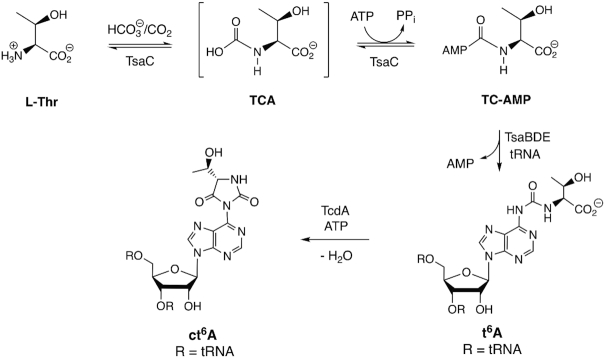
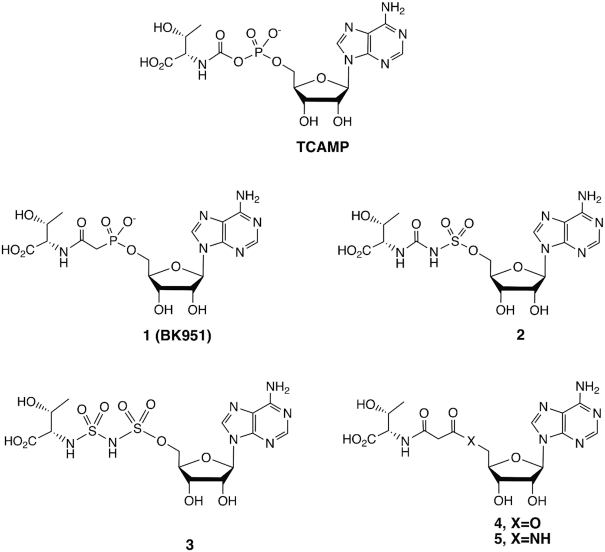
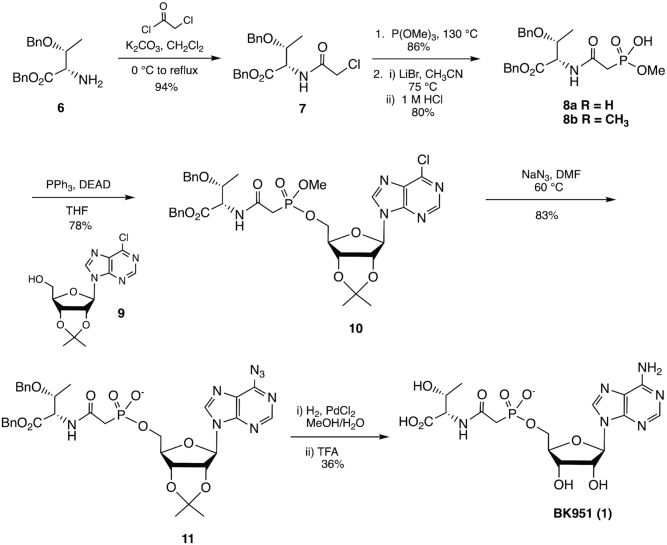
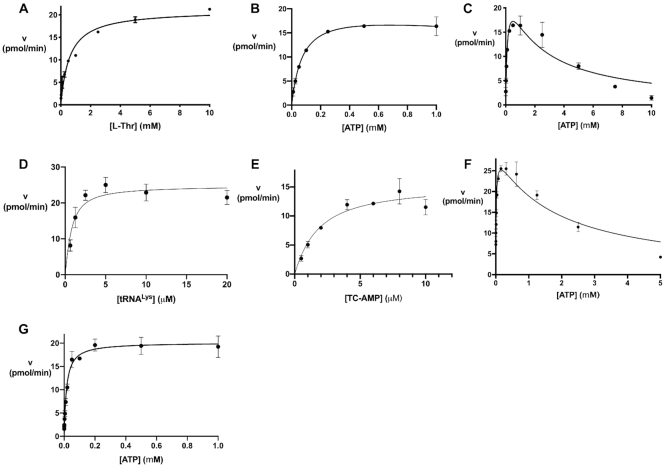
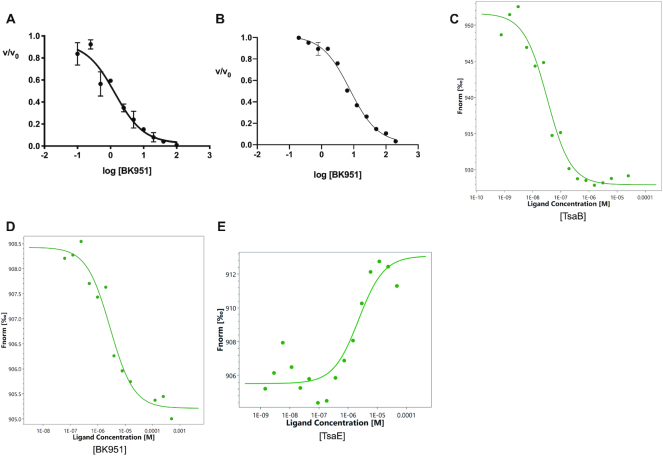
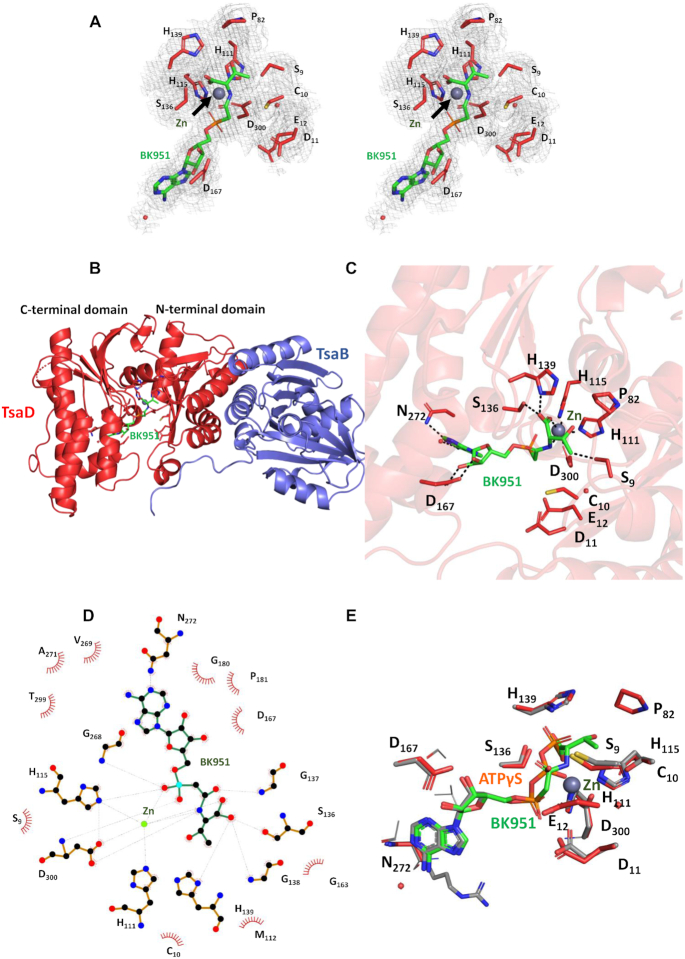
The tRNA modification N6-threonylcarbamoyladenosine (t6A) is universally conserved in all organisms. In bacteria, the biosynthesis of t6A requires four proteins (TsaBCDE) that catalyze the formation of t6A via the unstable intermediate l-threonylcarbamoyl-adenylate (TC-AMP). While the formation and stability of this intermediate has been studied in detail, the mechanism of its transfer to A37 in tRNA is poorly understood. To investigate this step, the structure of the TsaBD heterodimer from Escherichia coli has been solved bound to a stable phosphonate isosteric mimic of TC-AMP. The phosphonate inhibits t6A synthesis in vitro with an IC50 value of 1.3 μM in the presence of millimolar ATP and L-threonine. The inhibitor binds to TsaBD by coordination to the active site Zn atom via an oxygen atom from both the phosphonate and the carboxylate moieties. The bound conformation of the inhibitor suggests that the catalysis exploits a putative oxyanion hole created by a conserved active site loop of TsaD and that the metal essentially serves as a binding scaffold for the intermediate. The phosphonate bound crystal structure should be useful for the rational design of potent, drug-like small molecule inhibitors as mechanistic probes or potentially novel antibiotics.
tRNA 修饰 N6-硫代羰基腺苷(t6A)在所有生物中普遍保守。在细菌中,t6A 的生物合成需要四个蛋白质(TsaBCDE),它们通过不稳定的中间产物 l-苏氨酰碳氨酰腺苷(TC-AMP)催化 t6A 的形成。虽然已经详细研究了该中间产物的形成和稳定性,但它向 tRNA 中 A37 的转移机制知之甚少。为了研究这一步骤,已经解决了来自大肠杆菌的 TsaBD 杂二聚体与 TC-AMP 的稳定膦酸酯同系物模拟物结合的结构。该膦酸酯在存在毫摩尔 ATP 和 L-苏氨酸的情况下,体外抑制 t6A 合成的 IC50 值为 1.3 μM。抑制剂通过与活性位点 Zn 原子配位,通过膦酸酯和羧酸盐部分的一个氧原子与 TsaBD 结合。抑制剂的结合构象表明,该催化作用利用了 TsaD 的保守活性位点环创建的假定的氧阴离子孔,并且金属基本上作为中间产物的结合支架。结合的膦酸酯晶体结构对于合理设计有效的、类似药物的小分子抑制剂作为机制探针或潜在的新型抗生素应该是有用的。