Dipartimento di Scienze Biomediche e Neuromotorie, Alma Mater Studiorum - Università di Bologna.
Università Vita-Salute San Raffaele; Dipartimento di Medicina e Chirurgia, Università degli Studi di Parma.
Acta Biomed. 2020 Nov 9;91(4):e2020144. doi: 10.23750/abm.v91i4.10911.
Testing represents one of the main pillars of public health response to SARS-CoV-2/COVID-19 pandemic. This paper shows how accuracy and utility of testing programs depend not just on the type of tests, but on the context as well.
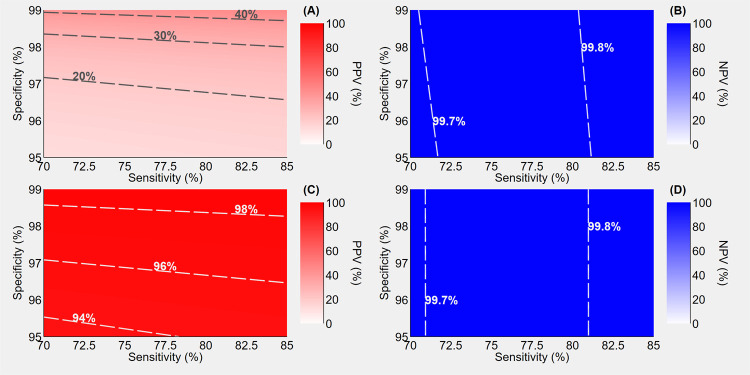
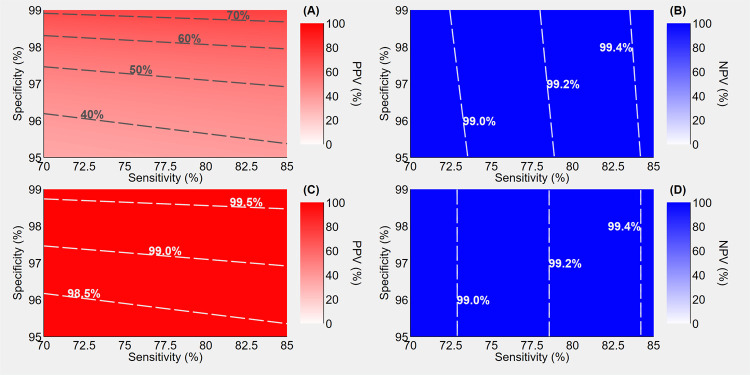
We describe the testing methods that have been developed and the possible testing strategies; then, we focus on two possible methods of population-wide testing, i.e., pooled testing and testing with rapid antigen tests. We show the accuracy of split-pooling method and how, in different pre-test probability scenarios, the positive and negative predictive values vary using rapid antigen tests.
Split-pooling, followed by retesting of negative results, shows a higher sensitivity than individual testing and requires fewer tests. In case of low pre-test probability, a negative result with antigen test could allow to rule out the infection, while, in case of a positive result, a confirmatory molecular test would be necessary.
Test performance alone is not enough to properly choose which test to use; goals and context of the testing program are essential. We advocate the use of pooled strategies when planning population-wide screening, and the weekly use of rapid tests for close periodic monitoring in low-prevalence populations.
检测是公共卫生应对 SARS-CoV-2/COVID-19 大流行的主要支柱之一。本文表明,检测计划的准确性和实用性不仅取决于检测类型,还取决于具体情况。
我们描述了已开发的检测方法和可能的检测策略;然后,我们重点介绍了两种可能的人群检测方法,即混合检测和使用快速抗原检测进行检测。我们展示了分池法的准确性,以及在不同的预检测概率情况下,使用快速抗原检测时阳性和阴性预测值的变化。
分池后对阴性结果进行复测比单独检测具有更高的敏感性,所需的检测次数也更少。在预检测概率较低的情况下,抗原检测的阴性结果可以排除感染,而阳性结果则需要进行分子确证检测。
仅测试性能不足以正确选择要使用的测试;测试计划的目标和背景至关重要。我们主张在规划人群筛查时使用混合策略,并在低流行地区每周使用快速检测进行定期监测。