Department of Veterinary Microbiology and Preventive Medicine, College of Veterinary Medicine, Iowa State University, Ames, IA 50011, USA.
Viruses. 2021 Jan 28;13(2):200. doi: 10.3390/v13020200.
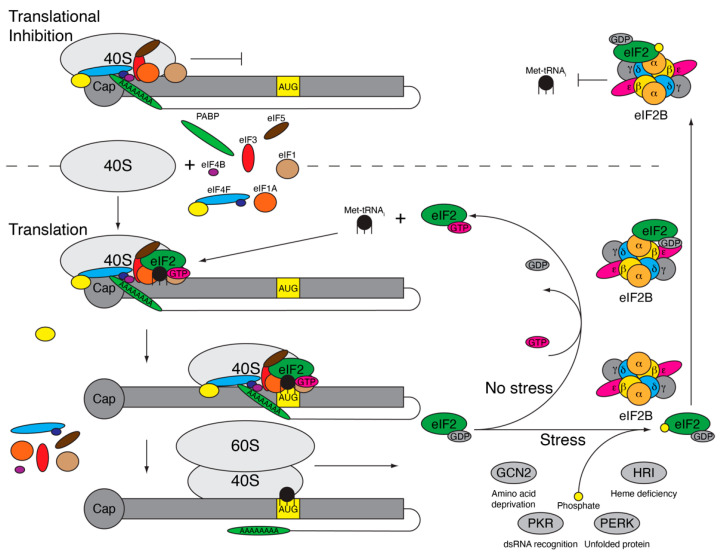
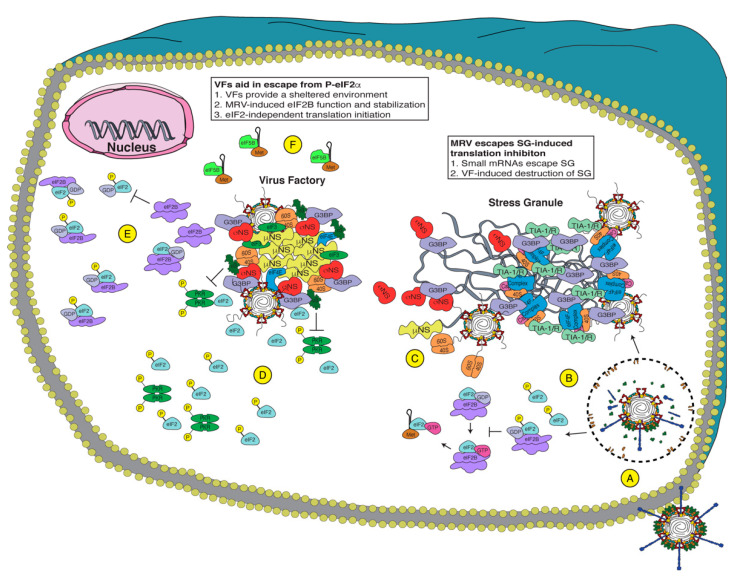
Cells are continually exposed to stressful events, which are overcome by the activation of a number of genetic pathways. The integrated stress response (ISR) is a large component of the overall cellular response to stress, which ultimately functions through the phosphorylation of the alpha subunit of eukaryotic initiation factor-2 (eIF2α) to inhibit the energy-taxing process of translation. This response is instrumental in the inhibition of viral infection and contributes to evolution in viruses. Mammalian orthoreovirus (MRV), an oncolytic virus that has shown promise in over 30 phase I-III clinical trials, has been shown to induce multiple arms within the ISR pathway, but it successfully evades, modulates, or subverts each cellular attempt to inhibit viral translation. MRV has not yet received Food and Drug Administration (FDA) approval for general use in the clinic; therefore, researchers continue to study virus interactions with host cells to identify circumstances where MRV effectiveness in tumor killing can be improved. In this review, we will discuss the ISR, MRV modulation of the ISR, and discuss ways in which MRV interaction with the ISR may increase the effectiveness of cancer therapeutics whose modes of action are altered by the ISR.
细胞不断暴露于应激事件中,这些应激事件通过激活许多遗传途径来克服。整体细胞应激反应(ISR)是应激反应的一个重要组成部分,其最终通过真核起始因子 2α(eIF2α)的α亚基磷酸化来抑制翻译这一耗能过程来发挥作用。这种反应对于抑制病毒感染至关重要,并有助于病毒的进化。哺乳动物正呼肠孤病毒(MRV)是一种溶瘤病毒,在超过 30 项 I-III 期临床试验中显示出良好的效果,已被证明能诱导 ISR 途径中的多个分支,但它成功地逃避、调节或颠覆了每个细胞抑制病毒翻译的尝试。MRV 尚未获得美国食品和药物管理局(FDA)的批准,可在临床上广泛使用;因此,研究人员继续研究病毒与宿主细胞的相互作用,以确定可以提高 MRV 在肿瘤杀伤中的有效性的情况。在这篇综述中,我们将讨论 ISR、MRV 对 ISR 的调节,并讨论 MRV 与 ISR 的相互作用如何增加作用机制被 ISR 改变的癌症治疗药物的有效性。