Cancer Institute, Xuzhou Medical University, 84 West Huaihai Road, Xuzhou, Jiangsu Province, 221002, China.
Center of Clinical Oncology, Affiliated Hospital of Xuzhou Medical University, Xuzhou, China.
J Exp Clin Cancer Res. 2021 Feb 1;40(1):52. doi: 10.1186/s13046-021-01857-2.
Increasing studies have shown that long noncoding RNAs (lncRNAs) are pivotal regulators participating in carcinogenic progression and tumor metastasis in colorectal cancer (CRC). Although lncRNA long intergenic noncoding RNA 460 (LINC00460) has been reported in CRC, the role and molecular mechanism of LINC00460 in CRC progression still requires exploration.
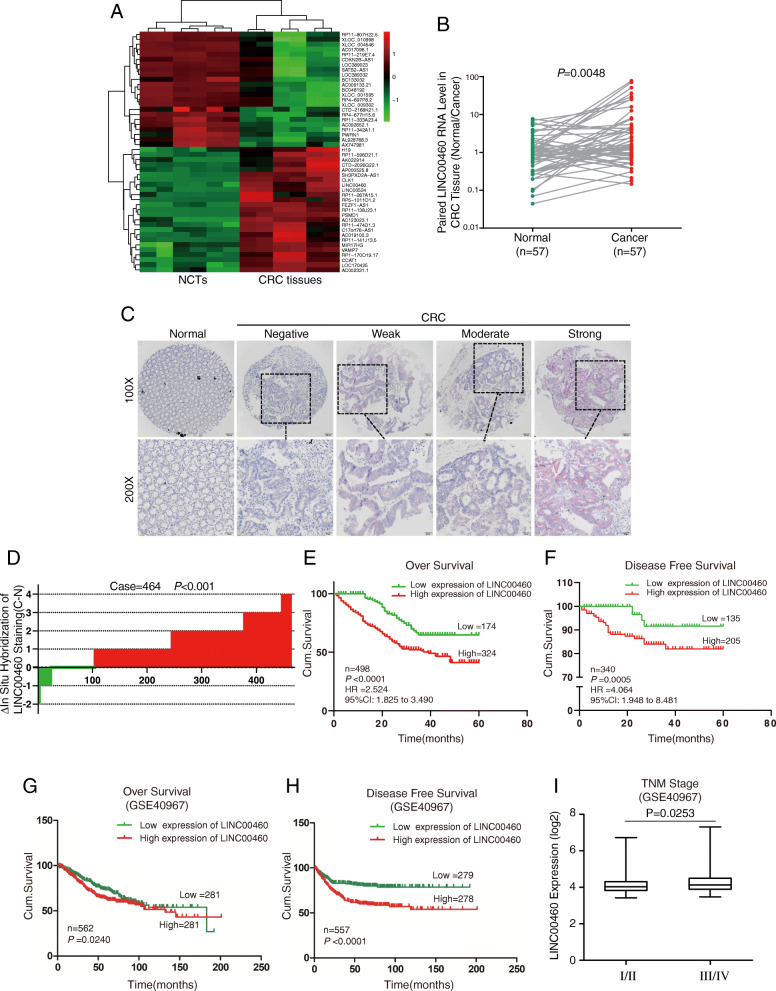
The expression levels of LINC00460 were analyzed by using a tissue microarray containing 498 CRC tissues and their corresponding non-tumor adjacent tissues. The correlations between the LINC00460 expression level and clinicopathological features were evaluated. The functional characterization of the role and molecular mechanism of LINC00460 in CRC was investigated through a series of in vitro and in vivo experiments.
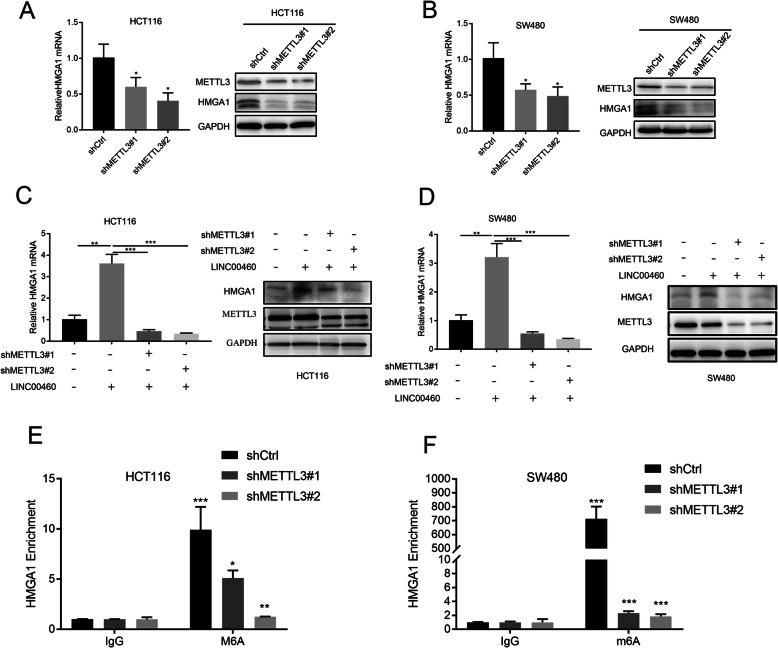
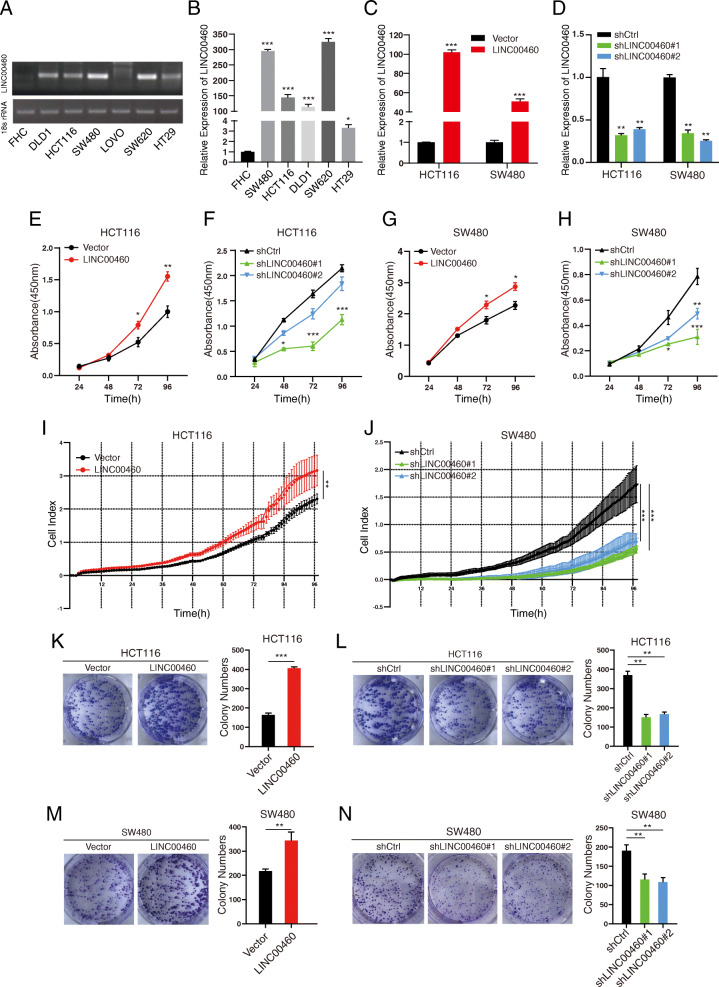
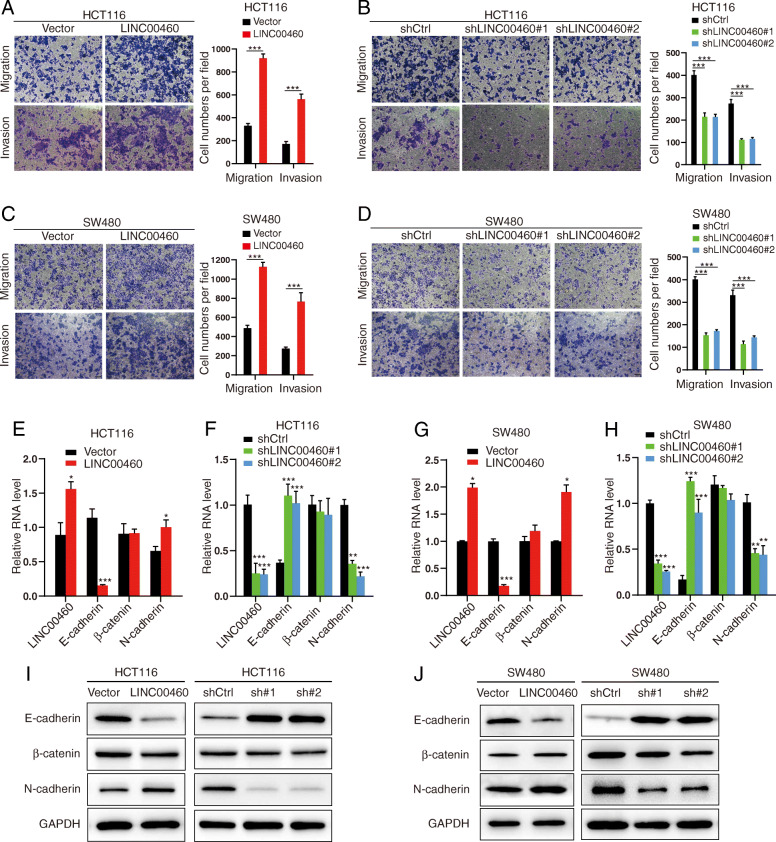
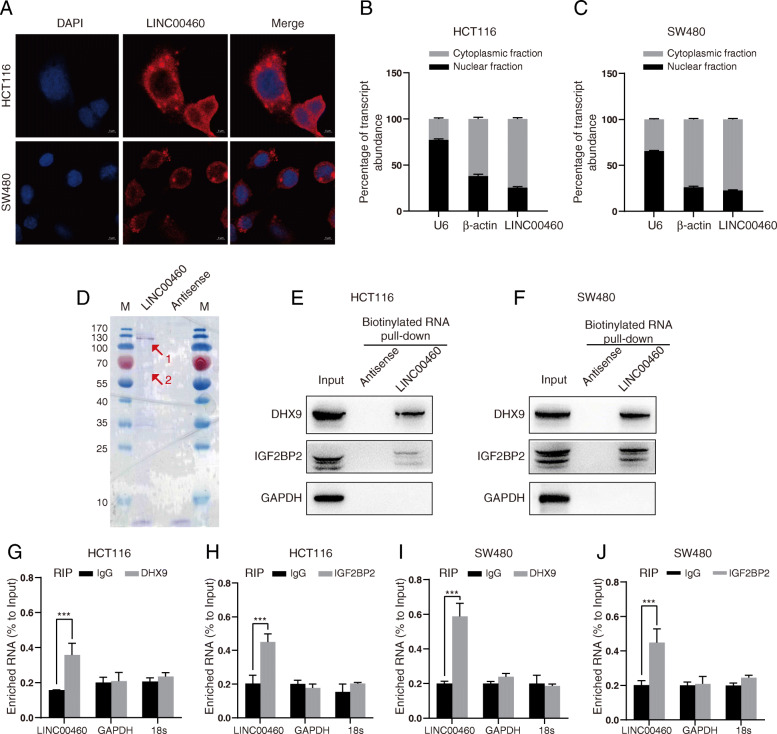
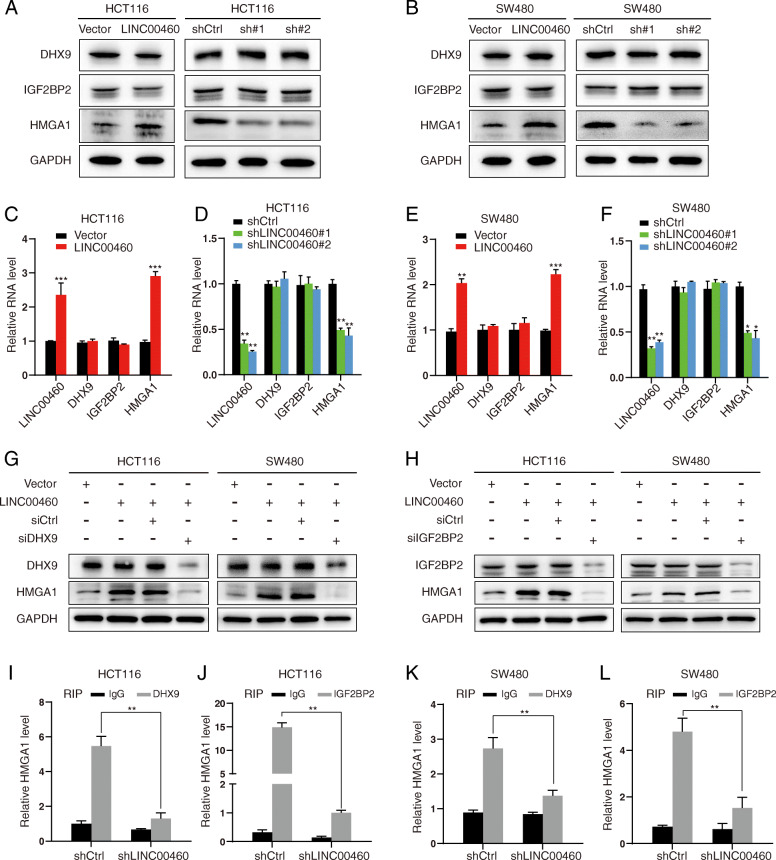
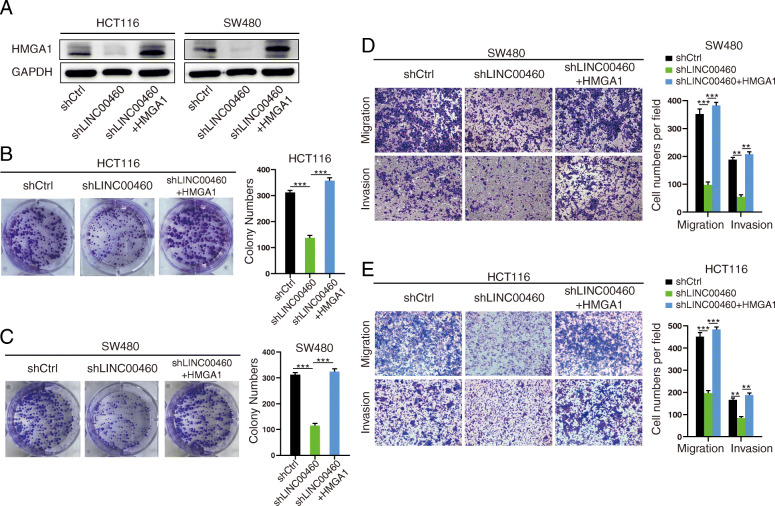
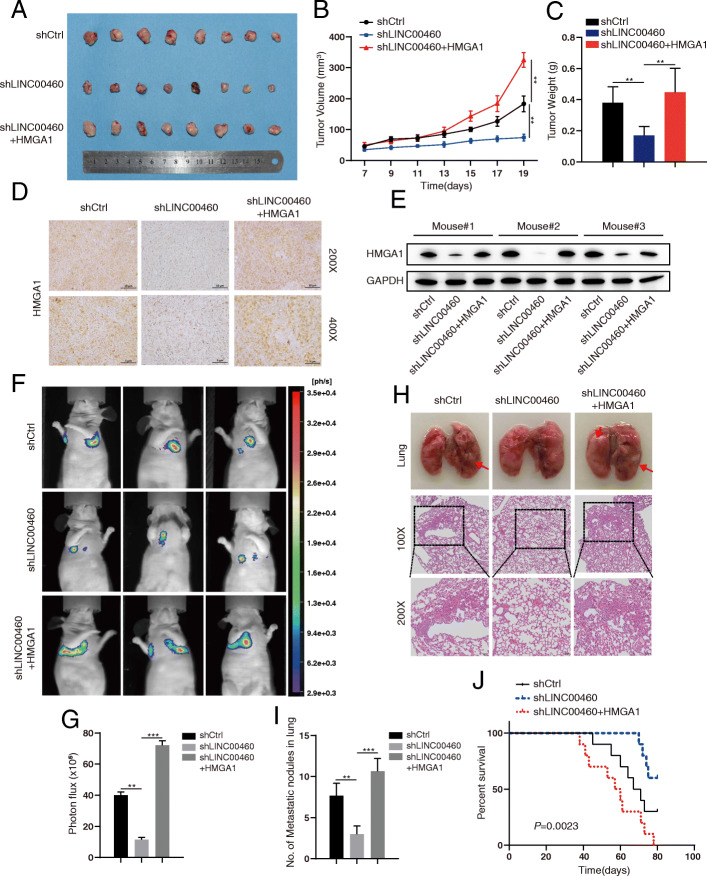
LINC00460 expression was increased in human CRC, and high LINC00460 expression was correlated with poor five-year overall survival and disease-free survival. LINC00460 overexpression sufficiently induced the epithelial-mesenchymal transition and promoted tumor cell proliferation, migration, and invasion in vitro and tumor growth and metastasis in vivo. In addition, LINC00460 enhanced the protein expression of high-mobility group AT-hook 1 (HMGA1) by directly interacting with IGF2BP2 and DHX9 to bind the 3' untranslated region (UTR) of HMGA1 mRNA and increased the stability of HMGA1 mRNA. In addition, the N6-methyladenosine (m6A) modification of HMGA1 mRNA by METTL3 enhanced HMGA1 expression in CRC. Finally, it suggested that HMGA1 was essential for LINC00460-induced cell proliferation, migration, and invasion.
LINC00460 may be a novel oncogene of CRC through interacting with IGF2BP2 and DHX9 and bind to the m6A modified HMGA1 mRNA to enhance the HMGA1 mRNA stability. LINC00460 can serve as a promising predictive biomarker for the diagnosis and prognosis among patients with CRC.
越来越多的研究表明,长非编码 RNA(lncRNA)是参与结直肠癌(CRC)致癌进展和肿瘤转移的关键调节因子。尽管已有研究报道 lncRNA 长基因间非编码 RNA 460(LINC00460)在 CRC 中,但 LINC00460 在 CRC 进展中的作用和分子机制仍需探索。
使用包含 498 例 CRC 组织及其相应非肿瘤相邻组织的组织微阵列分析 LINC00460 的表达水平。评估 LINC00460 表达水平与临床病理特征的相关性。通过一系列体外和体内实验研究 LINC00460 在 CRC 中的作用和分子机制的功能特征。
LINC00460 在人 CRC 中表达增加,高 LINC00460 表达与五年总生存率和无病生存率差相关。LINC00460 过表达在体外充分诱导上皮-间充质转化,并促进肿瘤细胞增殖、迁移和侵袭,在体内促进肿瘤生长和转移。此外,LINC00460 通过直接与 IGF2BP2 和 DHX9 相互作用增强高迁移率族 AT 盒 1(HMGA1)的蛋白表达,结合 HMGA1 mRNA 的 3'非翻译区(UTR)并增加 HMGA1 mRNA 的稳定性。此外,METTL3 对 HMGA1 mRNA 的 N6-甲基腺苷(m6A)修饰增强了 CRC 中 HMGA1 的表达。最后,研究表明 HMGA1 是 LINC00460 诱导的细胞增殖、迁移和侵袭所必需的。
LINC00460 可能通过与 IGF2BP2 和 DHX9 相互作用并结合 m6A 修饰的 HMGA1 mRNA 来增强 HMGA1 mRNA 的稳定性,从而成为 CRC 的一种新型癌基因。LINC00460 可作为 CRC 患者诊断和预后的有前途的预测生物标志物。