Department of Otorhinolaryngology, The First Affiliated Hospital of Chongqing Medical University, No. 1 Youyi Road, Yuzhong District, Chongqing, 400016, China.
J Exp Clin Cancer Res. 2022 Jan 3;41(1):6. doi: 10.1186/s13046-021-02212-1.
Lymph node metastasis is the main cause of poor prognosis of head and neck squamous carcinoma (HNSCC) patients. N6-methyladenosine (m6A) RNA modification is an emerging epigenetic regulatory mechanism for gene expression, and as a novel m6A reader protein, IGF2BP2 has been implicated in tumor progression and metastasis. However, not much is currently known about the functional roles of IGF2BP2 in HNSCC, and whether IGF2BP2 regulates lymphatic metastasis through m6A modification in HNSCC remains to be determined.
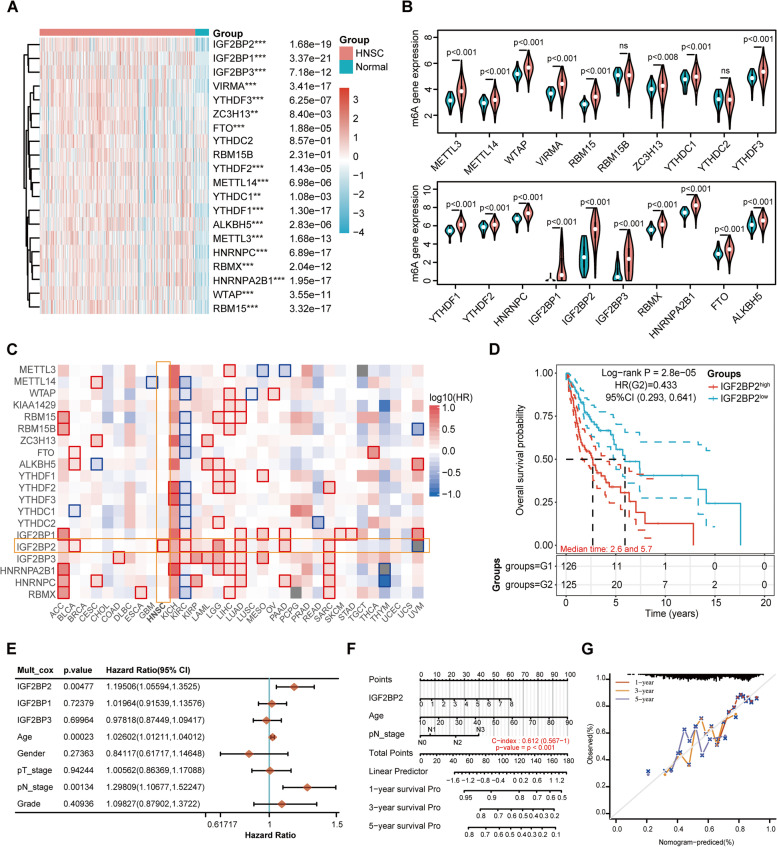
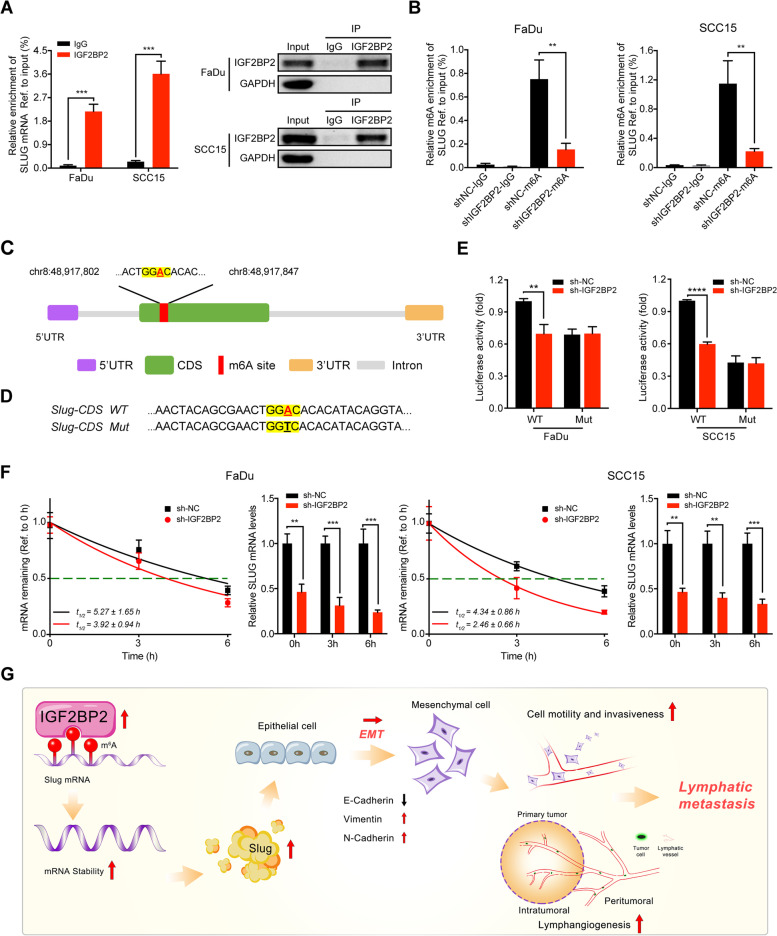
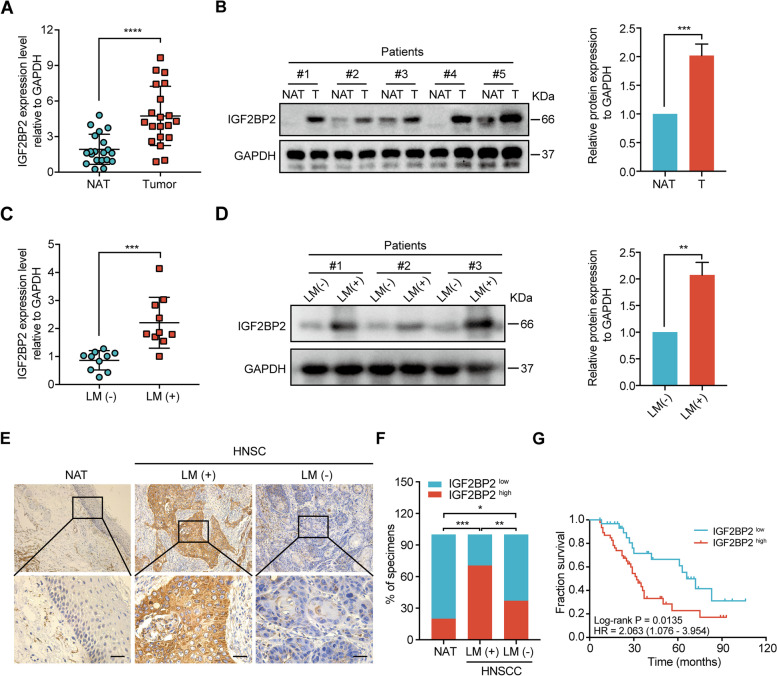
The expression and overall survival (OS) probability of m6A-related regulators in HNSCC were analyzed with The Cancer Genome Atlas (TCGA) dataset and GEPIA website tool, respectively. The expression levels of IGF2BP2 were measured in HNSCC tissues and normal adjacent tissues. To study the effects of IGF2BP2 on HNSCC cell metastasis in vitro and in vivo, gain- and loss- of function methods were employed. RIP, MeRIP, luciferase reporter and mRNA stability assays were performed to explore the epigenetic mechanism of IGF2BP2 in HNSCC.
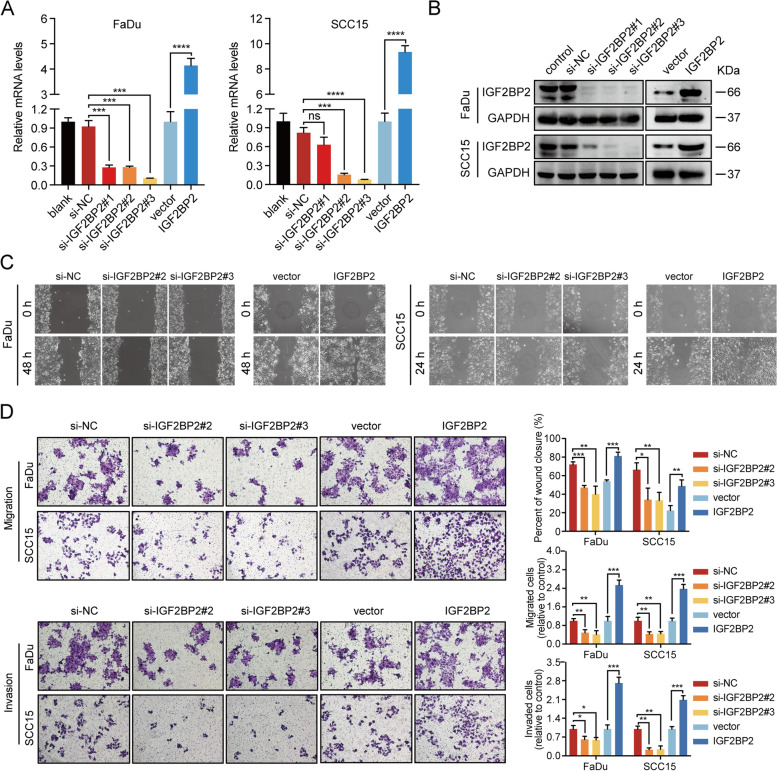
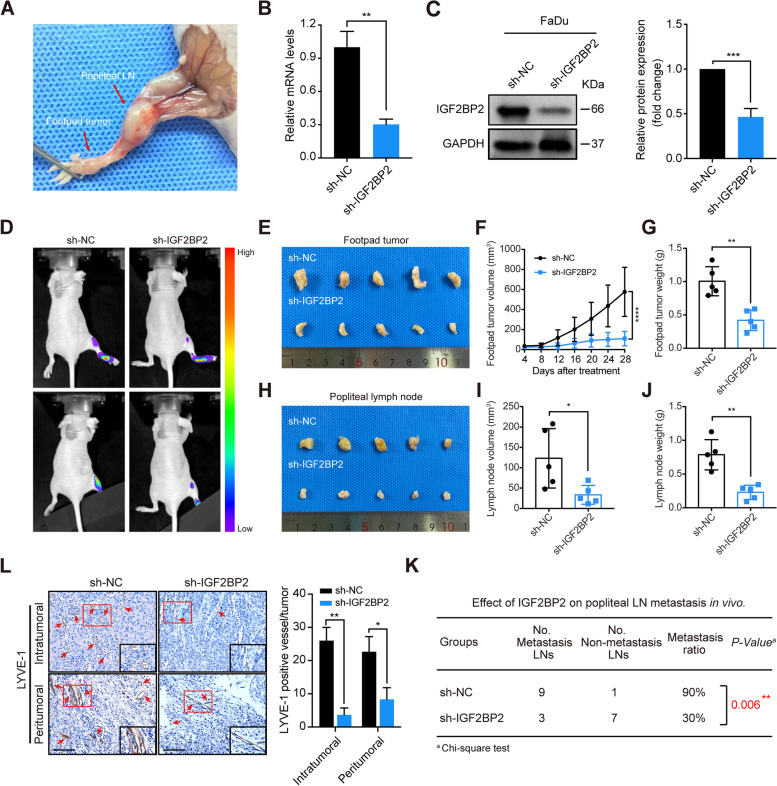
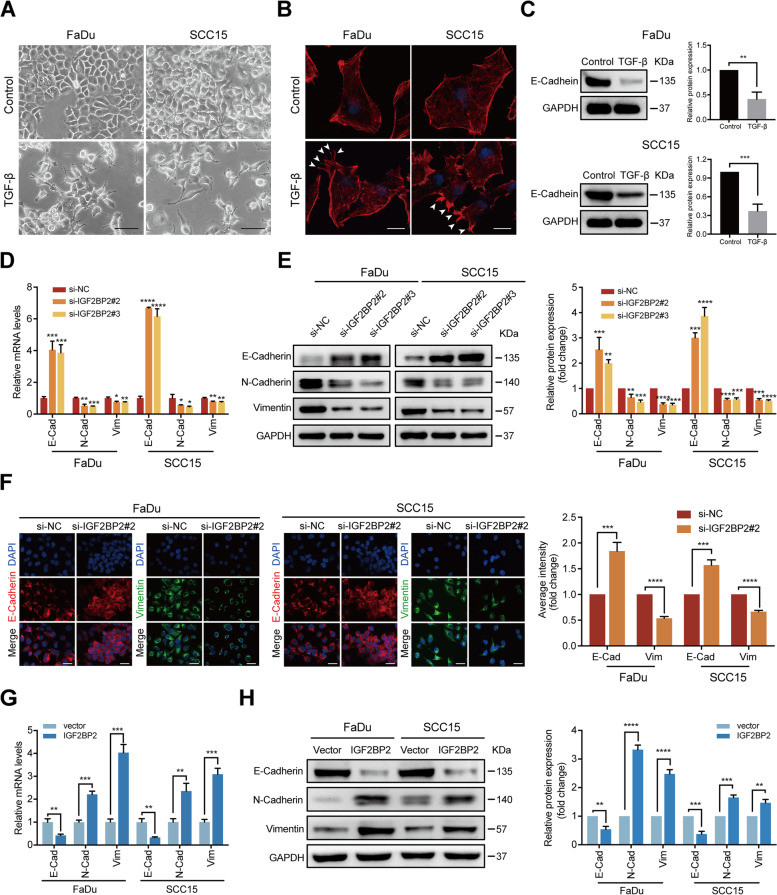
We investigated 20 m6A-related regulators in HNSCC and discovered that only the overexpression of IGF2BP2 was associated with a poor OS probability and an independent prognostic factor for HNSCC patients. Additionally, we demonstrated that IGF2BP2 was overexpressed in HNSCC tissues, and significantly correlated to lymphatic metastasis and poor prognosis. Functional studies have shown that IGF2BP2 promotes both HNSCC cell migration as well as invasion via the epithelial-mesenchymal transition (EMT) process in vitro, and IGF2BP2 knockdown significantly inhibited lymphatic metastasis and lymphangiogenesis in vivo. Mechanistic investigations revealed that Slug, a key EMT-related transcriptional factor, is the direct target of IGF2BP2, and essential for IGF2BP2-regulated EMT and metastasis in HNSCC. Furthermore, we demonstrated that IGF2BP2 recognizes and binds the m6A site in the coding sequence (CDS) region of Slug and promotes its mRNA stability.
Collectively, our study uncovers the oncogenic role and potential mechanism of IGF2BP2, which serves as a m6A reader, in controlling lymphatic metastasis and EMT in HNSCC, suggesting that IGF2BP2 may act as a therapeutic target and prognostic biomarker for HNSCC patients with metastasis.
淋巴结转移是头颈部鳞状细胞癌(HNSCC)患者预后不良的主要原因。N6-甲基腺苷(m6A)RNA 修饰是一种新兴的基因表达表观遗传调控机制,作为一种新型 m6A 读蛋白,IGF2BP2 已被牵连到肿瘤的进展和转移中。然而,目前关于 IGF2BP2 在 HNSCC 中的功能作用知之甚少,IGF2BP2 是否通过 m6A 修饰调节 HNSCC 的淋巴转移仍有待确定。
使用癌症基因组图谱(TCGA)数据集和 GEPIA 网站工具分别分析 HNSCC 中 m6A 相关调节剂的表达和总生存(OS)概率。测量 HNSCC 组织和正常相邻组织中 IGF2BP2 的表达水平。为了研究 IGF2BP2 对 HNSCC 细胞转移的体外和体内影响,采用了增益和缺失功能的方法。进行 RIP、MeRIP、荧光素酶报告和 mRNA 稳定性测定,以探讨 IGF2BP2 在 HNSCC 中的表观遗传机制。
我们研究了 20 个 HNSCC 中的 m6A 相关调节剂,发现只有 IGF2BP2 的过表达与较差的 OS 概率相关,并且是 HNSCC 患者的独立预后因素。此外,我们证明 IGF2BP2 在 HNSCC 组织中过表达,并且与淋巴转移和不良预后显著相关。功能研究表明,IGF2BP2 通过上皮间质转化(EMT)过程在体外促进 HNSCC 细胞的迁移和侵袭,IGF2BP2 敲低显著抑制体内的淋巴转移和淋巴管生成。机制研究表明,Slug,一种关键的 EMT 相关转录因子,是 IGF2BP2 的直接靶标,是 IGF2BP2 调节 HNSCC 中的 EMT 和转移所必需的。此外,我们证明 IGF2BP2 识别并结合 Slug 编码序列(CDS)区域的 m6A 位点,并促进其 mRNA 稳定性。
总的来说,我们的研究揭示了 IGF2BP2 作为 m6A 阅读器在控制 HNSCC 淋巴转移和 EMT 中的致癌作用和潜在机制,表明 IGF2BP2 可能作为治疗靶点和有转移的 HNSCC 患者的预后生物标志物。