School of Health and Related Research (ScHARR), University of Sheffield, Sheffield, UK.
Department of Psychology, University of Southern Denmark, Odense, Denmark.
Diabetologia. 2021 Jun;64(6):1213-1225. doi: 10.1007/s00125-021-05382-x. Epub 2021 Feb 2.
AIMS/HYPOTHESIS: It is generally accepted that hypoglycaemia can negatively impact the quality of life (QoL) of people living with diabetes. However, the suitability of patient-reported outcome measures (PROMs) used to assess this impact is unclear. The aim of this systematic review was to identify PROMs used to assess the impact of hypoglycaemia on QoL and examine their quality and psychometric properties.
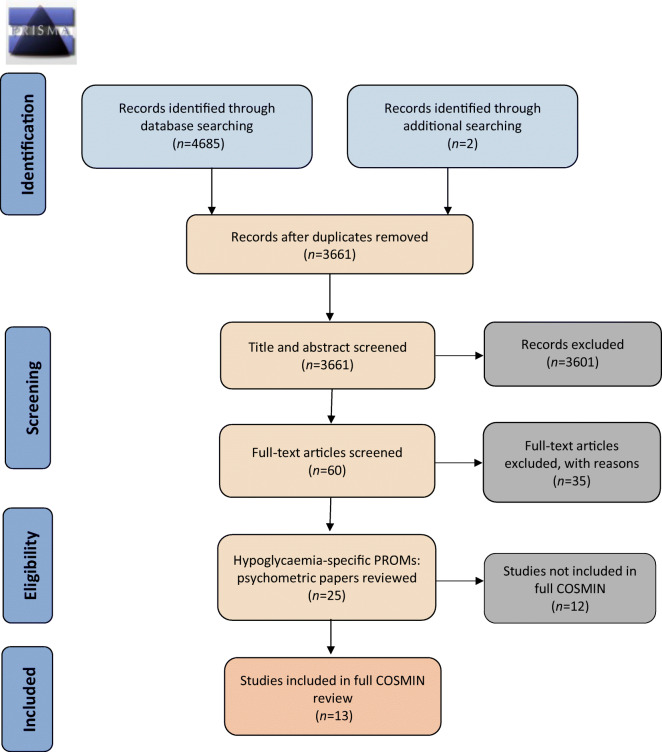
Systematic searches (MEDLINE, EMBASE, PsycINFO, CINAHL and The Cochrane Library databases) were undertaken to identify published articles reporting on the development or validation of hypoglycaemia-specific PROMs used to assess the impact of hypoglycaemia on QoL (or domains of QoL) in adults with diabetes. A protocol was developed and registered with PROSPERO (registration no. CRD42019125153). Studies were assessed for inclusion at title/abstract stage by one reviewer. Full-text articles were scrutinised where considered relevant or potentially relevant or where doubt existed. Twenty per cent of articles were assessed by a second reviewer. PROMS were evaluated, according to COnsensus-based Standards for the selection of health Measurement INstruments (COSMIN) guidelines, and data were extracted independently by two reviewers against COSMIN criteria. Assessment of each PROM's content validity included reviewer ratings (N = 16) of relevance, comprehensiveness and comprehensibility: by researchers (n = 6); clinicians (n = 6); and adults with diabetes (n = 4).
Of the 214 PROMs used to assess the impact of hypoglycaemia on QoL (or domains of QoL), seven hypoglycaemia-specific PROMS were identified and subjected to full evaluation: the Fear of Hypoglycemia 15-item scale; the Hypoglycemia Fear Survey; the Hypoglycemia Fear Survey version II; the Hypoglycemia Fear Survey-II short-form; the Hypoglycemic Attitudes and Behavior Scale; the Hypoglycemic Confidence Scale; and the QoLHYPO questionnaire. Content validity was rated as 'inconsistent', with most as '(very) low' quality, while structural validity was deemed 'unsatisfactory'. Other measurement properties (e.g. reliability) varied, and evidence gaps were apparent across all PROMs. None of the identified studies addressed cross-cultural validity or measurement error. Criterion validity and responsiveness were not assessed due to the lack of a 'gold standard' measure of the impact of hypoglycaemia on QoL against which to compare the PROMS.
CONCLUSIONS/INTERPRETATION: None of the hypoglycaemia-specific PROMs identified had sufficient evidence to demonstrate satisfactory validity, reliability and responsiveness. All were limited in terms of content and structural validity, which restricts their utility for assessing the impact of hypoglycaemia on QoL in the clinic or research setting. Further research is needed to address the content validity of existing PROMs, or the development of new PROM(s), for the purpose of assessing the impact of hypoglycaemia on QoL.
CRD42019125153.
目的/假设:人们普遍认为,低血糖会对糖尿病患者的生活质量(QoL)产生负面影响。然而,用于评估这种影响的患者报告结局测量(PROMs)的适用性尚不清楚。本系统评价的目的是确定用于评估低血糖对 QoL 影响的 PROMs,并检查其质量和心理测量特性。
系统检索(MEDLINE、EMBASE、PsycINFO、CINAHL 和 The Cochrane Library 数据库),以确定报告开发或验证用于评估糖尿病成人低血糖对 QoL(或 QoL 领域)影响的低血糖特异性 PROMs 的已发表文章。制定了一项方案并在 PROSPERO(注册号:CRD42019125153)中进行了注册。由一名评审员在标题/摘要阶段评估纳入标准。对认为相关或可能相关或存在疑问的全文文章进行仔细审查。20%的文章由第二名评审员进行评估。根据共识基础选择健康测量仪器标准(COSMIN)指南对 PROMs 进行评估,并由两名评审员根据 COSMIN 标准独立提取数据。对每个 PROM 的内容有效性的评估包括 16 名评审员对相关性、全面性和可理解性的评分(N=16):研究人员(n=6);临床医生(n=6);和糖尿病患者(n=4)。
在用于评估低血糖对 QoL 影响的 214 个 PROMs 中,确定了 7 个低血糖特异性 PROMs 并进行了全面评估:15 项恐惧低血糖量表;低血糖恐惧调查;低血糖恐惧调查 II 版;低血糖恐惧调查 II 简式;低血糖态度和行为量表;低血糖信心量表;和 QoLHYPO 问卷。内容有效性被评为“不一致”,大多数为“(非常)低”质量,而结构有效性被认为“不令人满意”。其他测量特性(例如可靠性)各不相同,所有 PROMs 都存在明显的证据差距。没有一项确定的研究涉及跨文化有效性或测量误差。由于缺乏可与 PROMs 相比较的评估低血糖对 QoL 影响的“金标准”测量方法,因此无法评估效标关联度和反应度。
结论/解释:确定的低血糖特异性 PROMs 均缺乏足够的证据来证明其具有令人满意的有效性、可靠性和反应度。所有这些都在内容和结构有效性方面存在局限性,这限制了它们在临床或研究环境中评估低血糖对 QoL 的影响的实用性。需要进一步研究以解决现有 PROMs 的内容有效性问题,或开发用于评估低血糖对 QoL 影响的新 PROMs。
PROSPERO 注册号:CRD42019125153。