Department of Molecular and Integrative Physiology, University of Kansas Medical Center, Kansas City, KS 661601, USA.
Int J Mol Sci. 2021 Jan 26;22(3):1191. doi: 10.3390/ijms22031191.
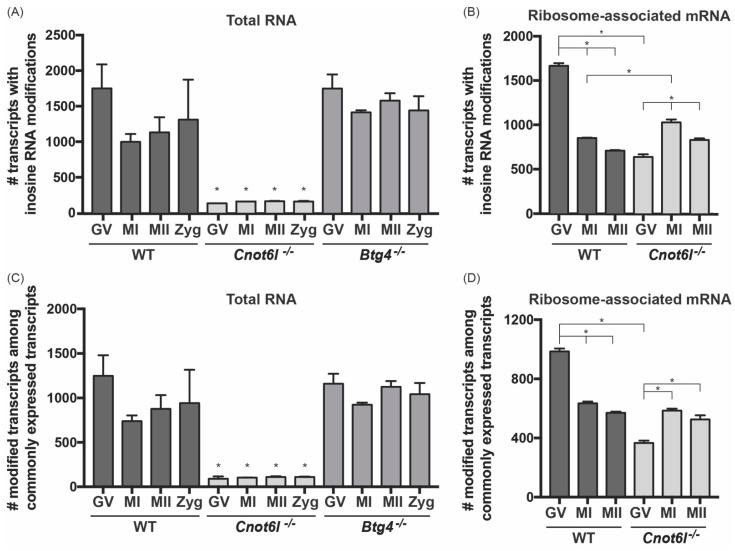
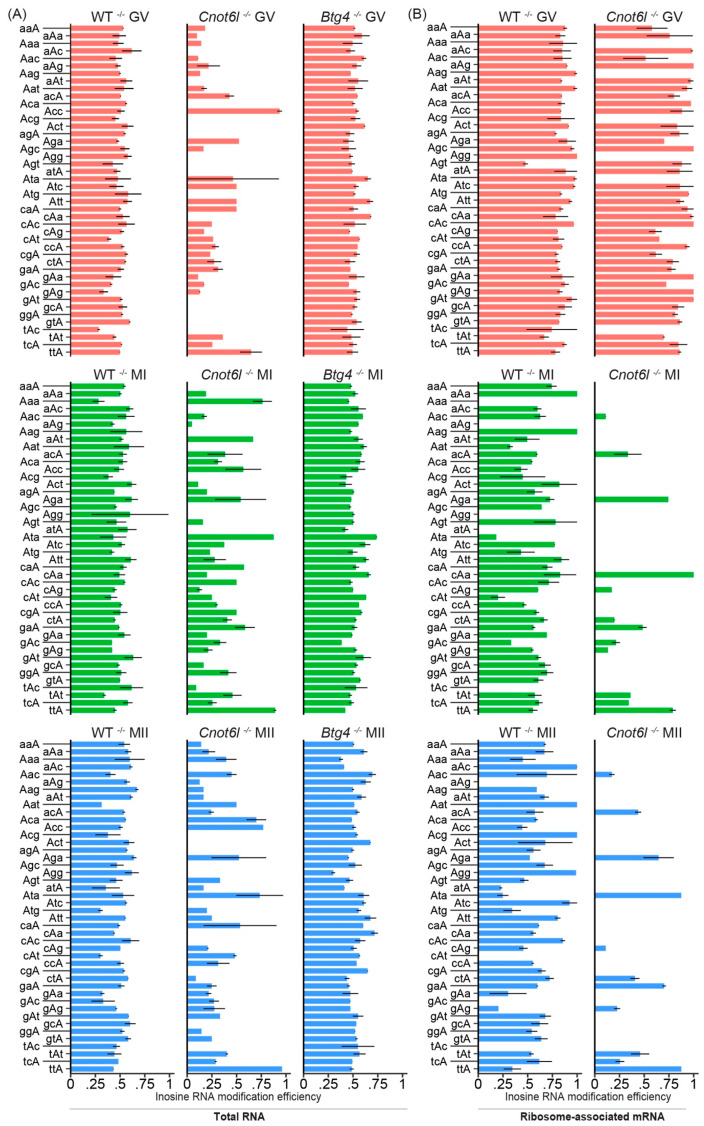
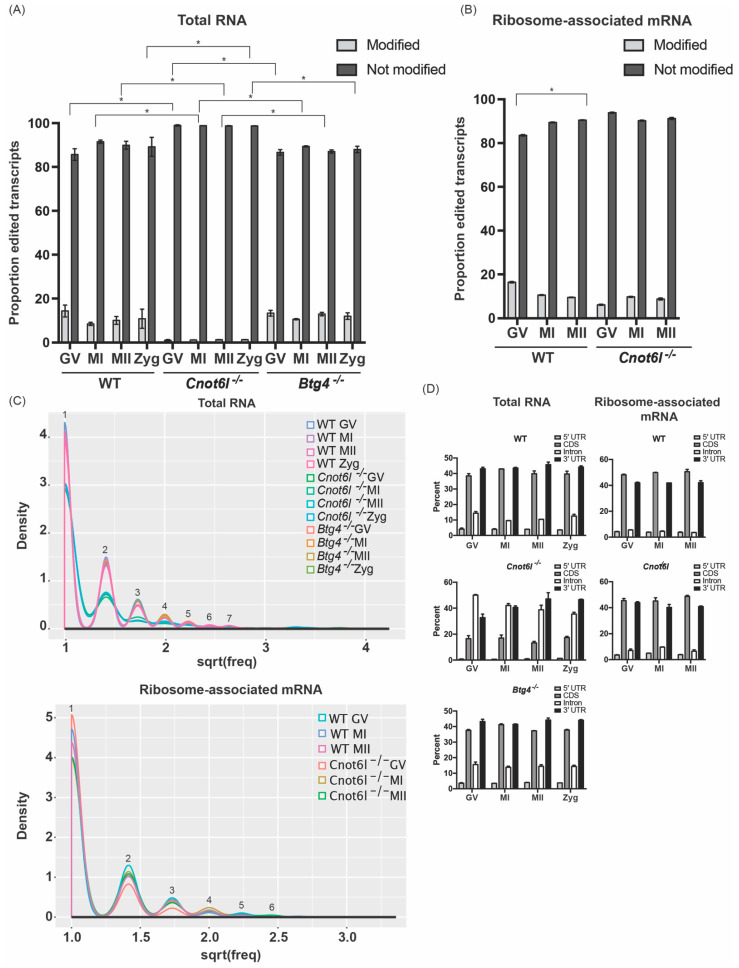
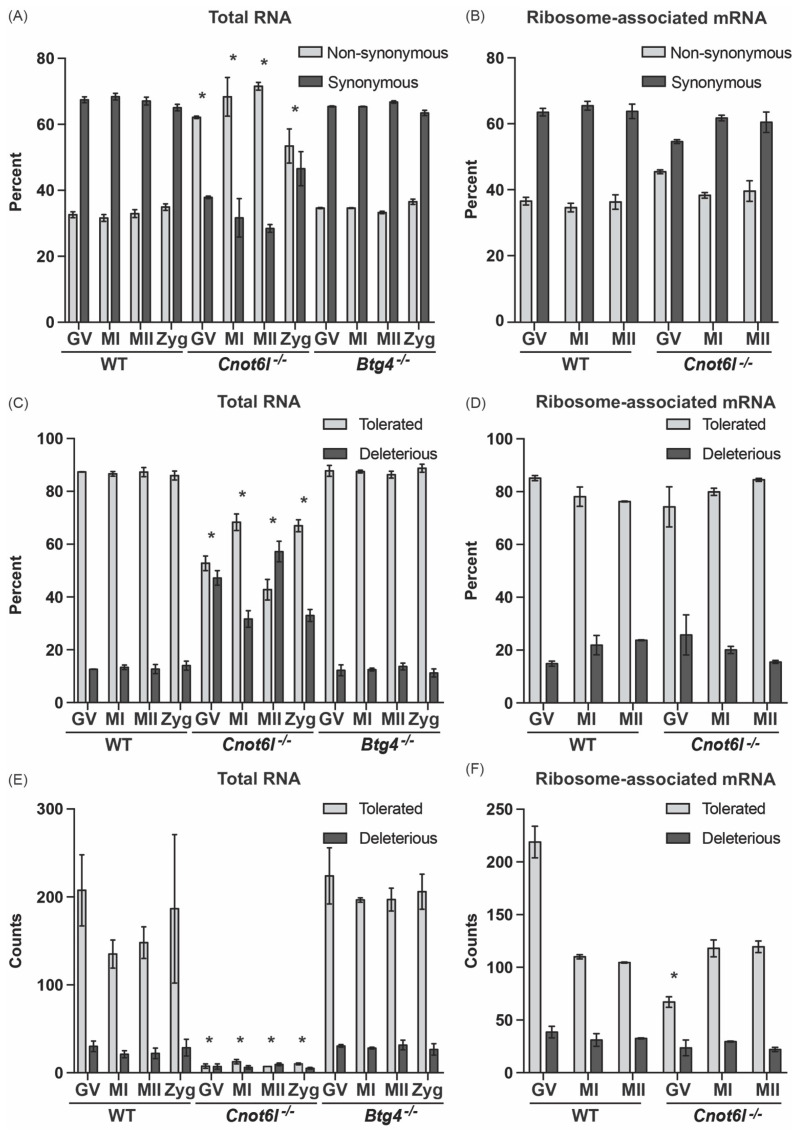
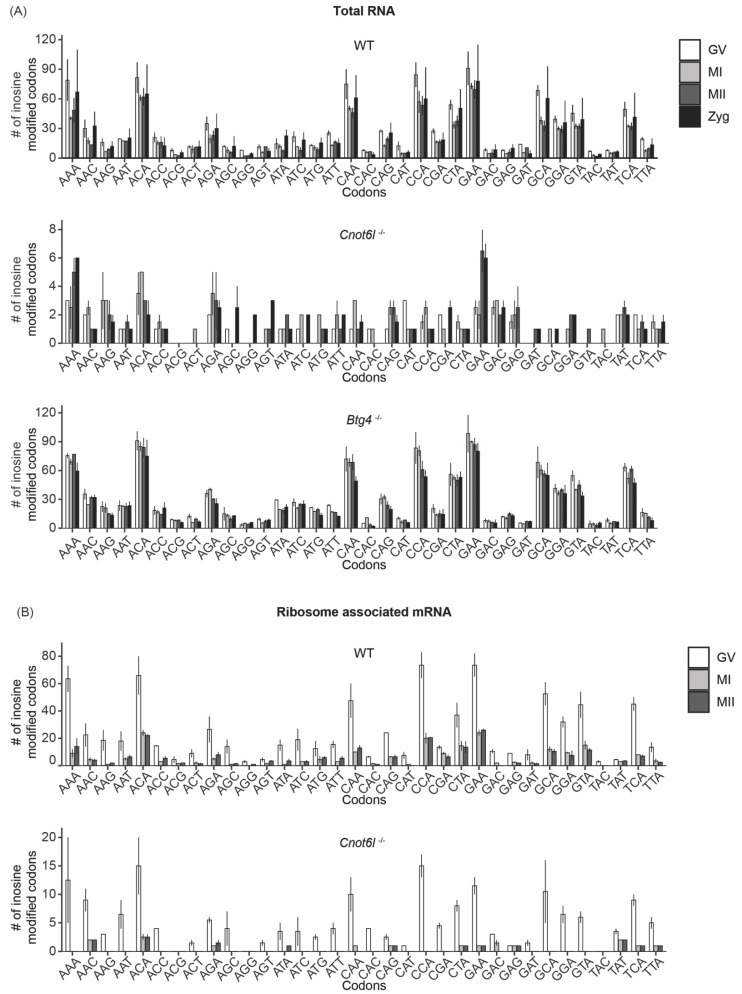
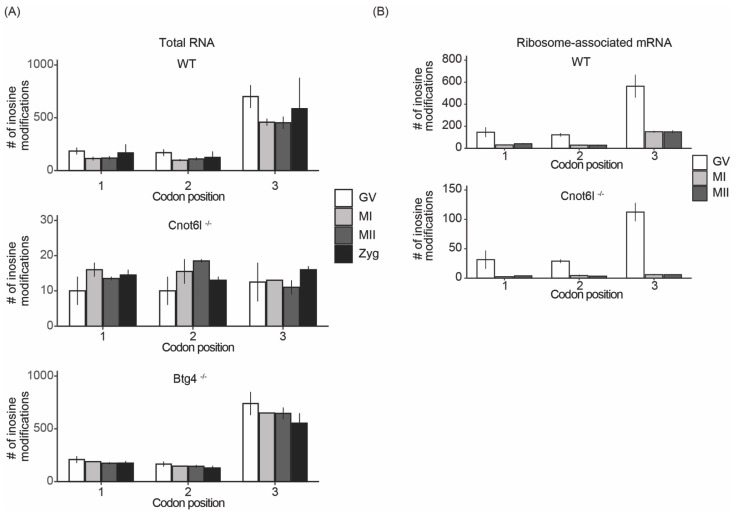
Mammalian oocytes must degrade maternal transcripts through a process called translational mRNA decay, in which maternal mRNA undergoes translational activation, followed by deadenylation and mRNA decay. Once a transcript is translationally activated, it becomes deadenylated by the CCR4-NOT complex. Knockout of CCR4-NOT Transcription Complex Subunit 6 Like (), a deadenylase within the CCR4-NOT complex, results in mRNA decay defects during metaphase I (MI) entry. Knockout of B-cell translocation gene-4 (), an adaptor protein of the CCR4-NOT complex, results in mRNA decay defects following fertilization. Therefore, mechanisms controlling mRNA turnover have significant impacts on oocyte competence and early embryonic development. Post-transcriptional inosine RNA modifications can impact mRNA stability, possibly through a translation mechanism. Here, we assessed inosine RNA modifications in oocytes, eggs, and embryos from and mice, which display stabilization of mRNA and over-translation of the stabilized transcripts. If inosine modifications have a role in modulating RNA stability, we hypothesize that in these mutant backgrounds, we would observe changes or a disruption in inosine mRNA modifications. To test this, we used a computational approach to identify inosine RNA modifications in total and polysomal RNA-seq data during meiotic maturation (GV, MI, and MII stages). We observed pronounced depletion of inosine mRNA modifications in samples from , but not in mice. Additionally, analysis of ribosome-associated RNA revealed clearance of inosine modified mRNA. These observations suggest a novel mechanism of mRNA clearance during oocyte maturation, in which inosine-containing transcripts decay in an independent, but parallel mechanism to CCR4-NOT deadenylation.
哺乳动物卵母细胞必须通过一种称为翻译 mRNA 衰减的过程来降解母体转录本,在此过程中母体 mRNA 经历翻译激活,随后是去腺苷酸化和 mRNA 衰减。一旦转录本被翻译激活,它就会被 CCR4-NOT 复合物中的脱腺苷酸酶降解。CCR4-NOT 转录复合物亚基 6 样()的敲除,一种 CCR4-NOT 复合物中的脱腺苷酸酶,导致在进入中期 I(MI)时出现 mRNA 衰减缺陷。B 细胞易位基因-4()的敲除,一种 CCR4-NOT 复合物的衔接蛋白,导致受精后 mRNA 衰减缺陷。因此,控制 mRNA 周转的机制对卵母细胞的能力和早期胚胎发育有重大影响。转录后肌苷 RNA 修饰可以通过翻译机制影响 mRNA 的稳定性。在这里,我们评估了来自和的卵母细胞、卵子和胚胎中的肌苷 RNA 修饰,这些突变体显示 mRNA 稳定并过度翻译稳定的转录本。如果肌苷修饰在调节 RNA 稳定性方面起作用,我们假设在这些突变背景下,我们会观察到肌苷 mRNA 修饰的变化或破坏。为了验证这一点,我们使用计算方法在减数分裂成熟(GV、MI 和 MII 阶段)过程中鉴定总和多核糖体 RNA-seq 数据中的肌苷 RNA 修饰。我们观察到来自的样本中肌苷 mRNA 修饰明显耗尽,但在的样本中没有。此外,对核糖体相关 RNA 的分析显示肌苷修饰的 mRNA 清除。这些观察结果表明,在卵母细胞成熟过程中存在一种新的 mRNA 清除机制,其中含有肌苷的转录本以独立但平行的机制在 CCR4-NOT 去腺苷酸化降解。