Matsushita Yuki, Nakagawa Hayato, Koike Kazuhiko
Department of Gastroenterology, The University of Tokyo, 7-3-1 Hongo, Bunkyo-ku, Tokyo 113-8655, Japan.
Cancers (Basel). 2021 Jan 26;13(3):474. doi: 10.3390/cancers13030474.
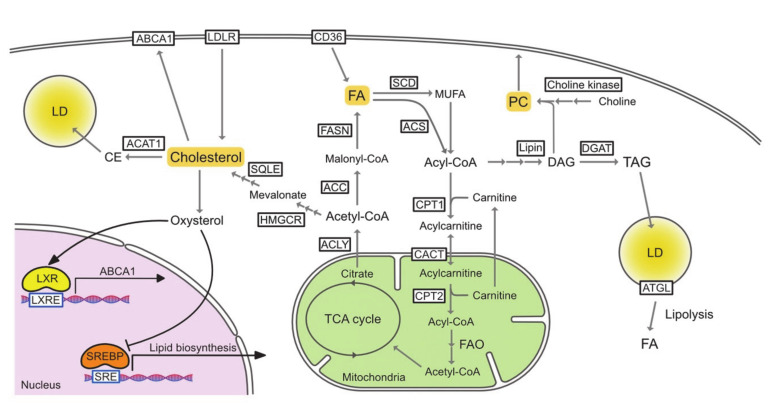
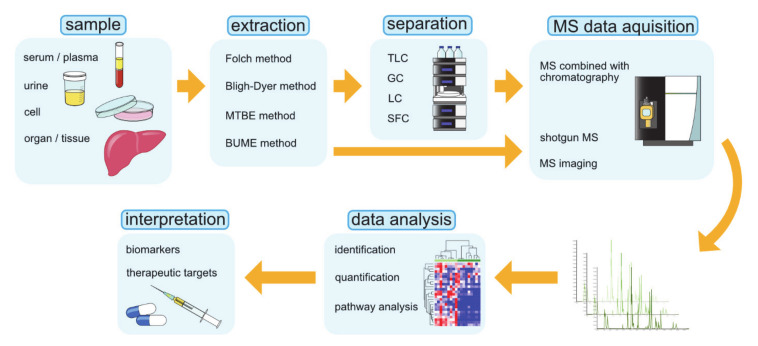
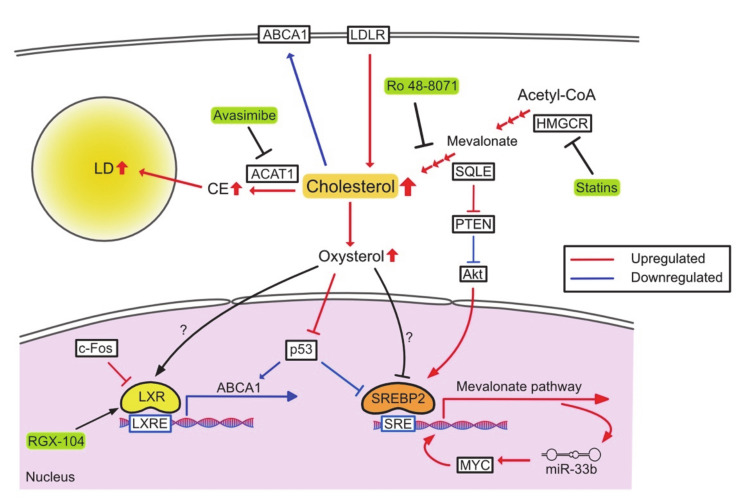
Lipids in our body, which are mainly composed of fatty acids, triacylglycerides, sphingolipids, phospholipids, and cholesterol, play important roles at the cellular level. In addition to being energy sources and structural components of biological membranes, several types of lipids serve as signaling molecules or secondary messengers. Metabolic reprogramming has been recognized as a hallmark of cancer, but changes in lipid metabolism in cancer have received less attention compared to glucose or glutamine metabolism. However, recent innovations in mass spectrometry- and chromatography-based lipidomics technologies have increased our understanding of the role of lipids in cancer. Changes in lipid metabolism, so-called "lipid metabolic reprogramming", can affect cellular functions including the cell cycle, proliferation, growth, and differentiation, leading to carcinogenesis. Moreover, interactions between cancer cells and adjacent immune cells through altered lipid metabolism are known to support tumor growth and progression. Characterization of cancer-specific lipid metabolism can be used to identify novel metabolic targets for cancer treatment, and indeed, several clinical trials are currently underway. Thus, we discuss the latest findings on the roles of lipid metabolism in cancer biology and introduce current advances in lipidomics technologies, focusing on their applications in cancer research.
我们身体中的脂质主要由脂肪酸、三酰甘油、鞘脂、磷脂和胆固醇组成,在细胞水平上发挥着重要作用。除了作为生物膜的能量来源和结构成分外,几种类型的脂质还充当信号分子或第二信使。代谢重编程已被认为是癌症的一个标志,但与葡萄糖或谷氨酰胺代谢相比,癌症中脂质代谢的变化受到的关注较少。然而,基于质谱和色谱的脂质组学技术的最新创新增加了我们对脂质在癌症中作用的理解。脂质代谢的变化,即所谓的“脂质代谢重编程”,可影响包括细胞周期、增殖、生长和分化在内的细胞功能,从而导致癌症发生。此外,已知癌细胞与相邻免疫细胞之间通过改变的脂质代谢相互作用可支持肿瘤生长和进展。癌症特异性脂质代谢的特征可用于识别癌症治疗的新代谢靶点,事实上,目前正在进行几项临床试验。因此,我们讨论了脂质代谢在癌症生物学中作用的最新发现,并介绍了脂质组学技术的当前进展,重点是它们在癌症研究中的应用。