Cain Foundation Laboratories, Jan and Dan Duncan Neurological Research Institute at Texas Children's Hospital, Houston, TX 77030.
Department of Pediatrics, Baylor College of Medicine, Houston, TX 77030.
eNeuro. 2021 Mar 24;8(2). doi: 10.1523/ENEURO.0345-20.2020. Print 2021 Mar-Apr.
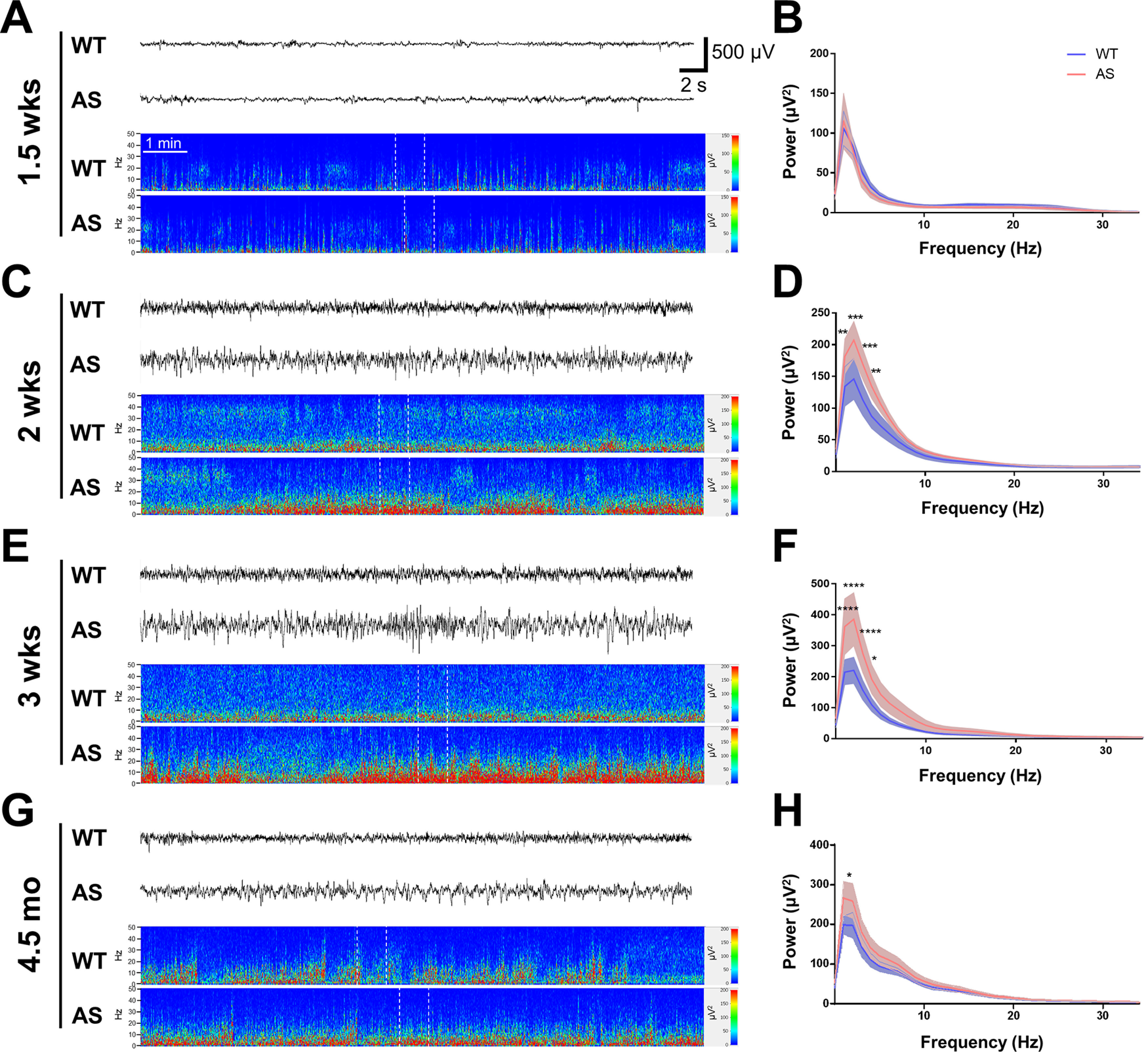
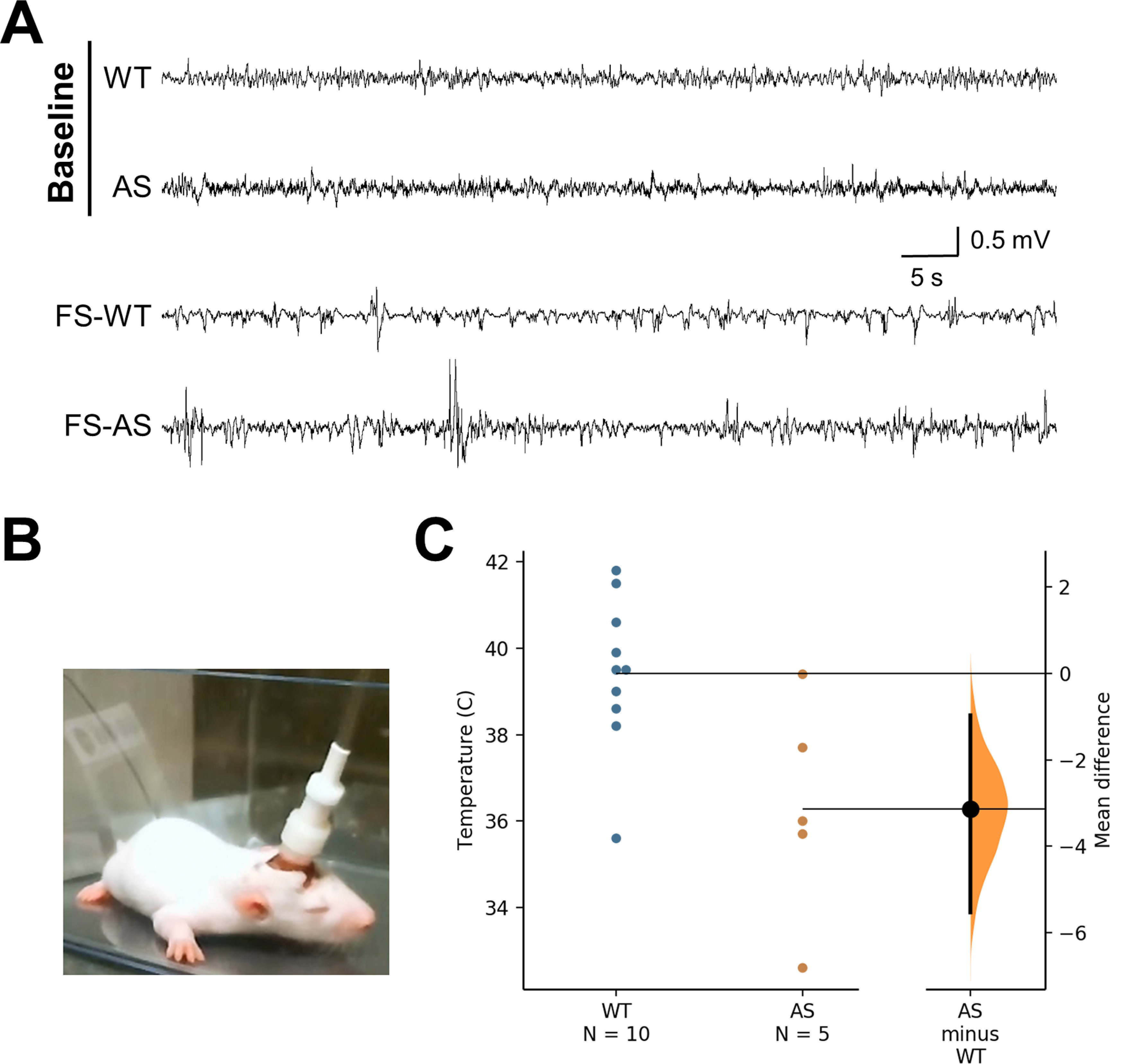
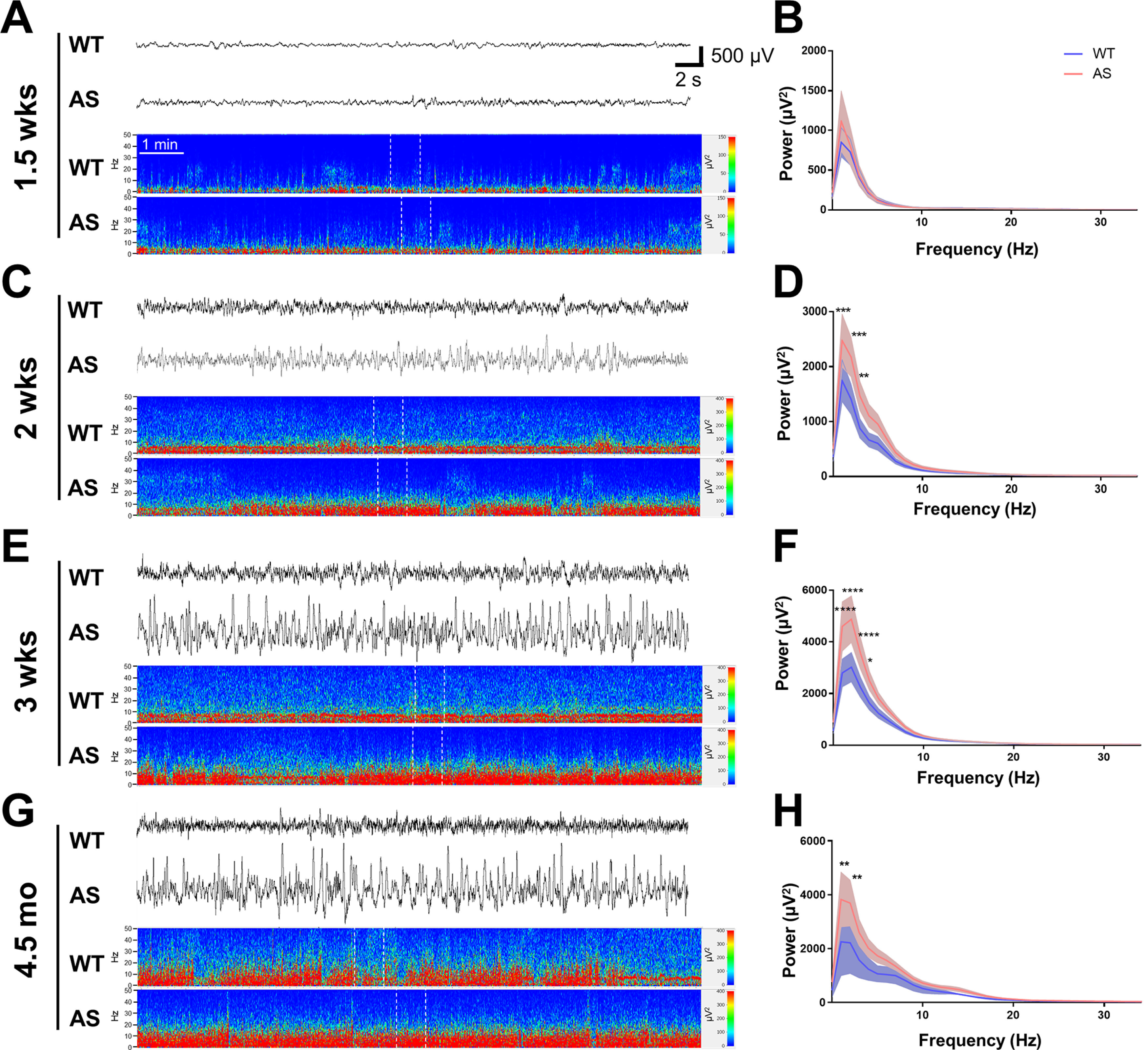
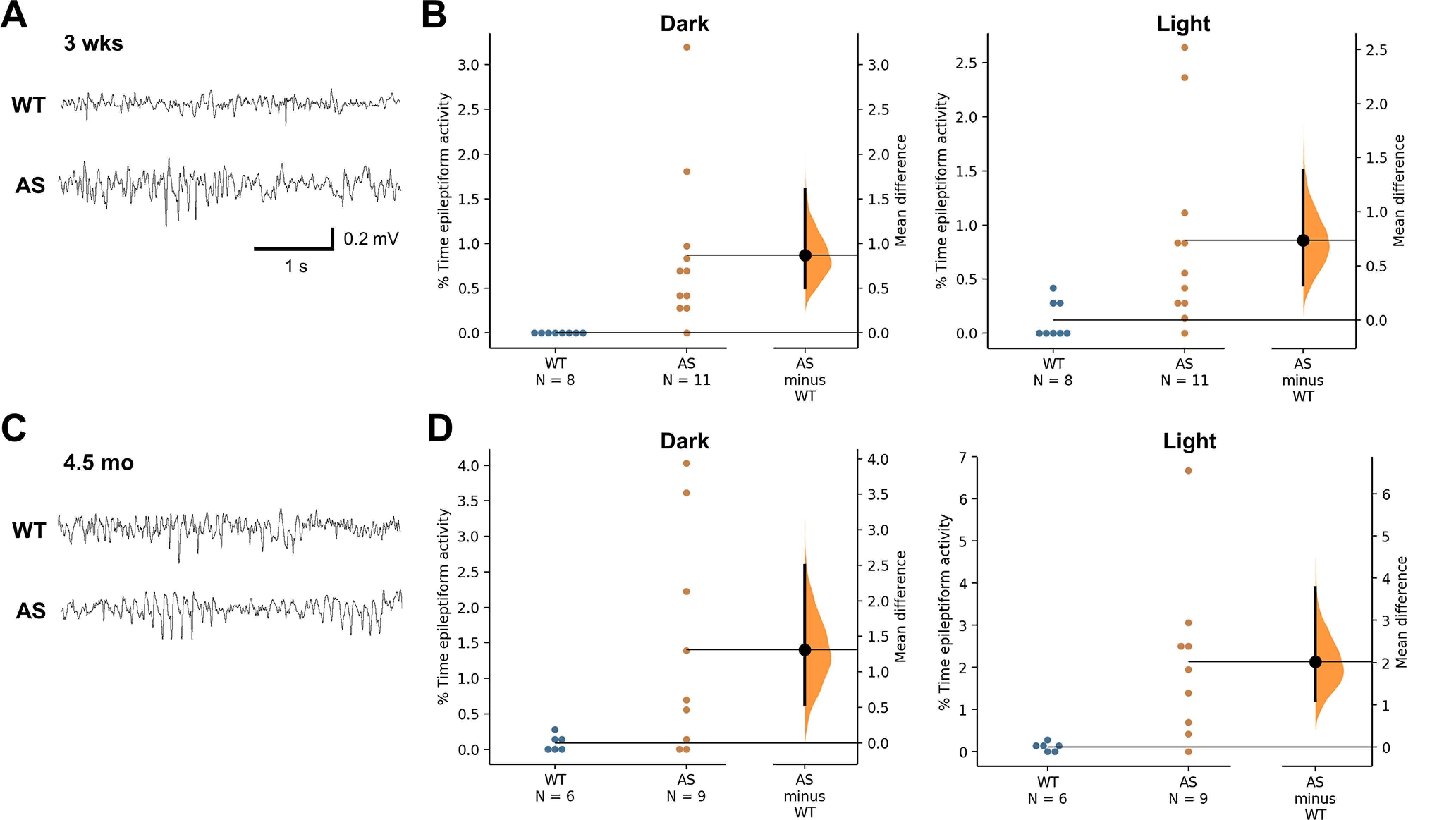
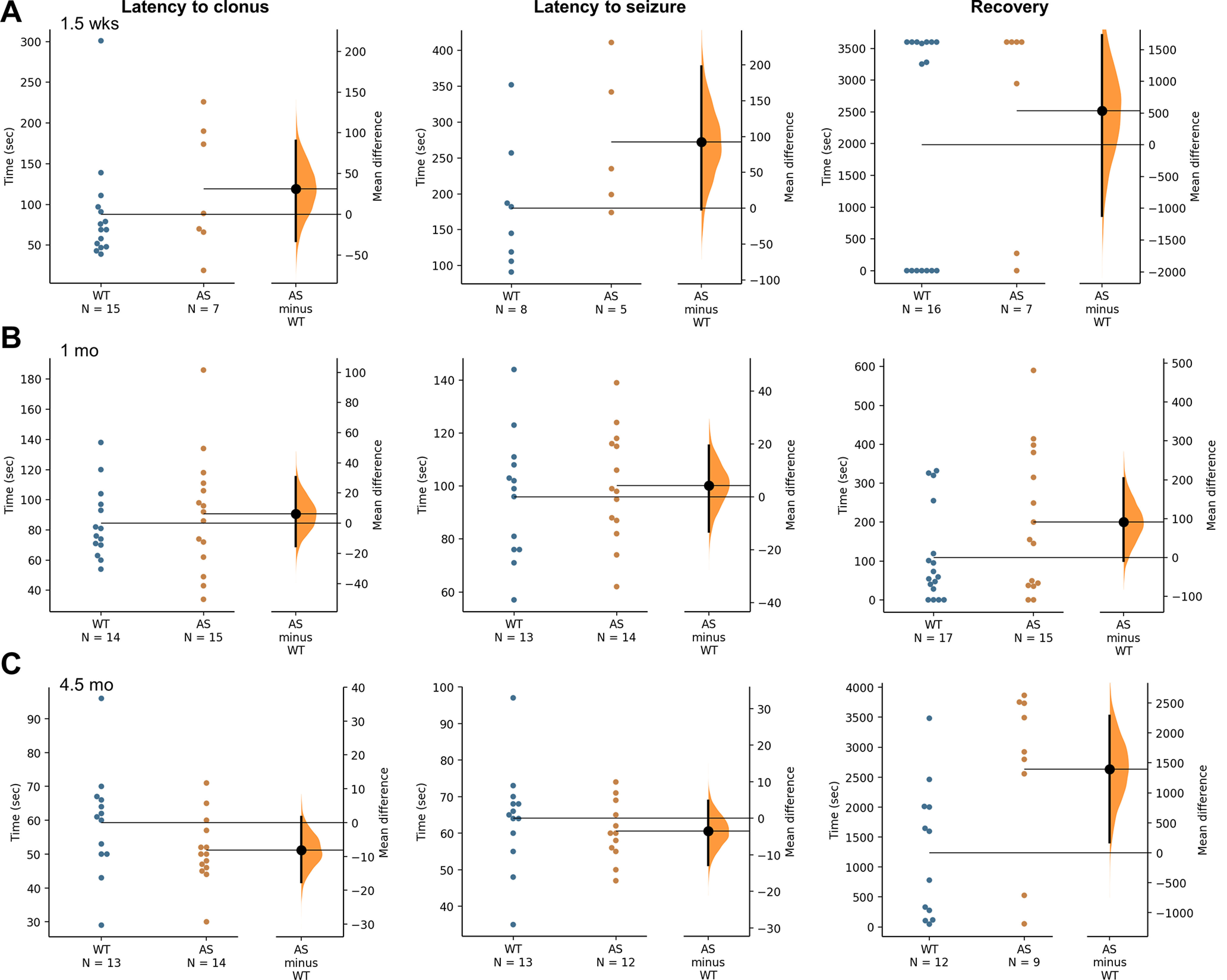
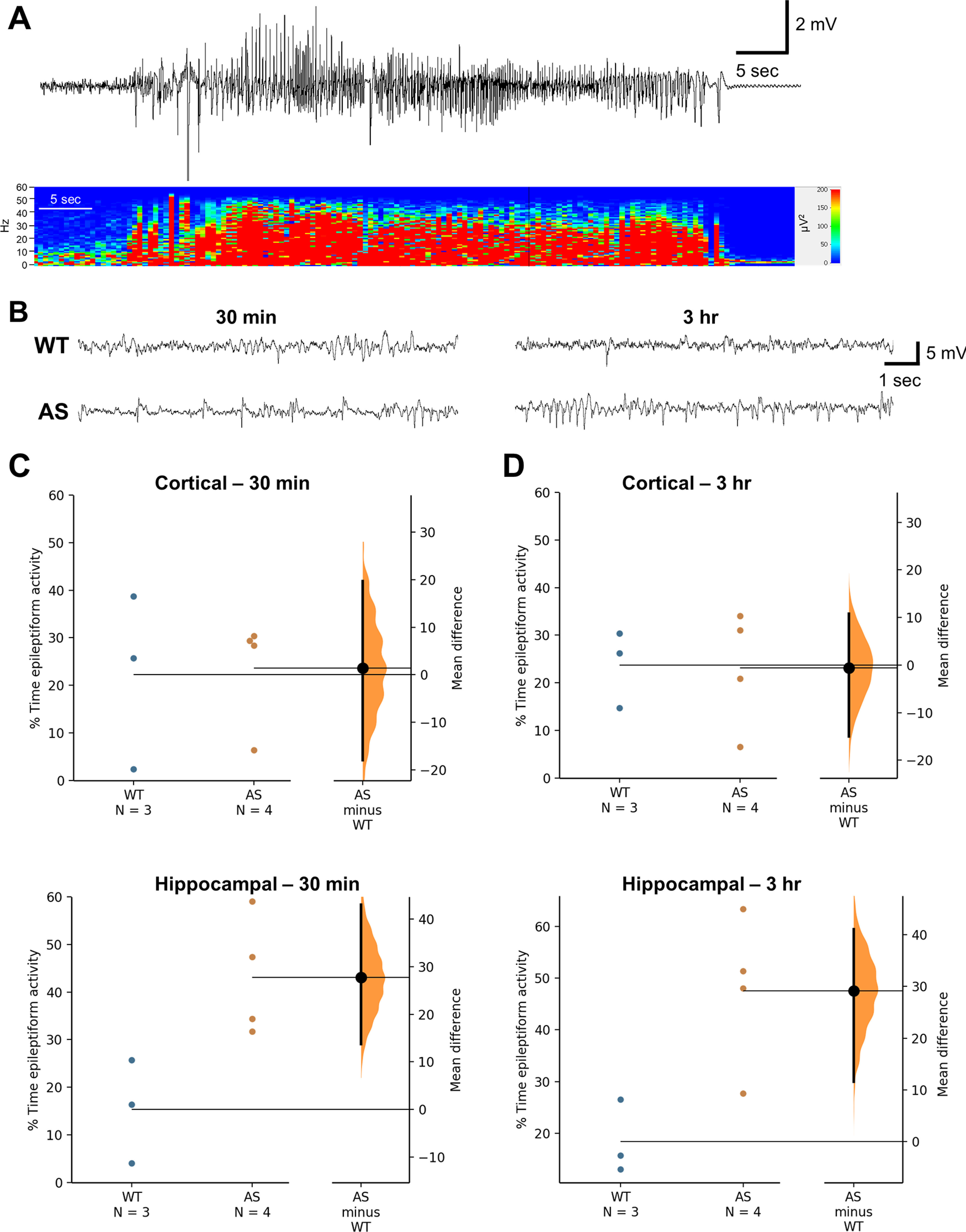
Angelman syndrome (AS) is a neurodevelopmental disorder with unique behavioral phenotypes, seizures, and distinctive electroencephalographic (EEG) patterns. Recent studies identified motor, social communication, and learning and memory deficits in a CRISPR engineered rat model with a complete maternal deletion of the gene. It is unknown whether this model recapitulates other aspects of the clinical disorder. We report here the effect of maternal deletion in the rat on epileptiform activity, seizure threshold, and quantitative EEG. Using video-synchronized EEG (vEEG) monitoring, we assessed spectral power and epileptiform activity early postnatally through adulthood. While EEG power was similar to wild-type (WT) at 1.5 weeks postnatally, at all other ages analyzed, our findings were similar to the AS phenotype in mice and humans with significantly increased δ power. Analysis of epileptiform activity in juvenile and adult rats showed increased time spent in epileptiform activity in AS compared with WT rats. We evaluated seizure threshold using pentylenetetrazol (PTZ), audiogenic stimulus, and hyperthermia to provoke febrile seizures (FSs). Behavioral seizure scoring following PTZ induction revealed no difference in seizure threshold in AS rats, however behavioral recovery from the PTZ-induced seizure was longer in the adult group with significantly increased hippocampal epileptiform activity during this phase. When exposed to hyperthermia, AS rat pups showed a significantly lower temperature threshold to first seizure than WT. Our findings highlight an age-dependence for the EEG and epileptiform phenotypes in a preclinical model of AS, and support the use of quantitative EEG and increased δ power as a potential biomarker of AS.
天使综合征(AS)是一种神经发育障碍,具有独特的行为表型、癫痫发作和独特的脑电图(EEG)模式。最近的研究在一种 CRISPR 工程化的大鼠模型中发现了运动、社交沟通以及学习和记忆缺陷,该模型存在完全的母体缺失 基因。目前尚不清楚该模型是否能再现临床疾病的其他方面。我们在此报告 基因母体缺失对大鼠癫痫样活动、癫痫发作阈值和定量脑电图的影响。我们使用视频同步脑电图(vEEG)监测,在出生后早期到成年期评估频谱功率和癫痫样活动。虽然在出生后 1.5 周时,大鼠的 EEG 功率与野生型(WT)相似,但在分析的所有其他年龄中,我们的研究结果与小鼠和人类的 AS 表型相似,δ 功率显著增加。对幼年和成年大鼠癫痫样活动的分析显示,AS 大鼠的癫痫样活动时间明显长于 WT 大鼠。我们使用戊四氮(PTZ)、听觉刺激和发热来评估癫痫发作阈值,以引发热性惊厥(FS)。PTZ 诱导后行为性癫痫发作评分显示,AS 大鼠的癫痫发作阈值没有差异,但在成年组中,从 PTZ 诱导的癫痫发作中恢复的时间更长,在此期间海马区的癫痫样活动明显增加。当暴露于发热时,AS 幼鼠的首次癫痫发作体温阈值明显低于 WT 幼鼠。我们的研究结果强调了一种在 AS 临床前模型中 EEG 和癫痫样表型的年龄依赖性,并支持将定量 EEG 和增加的 δ 功率作为 AS 的潜在生物标志物。