Roche Pharma Research and Early Development, Neuroscience, Ophthalmology and Rare Diseases, Roche Innovation Center Basel, Basel, Switzerland.
2Center for Autism Research and Treatment, University of California Los Angeles, Semel Institute for Neuroscience, Los Angeles, CA 90024 USA.
Mol Autism. 2019 Jul 3;10:29. doi: 10.1186/s13229-019-0280-6. eCollection 2019.
Duplications of 15q11.2-q13.1 (Dup15q syndrome), including the paternally imprinted gene and three nonimprinted gamma-aminobutyric acid type-A (GABA) receptor genes, are highly penetrant for neurodevelopmental disorders such as autism spectrum disorder (ASD). To guide targeted treatments of Dup15q syndrome and other forms of ASD, biomarkers are needed that reflect molecular mechanisms of pathology. We recently described a beta EEG phenotype of Dup15q syndrome, but it remains unknown which specific genes drive this phenotype.
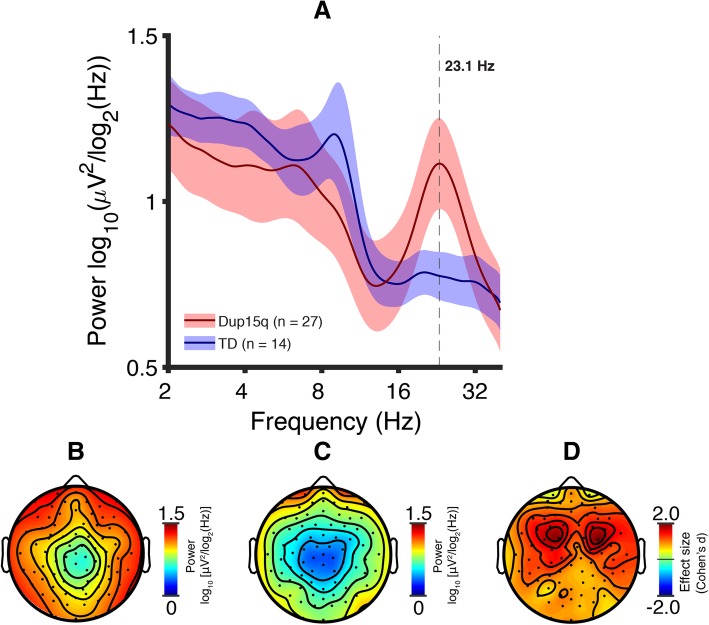
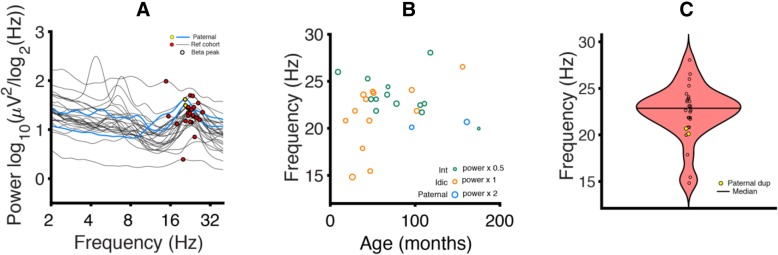
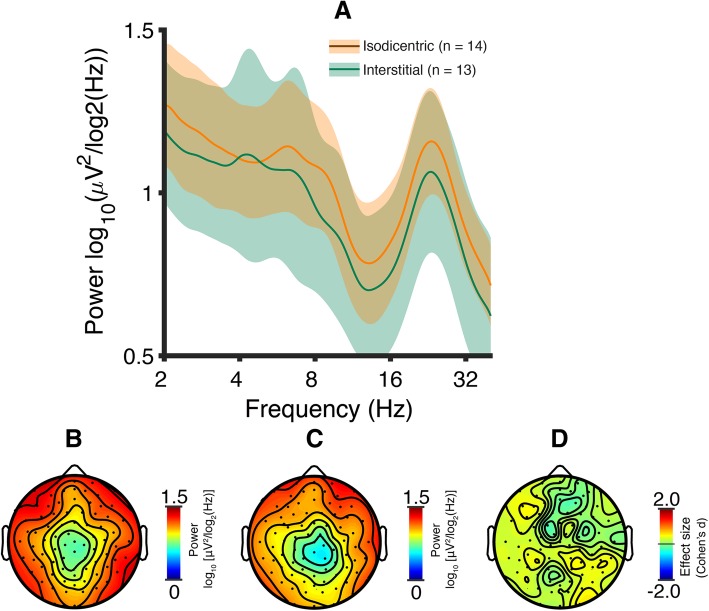
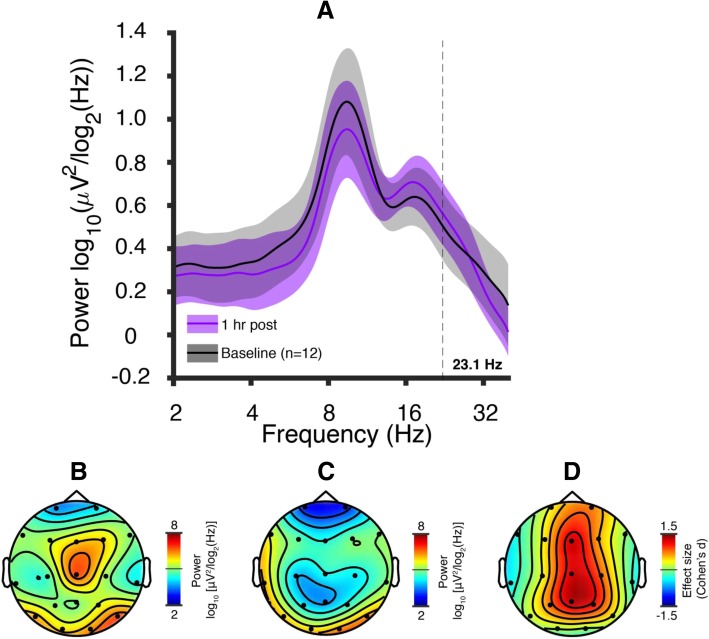
To test the hypothesis that overexpression is not necessary for the beta EEG phenotype, we compared EEG from a reference cohort of children with Dup15q syndrome ( = 27) to (1) the pharmacological effects of the GABA modulator midazolam ( = 12) on EEG from healthy adults, (2) EEG from typically developing (TD) children ( = 14), and (3) EEG from two children with duplications of paternal 15q (i.e., the -silenced allele).
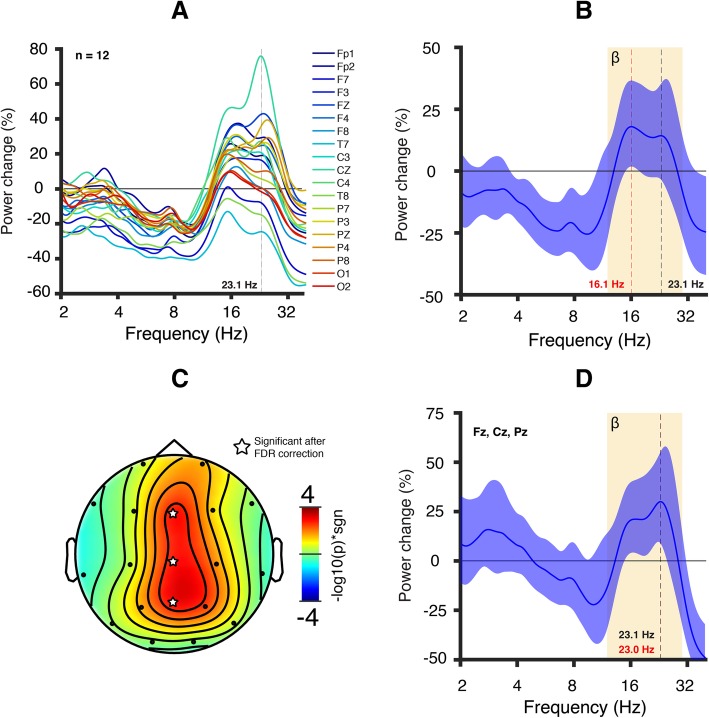
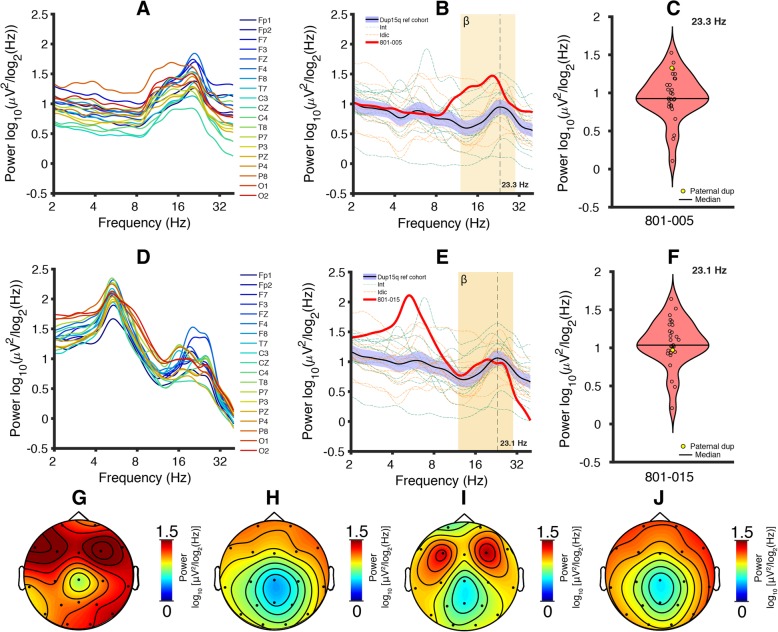
Peak beta power was significantly increased in the reference cohort relative to TD controls. Midazolam administration recapitulated the beta EEG phenotype in healthy adults with a similar peak frequency in central channels ( = 23.0 Hz) as Dup15q syndrome ( = 23.1 Hz). Both paternal Dup15q syndrome cases displayed beta power comparable to the reference cohort.
Our results suggest a critical role for GABAergic transmission in the Dup15q syndrome beta EEG phenotype, which cannot be explained by dysfunction alone. If this mechanism is confirmed, the phenotype may be used as a marker of GABAergic pathology in clinical trials for Dup15q syndrome.
15q11.2-q13.1 重复(Dup15q 综合征),包括父系印迹基因和三个非印迹γ-氨基丁酸 A 型(GABA)受体基因,对神经发育障碍(如自闭症谱系障碍[ASD])具有高度外显率。为了指导 Dup15q 综合征和其他形式的 ASD 的靶向治疗,需要反映病理学分子机制的生物标志物。我们最近描述了 Dup15q 综合征的β脑电表现型,但尚不清楚哪些特定基因驱动这种表现型。
为了检验 过度表达不是β脑电表现型所必需的假设,我们比较了Dup15q 综合征参考队列的脑电图(n=27)与(1)GABA 调节剂咪达唑仑(n=12)对健康成年人脑电图的药理作用,(2)典型发育(TD)儿童的脑电图(n=14),和(3)两个 15q 父系重复(即 -沉默等位基因)的儿童的脑电图。
与 TD 对照组相比,参考队列的峰值β功率显著增加。咪达唑仑给药在健康成年人中再现了β脑电表现型,中央通道的峰值频率相似(n=23.0Hz)与 Dup15q 综合征(n=23.1Hz)。两个父系 Dup15q 综合征病例的β功率与参考队列相当。
我们的结果表明 GABA 能传递在 Dup15q 综合征β脑电表现型中起关键作用,这不能仅用 功能障碍来解释。如果这一机制得到证实,该表型可作为 Dup15q 综合征临床试验中 GABA 能病理学的标志物。