Institut NeuroMyoGène (INMG), University Claude Bernard Lyon1, CNRS UMR 5310, INSERM U1217, Lyon, France.
Australian Regenerative Medicine Institute (ARMI), Monash University, Clayton, VIC, Australia.
Nat Commun. 2021 Feb 2;12(1):749. doi: 10.1038/s41467-020-20290-1.
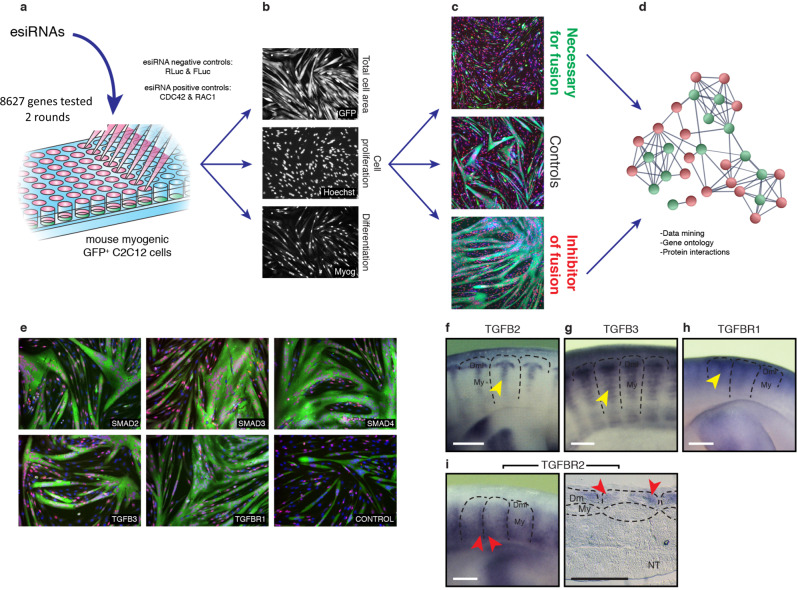
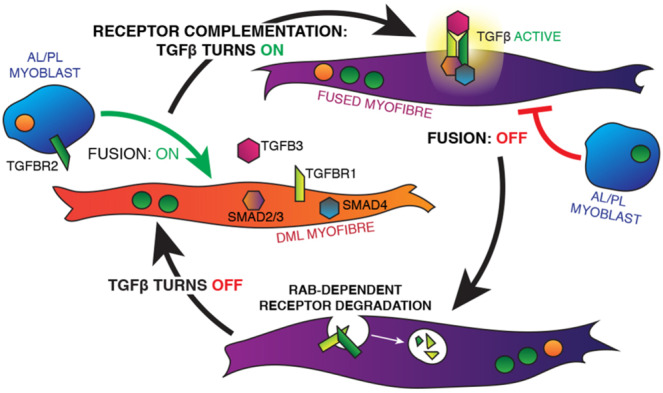
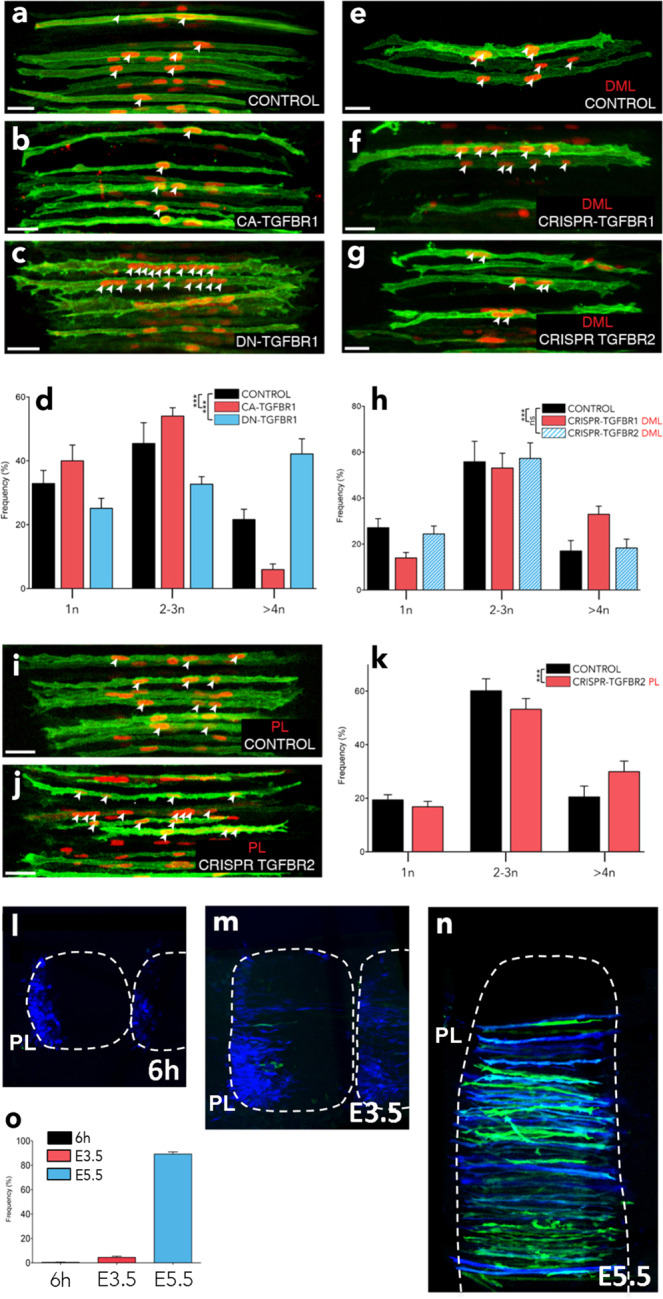
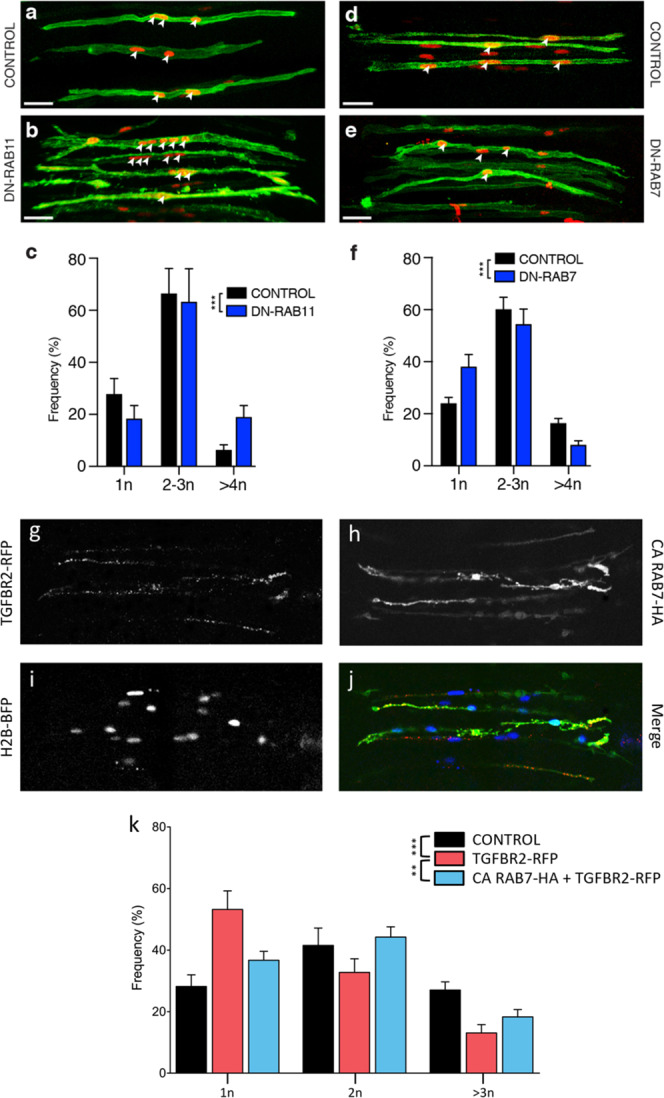
Fusion of nascent myoblasts to pre-existing myofibres is critical for skeletal muscle growth and repair. The vast majority of molecules known to regulate myoblast fusion are necessary in this process. Here, we uncover, through high-throughput in vitro assays and in vivo studies in the chicken embryo, that TGFβ (SMAD2/3-dependent) signalling acts specifically and uniquely as a molecular brake on muscle fusion. While constitutive activation of the pathway arrests fusion, its inhibition leads to a striking over-fusion phenotype. This dynamic control of TGFβ signalling in the embryonic muscle relies on a receptor complementation mechanism, prompted by the merging of myoblasts with myofibres, each carrying one component of the heterodimer receptor complex. The competence of myofibres to fuse is likely restored through endocytic degradation of activated receptors. Altogether, this study shows that muscle fusion relies on TGFβ signalling to regulate its pace.
新生肌母细胞融合到预先存在的肌纤维对于骨骼肌的生长和修复至关重要。在这个过程中,绝大多数已知调节肌母细胞融合的分子都是必需的。在这里,我们通过高通量体外测定和鸡胚体内研究发现,TGFβ(SMAD2/3 依赖性)信号转导特异性且独特地作为肌肉融合的分子制动器。虽然该途径的组成性激活会阻止融合,但抑制该途径会导致明显的过度融合表型。这种对胚胎肌肉中 TGFβ 信号的动态控制依赖于一种受体互补机制,该机制由肌母细胞与肌纤维融合引发,每个肌纤维都携带异二聚体受体复合物的一个组成部分。肌纤维融合的能力可能通过激活受体的内吞降解来恢复。总之,这项研究表明,肌肉融合依赖于 TGFβ 信号来调节其速度。