Center for Gene Therapy City of Hope-Beckman Research Institute at the City of Hope Duarte California USA.
Faculty of Medicine School of Women's & Children's Health University of New South Wales (UNSW) Sydney NSW Australia.
J Extracell Vesicles. 2021 Jan;10(3):e12053. doi: 10.1002/jev2.12053. Epub 2021 Jan 23.
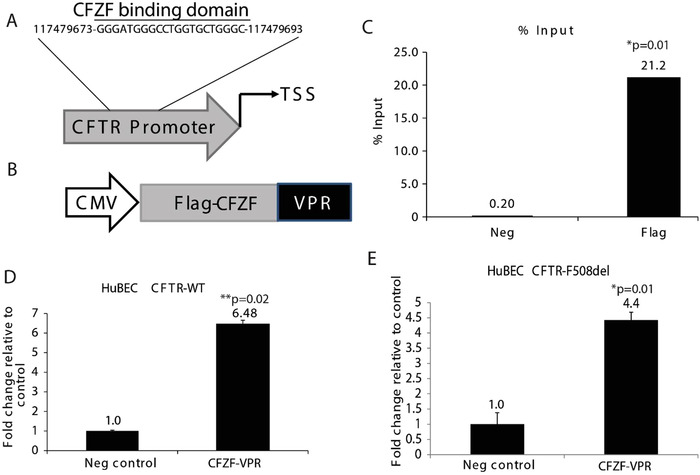
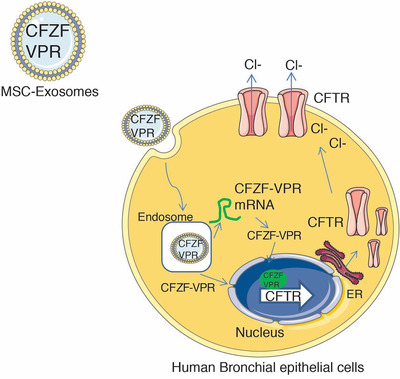
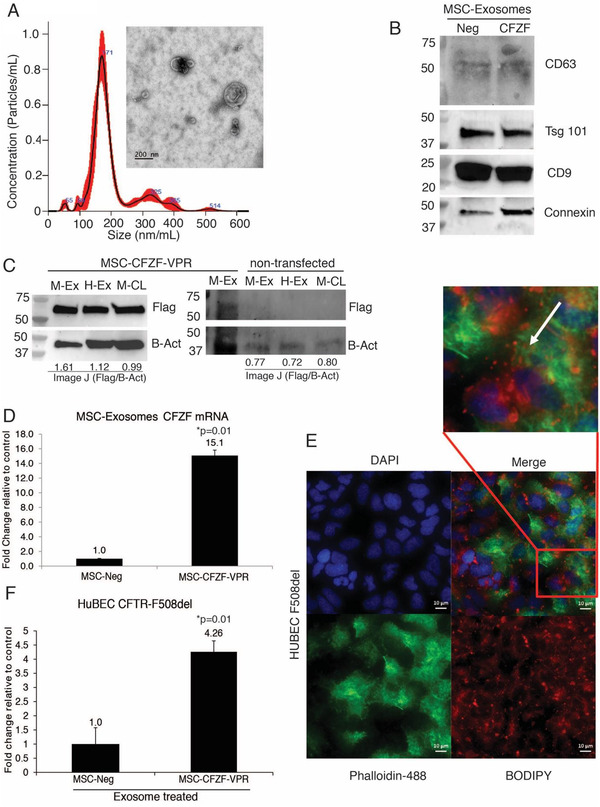
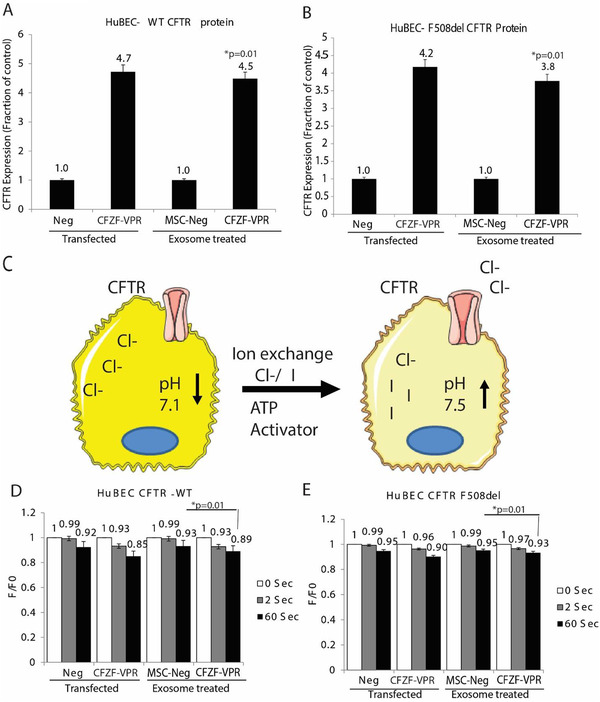
Cystic fibrosis is a genetic disorder that results in a multi-organ disease with progressive respiratory decline which leads to premature death. Mutations in the cystic fibrosis transmembrane conductance regulator (CFTR) gene disrupts the capacity of the protein to function as a channel, transporting chloride ions and bicarbonate across epithelial cell membranes. Small molecule treatments targeted at potentiating or correcting CFTR have shown clinical benefits, but are only effective for a small percentage of individuals with specific CFTR mutations. To overcome this limitation, we engineered stromal-derived mesenchymal stem cells (MSC) and HEK293 cells to produce exosomes containing a novel CFTR Zinc Finger Protein fusion with transcriptional activation domains VP64, P65 and Rta to target the CFTR promoter (CFZF-VPR) and activate transcription. Treatment with CFZF-VPR results in robust activation of CFTR transcription in patient derived Human Bronchial Epithelial cells (HuBEC). We also find that CFZF-VPR can be packaged into MSC and HEK293 cell exosomes and delivered to HuBEC cells to potently activate CFTR expression. Connexin 43 appeared to be required for functional release of CFZF-VPR from exosomes. The observations presented here demonstrate that MSC derived exosomes can be used to deliver a packaged zinc finger activator to target cells and activate CFTR. The novel approach presented here offers a next-generation genetic therapy that may one day prove effective in treating patients afflicted with Cystic fibrosis.
囊性纤维化是一种遗传性疾病,导致多器官疾病,呼吸功能进行性下降,导致过早死亡。囊性纤维化跨膜电导调节因子(CFTR)基因突变破坏了该蛋白作为通道的功能,使氯离子和碳酸氢根离子跨上皮细胞膜转运。针对 CFTR 进行功能增强或纠正的小分子治疗已显示出临床益处,但仅对具有特定 CFTR 突变的一小部分个体有效。为了克服这一限制,我们设计了基质衍生间充质干细胞(MSC)和 HEK293 细胞,以产生含有新型 CFTR 锌指蛋白融合物的外泌体,该融合物具有转录激活结构域 VP64、P65 和 Rta,以靶向 CFTR 启动子(CFZF-VPR)并激活转录。用 CFZF-VPR 处理可导致患者来源的人支气管上皮细胞(HuBEC)中 CFTR 转录的强烈激活。我们还发现 CFZF-VPR 可以被包装到 MSC 和 HEK293 细胞的外泌体中,并递送到 HuBEC 细胞中,以有效地激活 CFTR 表达。连接蛋白 43 似乎是 CFZF-VPR 从外泌体中功能性释放所必需的。这里提出的观察结果表明,MSC 衍生的外泌体可用于递送至靶细胞的包装锌指激活剂并激活 CFTR。这里提出的新方法提供了一种下一代基因治疗方法,有朝一日可能对治疗囊性纤维化患者有效。