Guan Bin, Frank Karen M, Maldonado José O, Beach Margaret, Pelayo Eileen, Warner Blake M, Hufnagel Robert B
Ophthalmic Genetics and Visual Function Branch, National Eye Institute, National Institutes of Health, Bethesda, MD, 20892, USA.
Department of Laboratory Medicine, Clinical Center, National Institutes of Health, Bethesda, MD, 20892, USA.
medRxiv. 2021 Feb 1:2021.01.29.21250790. doi: 10.1101/2021.01.29.21250790.
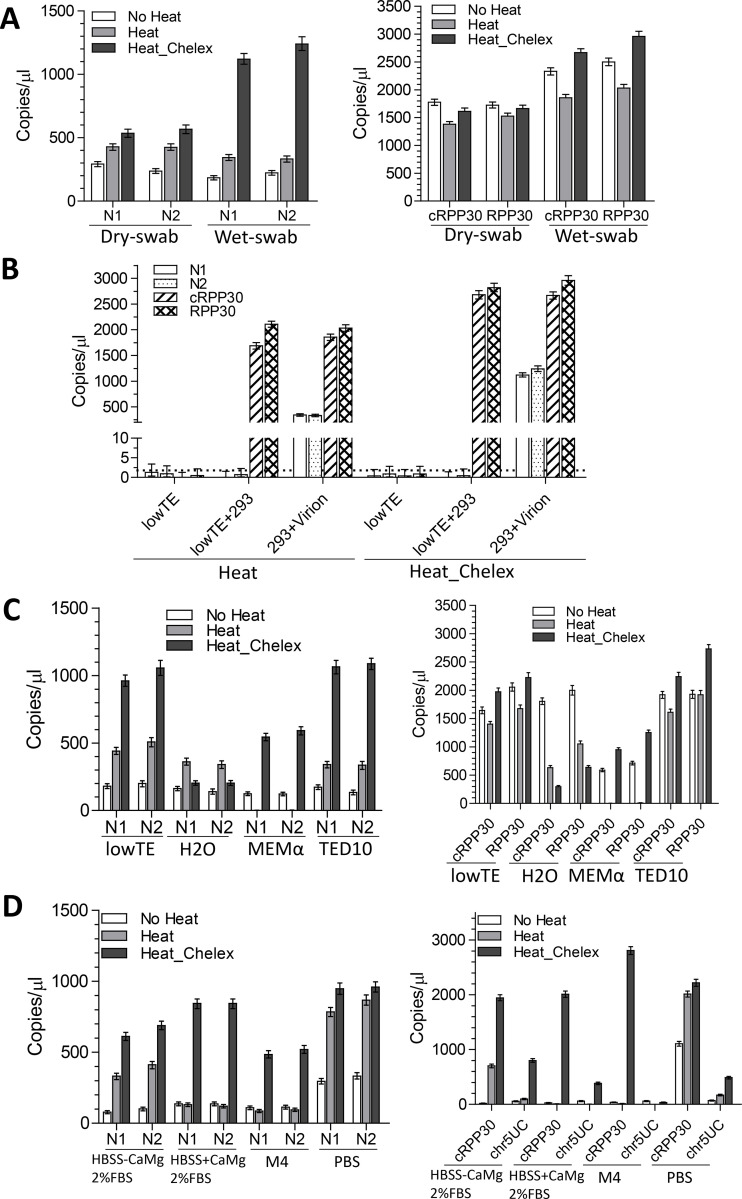
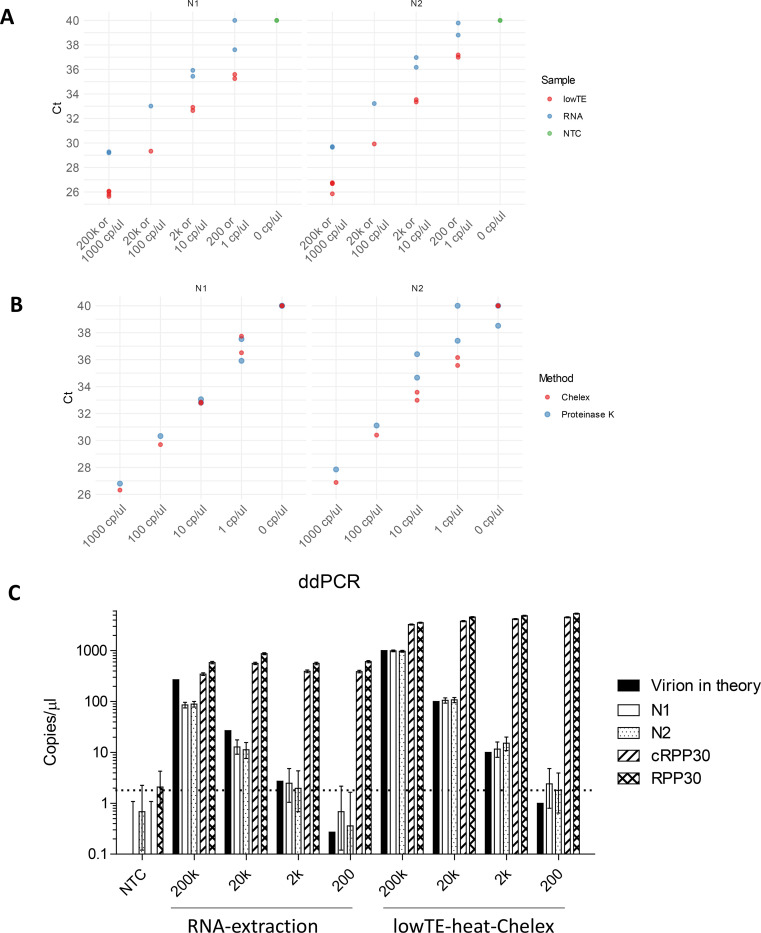
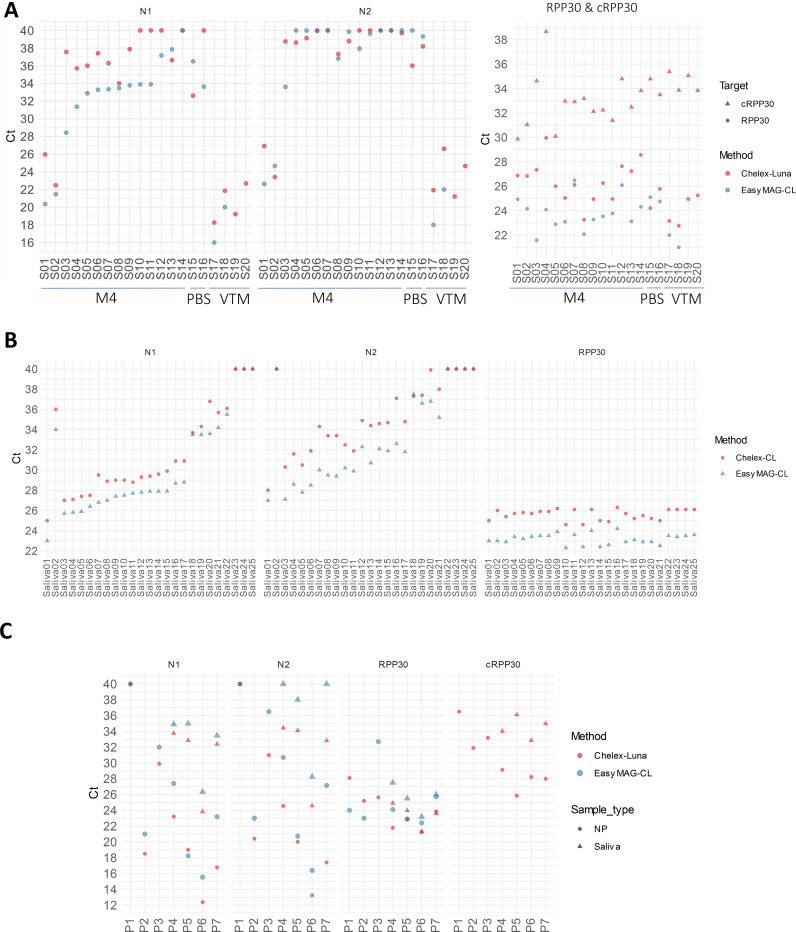
Current conventional detection of SARS-CoV-2 involves collection of a patient sample with a nasopharyngeal swab, storage of the swab during transport in a viral transport medium, extraction of RNA, and quantitative reverse transcription PCR (RT-qPCR). We developed a simplified and novel preparation method using a Chelex resin that obviates RNA extraction during viral testing. Direct detection RT-qPCR and digital-droplet PCR was compared to the current conventional method with RNA extraction for simulated samples and patient specimens. The heat-treatment in the presence of Chelex markedly improved detection sensitivity as compared to heat alone, and lack of RNA extraction shortens the overall diagnostic workflow. Furthermore, the initial sample heating step inactivates SARS-CoV-2 infectivity, thus improving workflow safety. This fast RNA preparation and detection method is versatile for a variety of samples, safe for testing personnel, and suitable for standard clinical collection and testing on high throughput platforms.
目前对严重急性呼吸综合征冠状病毒2(SARS-CoV-2)的传统检测包括用鼻咽拭子采集患者样本,在运输过程中将拭子保存在病毒运输培养基中,提取RNA,以及定量逆转录聚合酶链反应(RT-qPCR)。我们开发了一种使用螯合树脂的简化新颖制备方法,在病毒检测过程中无需进行RNA提取。将直接检测RT-qPCR和数字液滴PCR与当前使用RNA提取的传统方法用于模拟样本和患者标本进行比较。与单独加热相比,在螯合树脂存在下的热处理显著提高了检测灵敏度,并且无需RNA提取缩短了整体诊断流程。此外,初始样本加热步骤可使SARS-CoV-2失活,从而提高操作流程安全性。这种快速的RNA制备和检测方法适用于多种样本,对检测人员安全,并且适用于高通量平台上的标准临床采集和检测。