State Key Laboratory of Cell Biology, Shanghai Key Laboratory of Molecular Andrology, Shanghai Institute of Biochemistry and Cell Biology, Center for Excellence in Molecular Cell Science, Chinese Academy of Sciences, University of Chinese Academy of Sciences, Shanghai 200031, China.
State Key Laboratory of Molecular Biology, Shanghai Key Laboratory of Molecular Andrology, Shanghai Institute of Biochemistry and Cell Biology, Center for Excellence in Molecular Cell Science, Chinese Academy of Sciences, University of Chinese Academy of Sciences, Shanghai 200031, China.
Asian J Androl. 2021 Nov-Dec;23(6):590-599. doi: 10.4103/aja.aja_97_20.
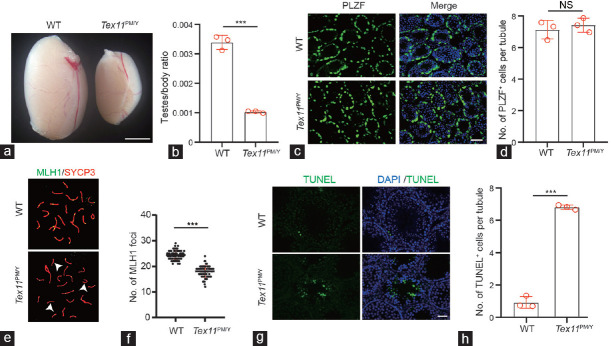
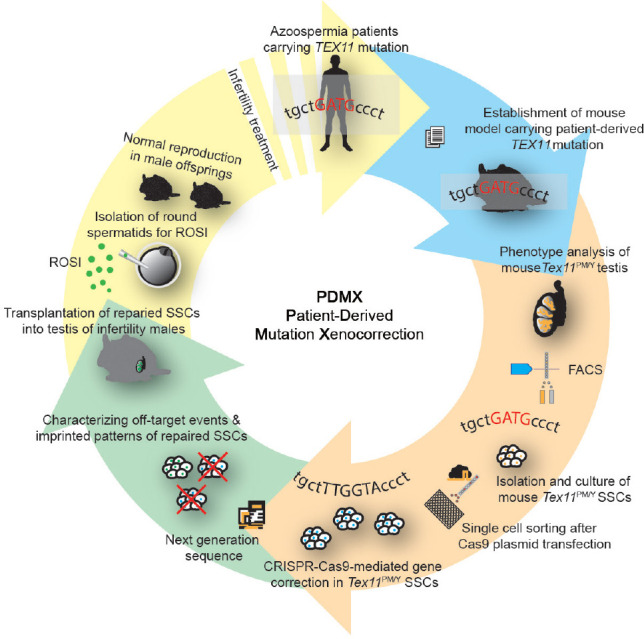
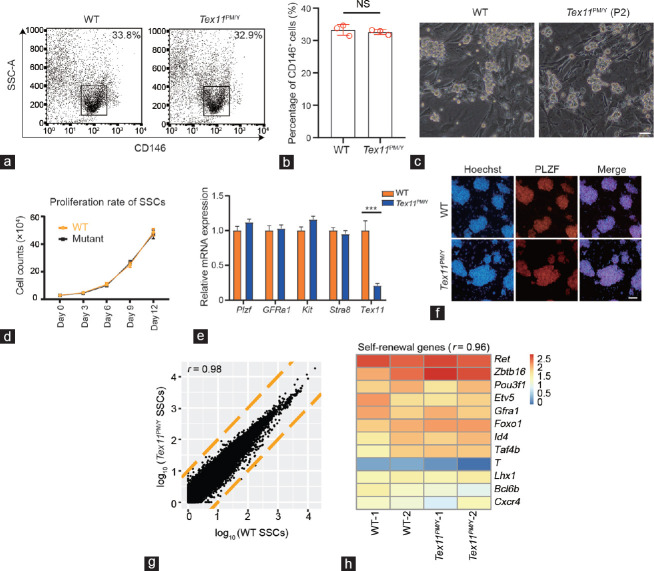
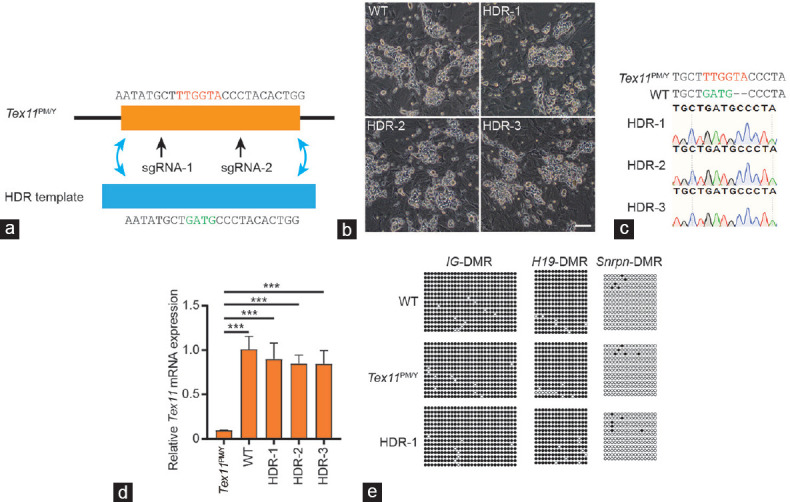
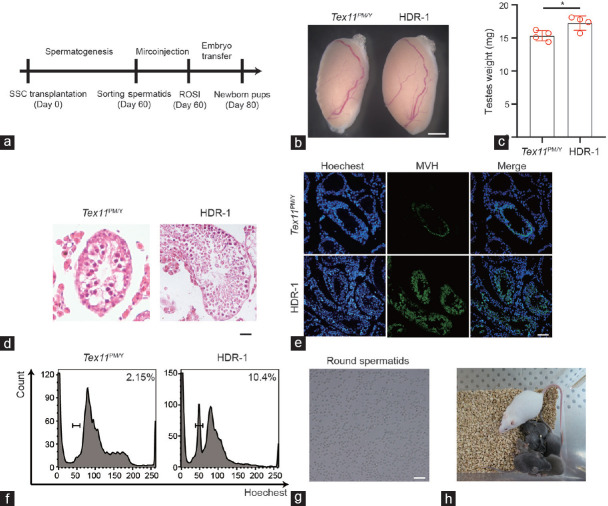
Azoospermia patients who carry a monogenetic mutation that causes meiotic arrest may have their biological child through genetic correction in spermatogonial stem cells (SSCs). However, such therapy for infertility has not been experimentally investigated yet. In this study, a mouse model with an X-linked testis-expressed 11 (TEX11) mutation (Tex11) identified in azoospermia patients exhibited meiotic arrest due to aberrant chromosome segregation. Tex11 SSCs could be isolated and expanded in vitro normally, and the mutation was corrected by clustered regularly interspaced short palindromic repeats (CRISPR)-CRISPR-associated endonuclease 9 (Cas9), leading to the generation of repaired SSC lines. Whole-genome sequencing demonstrated that the mutation rate in repaired SSCs is comparable with that of autonomous mutation in untreated Tex11 SSCs, and no predicted off-target sites are modified. Repaired SSCs could restore spermatogenesis in infertile males and give rise to fertile offspring at a high efficiency. In summary, our study establishes a paradigm for the treatment of male azoospermia by combining in vitro expansion of SSCs and gene therapy.
携带导致减数分裂阻滞的单基因突变的无精子症患者可以通过精原干细胞(SSCs)中的基因纠正来生育其生物学后代。然而,这种治疗不孕的方法尚未进行实验研究。在这项研究中,通过对无精子症患者中鉴定的 X 连锁睾丸表达 11(TEX11)突变(Tex11)的小鼠模型进行研究,发现由于染色体分离异常,导致减数分裂阻滞。Tex11 SSCs 可以正常在体外分离和扩增,并且通过成簇规律间隔短回文重复(CRISPR)-CRISPR 相关内切酶 9(Cas9)进行突变纠正,从而产生修复的 SSC 系。全基因组测序表明,修复的 SSCs 中的突变率与未经处理的 Tex11 SSCs 中的自主突变率相当,并且没有预测到的脱靶位点被修饰。修复的 SSCs 可以恢复不育雄性的精子发生,并以高效率产生可育后代。总之,我们的研究通过结合 SSCs 的体外扩增和基因治疗,为男性无精子症的治疗建立了一个范例。