Goossens Jean-François, Goossens Laurence, Bailly Christian
Univ. Lille, CHU Lille, EA 7365 - GRITA - Groupe de Recherche sur les Formes Injectables et les Technologies Associées, 59000, Lille, France.
OncoWitan, 59290, Lille (Wasquehal), France.
Nat Prod Bioprospect. 2021 Aug;11(4):365-377. doi: 10.1007/s13659-021-00298-w. Epub 2021 Feb 3.
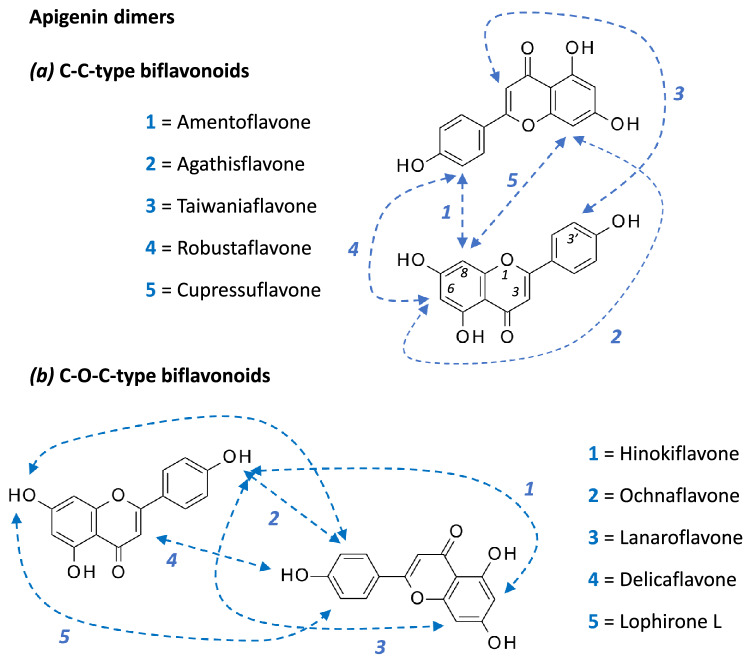
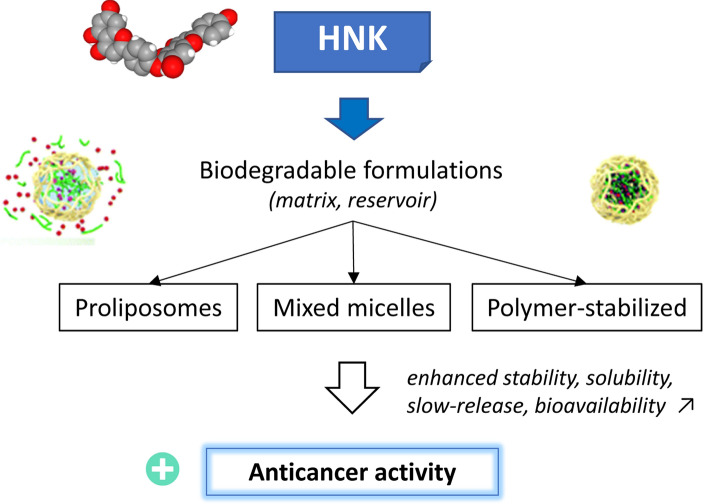
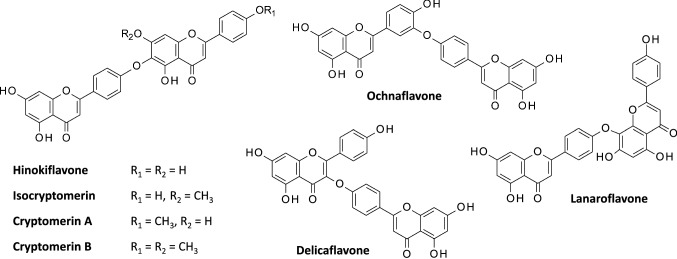
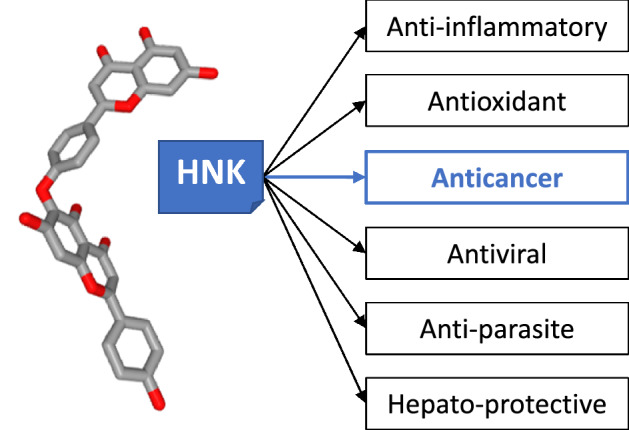
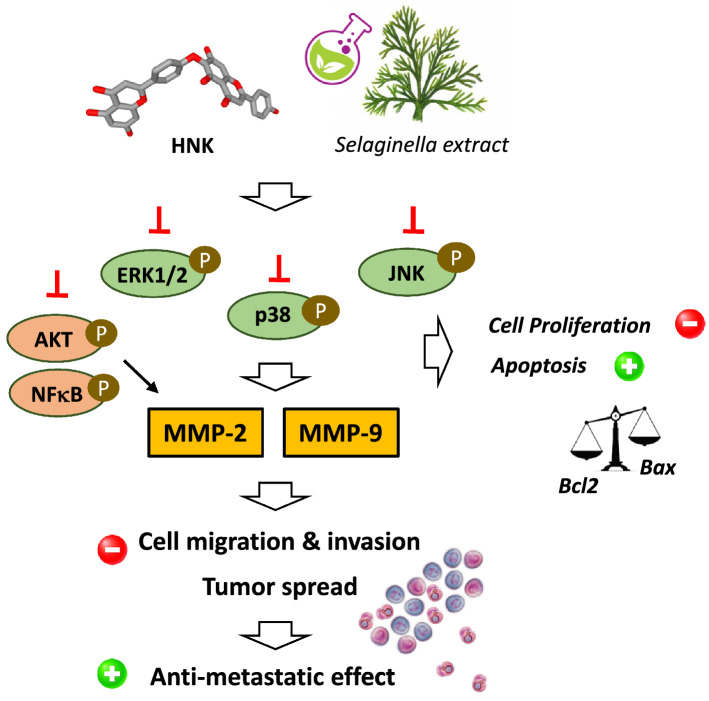
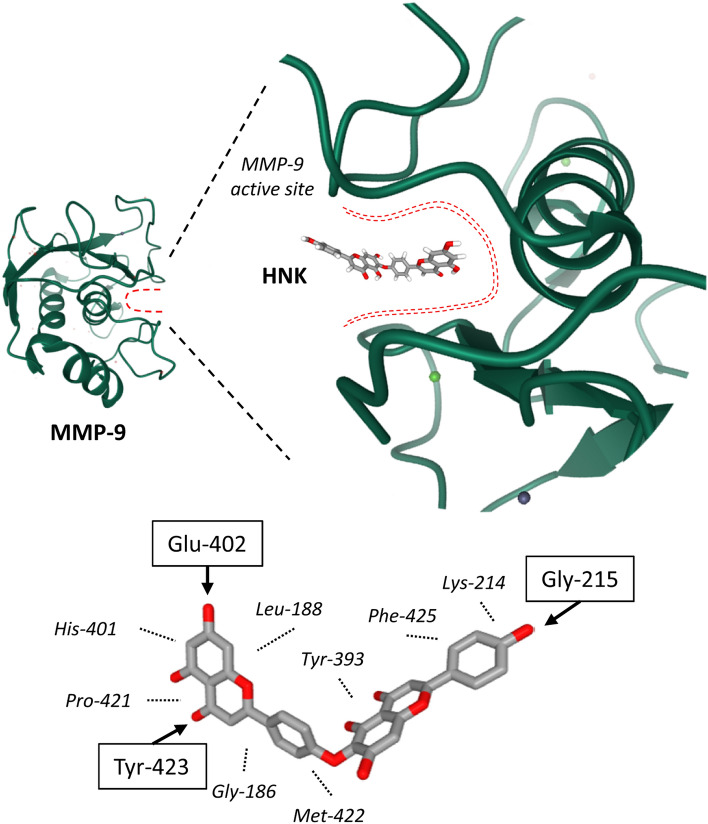
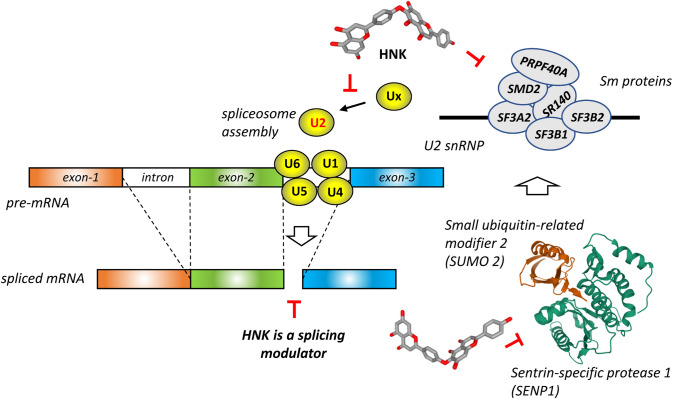
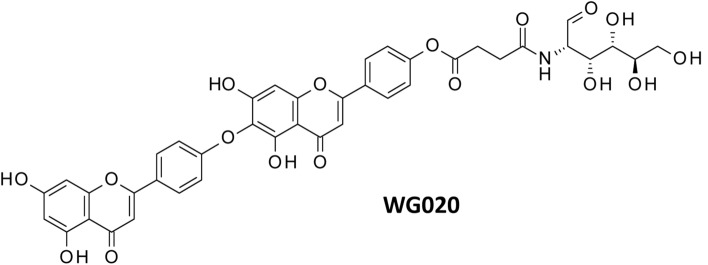
Biflavonoids are divided in two classes: C-C type compounds represented by the dimeric compound amentoflavone and C-O-C-type compounds typified by hinokiflavone (HNK) with an ether linkage between the two connected apigenin units. This later sub-group of bisflavonyl ethers includes HNK, ochnaflavone, delicaflavone and a few other dimeric compounds, found in a variety of plants, notably Selaginella species. A comprehensive review of the anticancer properties and mechanism of action of HNK is provided, to highlight the anti-proliferative and anti-metastatic activities of HNK and derivatives, and HNK-containing plant extracts. The anticancer effects rely on the capacity of HNK to interfere with the ERK1-2/p38/NFκB signaling pathway and the regulation of the expression of the matrix metalloproteinases MMP-2 and MMP-9 (with a potential direct binding to MMP-9). In addition, HNK was found to function as a potent modulator of pre-mRNA splicing, inhibiting the SUMO-specific protease SENP1. As such, HNK represents a rare SENP1 inhibitor of natural origin and a scaffold to design synthetic compounds. Oral formulations of HNK have been elaborated to enhance its solubility, to facilitate the compound delivery and to enhance its anticancer efficacy. The review shed light on the anticancer potential of C-O-C-type biflavonoids and specifically on the pharmacological profile of HNK. This compound deserves further attention as a regulator of pre-mRNA splicing, useful to treat cancers (in particular hepatocellular carcinoma) and other human pathologies.
以二聚体化合物穗花杉双黄酮为代表的C-C型化合物和以扁柏黄酮(HNK)为代表的C-O-C型化合物,后者两个连接的芹菜素单元之间有一个醚键。这一亚类双黄酮醚包括HNK、金莲黄酮、精致黄酮和其他一些二聚体化合物,存在于多种植物中,尤其是卷柏属植物。本文全面综述了HNK的抗癌特性和作用机制,以突出HNK及其衍生物以及含HNK的植物提取物的抗增殖和抗转移活性。抗癌作用依赖于HNK干扰ERK1-2/p38/NFκB信号通路的能力以及对基质金属蛋白酶MMP-2和MMP-9表达的调控(可能直接与MMP-9结合)。此外,发现HNK作为前体mRNA剪接的有效调节剂,可抑制SUMO特异性蛋白酶SENP1。因此,HNK是一种罕见的天然来源的SENP1抑制剂,也是设计合成化合物的支架。已制备出HNK的口服制剂以提高其溶解度,促进化合物递送并增强其抗癌功效。该综述揭示了C-O-C型双黄酮类化合物的抗癌潜力,特别是HNK的药理特性。作为一种前体mRNA剪接调节剂,该化合物值得进一步关注,有望用于治疗癌症(特别是肝细胞癌)和其他人类疾病。