1Department of Parasitology, Research Institute for Tropical Medicine, Muntinlupa, Philippines.
2Faculty of Infectious and Tropical Diseases, London School of Hygiene and Tropical Medicine, London, United Kingdom.
Am J Trop Med Hyg. 2021 Jan 18;104(3):968-978. doi: 10.4269/ajtmh.20-0814.
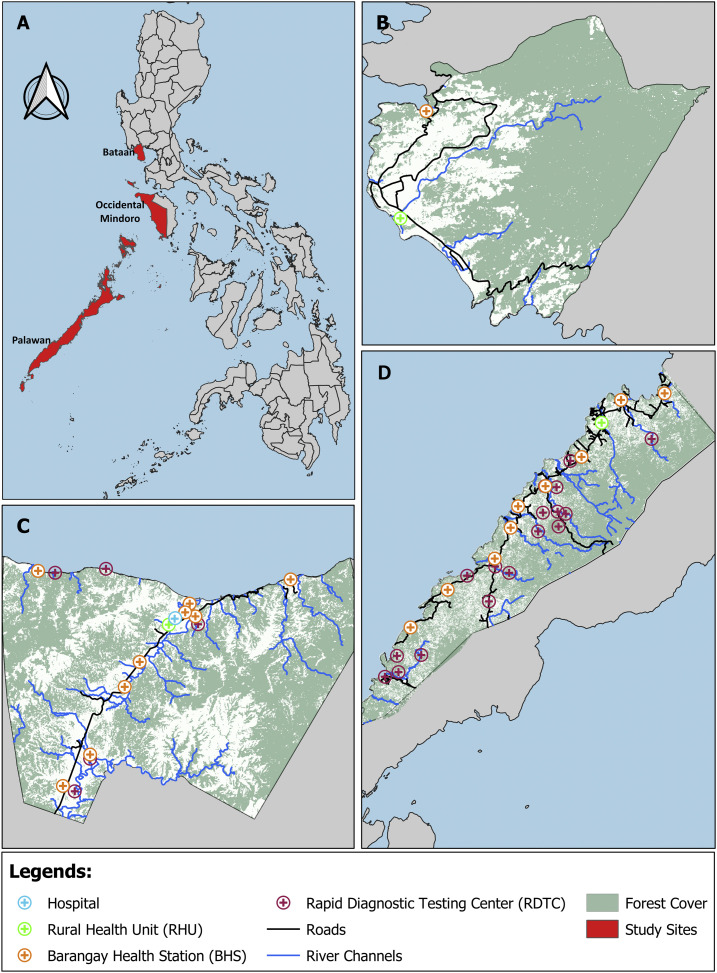
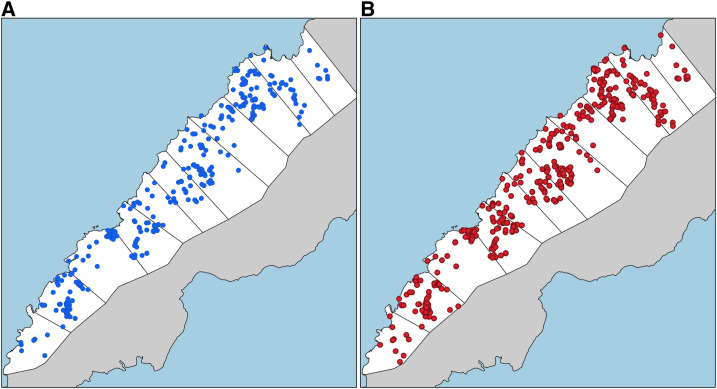
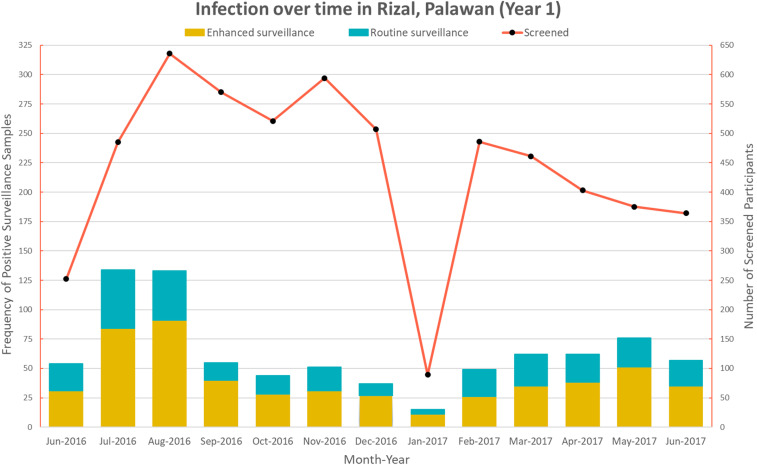
Following substantial progress in malaria control in the Philippines, new surveillance approaches are needed to identify and target residual malaria transmission. This study evaluated an enhanced surveillance approach using rolling cross-sectional surveys of all health facility attendees augmented with molecular diagnostics and geolocation. Facility surveys were carried out in three sites representing different transmission intensities: Morong, Bataan (pre-elimination), Abra de Ilog, Occidental Mindoro (stable medium risk), and Rizal, Palawan (high risk, control). Only one rapid diagnostic test (RDT)-positive infection and no PCR confirmed infections were found in Bataan and Occidental Mindoro, suggesting the absence of transmission. In Palawan, the inclusion of all health facility attendees, regardless of symptoms, and use of molecular diagnostics identified 313 infected individuals in addition to 300 cases identified by routine screening of febrile patients with the RDT or microscopy. Of these, the majority (313/613) were subpatent infections and only detected using molecular methods. Simultaneous collection of GPS coordinates on tablet-based applications allowed real-time mapping of malaria infections. Risk factor analysis showed higher risks in children and indigenous groups, with bed net use having a protective effect. Subpatent infections were more common in men and older age-groups. Overall, malaria risks were not associated with participants' classification, and some of the non-patient clinic attendees reported febrile illnesses (1.9%, 26/1,369), despite not seeking treatment, highlighting the widespread distribution of infection in communities. Together, these data illustrate the utility of health facility-based surveys to augment surveillance data to increase the probability of detecting infections in the wider community.
在菲律宾疟疾控制取得实质性进展之后,需要采用新的监测方法来发现和针对残留的疟疾传播。本研究评估了一种强化监测方法,即使用滚动式横断面调查所有卫生机构就诊者,同时辅以分子诊断和地理位置定位。在三个代表不同传播强度的地点开展了机构调查:巴丹省莫龙(消除前)、西民都洛省阿布拉克洛(稳定的中度风险)和巴拉望省黎刹(高风险,防控中)。在巴丹和西民都洛,只发现了一起快速诊断检测(RDT)阳性感染,没有聚合酶链反应(PCR)确认的感染,表明不存在传播。在巴拉望,通过包括所有卫生机构就诊者(无论症状),并使用分子诊断方法,除了通过 RDT 或显微镜常规筛查发热患者发现的 300 例病例外,还发现了 313 例感染病例。其中,大多数(313/613)为亚临床感染,只能通过分子方法检测到。在基于平板电脑的应用程序上同时收集 GPS 坐标,可以实时绘制疟疾感染图。风险因素分析显示,儿童和土著群体的风险较高,使用蚊帐具有保护作用。亚临床感染在男性和年龄较大的人群中更为常见。总体而言,疟疾风险与参与者的分类无关,一些非病人诊所就诊者报告了发热疾病(1.9%,26/1369),尽管没有寻求治疗,这突显了感染在社区中的广泛分布。这些数据共同说明了利用卫生机构为基础的调查来补充监测数据以增加在更广泛社区中发现感染的可能性。