Department of Reproductive and Family Health, School of Public Health, College of Medicine and Health Sciences, Wollo University, Dessie, Ethiopia.
Department of Epidemiology and Biostatistics, School of Public Health, College of Medicine and Health Sciences, Wollo University, Dessie, Ethiopia.
PLoS One. 2021 Feb 3;16(2):e0246348. doi: 10.1371/journal.pone.0246348. eCollection 2021.
Closely spaced birth increases the risk of adverse maternal and child health outcomes. In Ethiopia, the prevalence of short birth spacing was highly variable across studies. Besides, contraceptive use, educational status, and duration of breastfeeding were frequently mentioned factors affecting short birth spacing. Therefore, this meta-analysis aimed to estimate the pooled prevalence of short birth spacing and its association with contraceptive use, educational status, and duration of breastfeeding among reproductive-age women in Ethiopia.
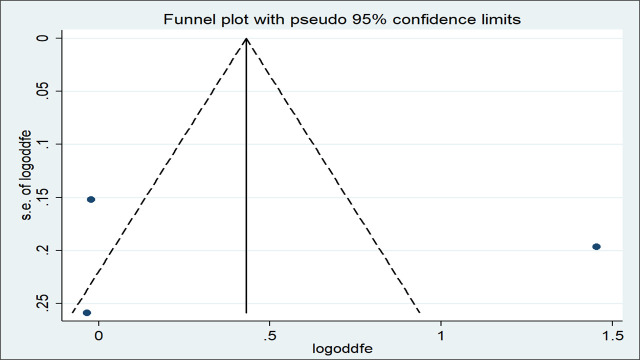
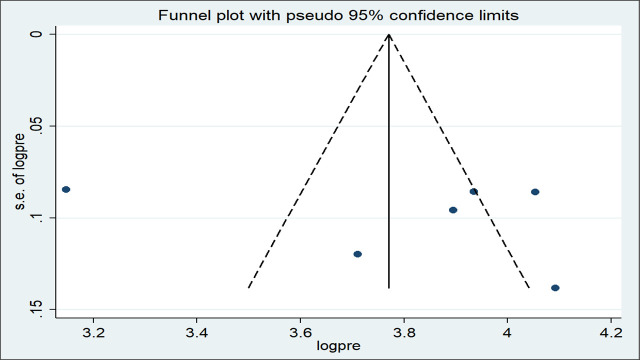
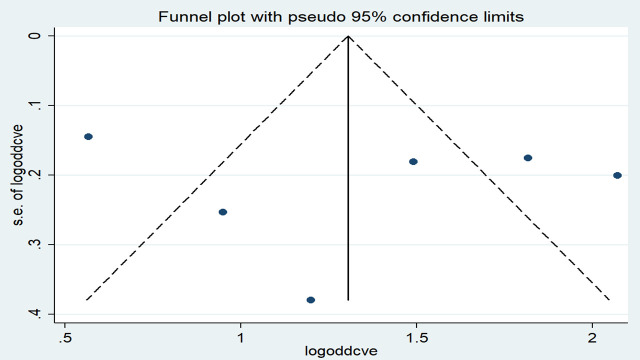
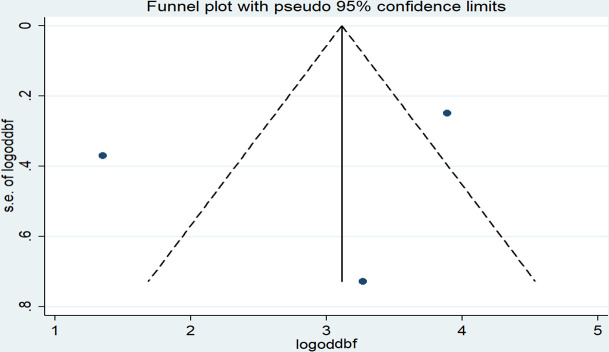
International databases: Google Scholar, PubMed, CINAHL, Cochrane library, HINARI, and Global Health were searched systematically to identify articles reporting the prevalence of short birth spacing and its association with contraceptive use, educational status, and duration of breastfeeding among reproductive-age women in Ethiopia. The data were analyzed by STATA/SE version-14 statistical software. The random-effect model was used to estimate the pooled prevalence of short birth spacing and the log odds ratio was used to determine the association. Moreover, egger's test and I-squared statistics were used to assess publication bias and heterogeneity respectively.
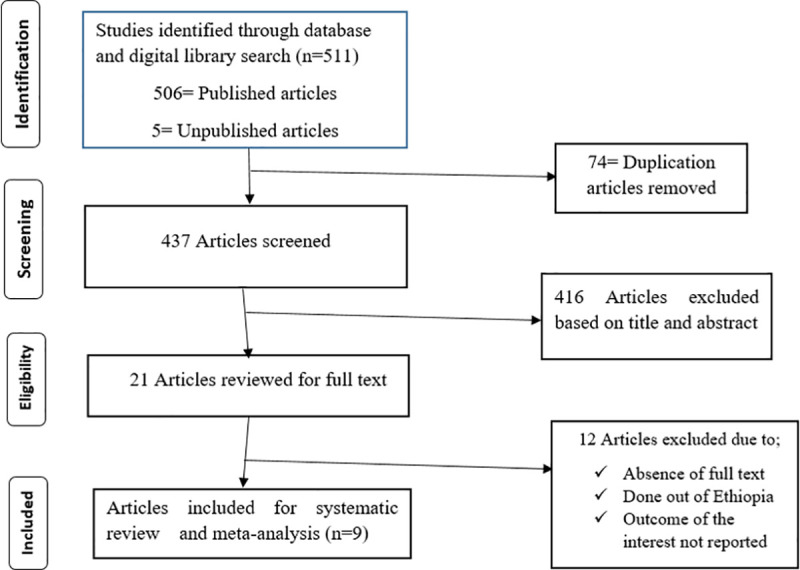
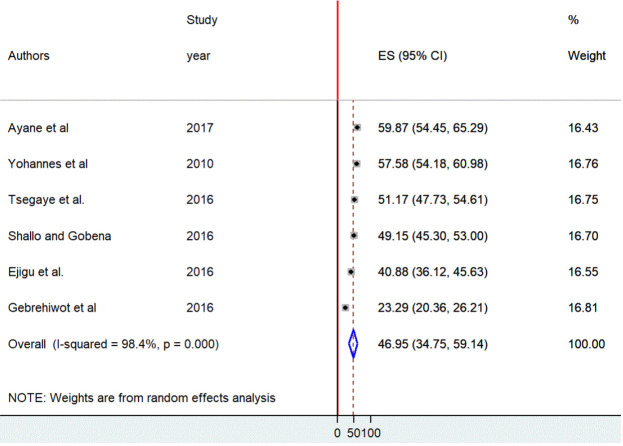
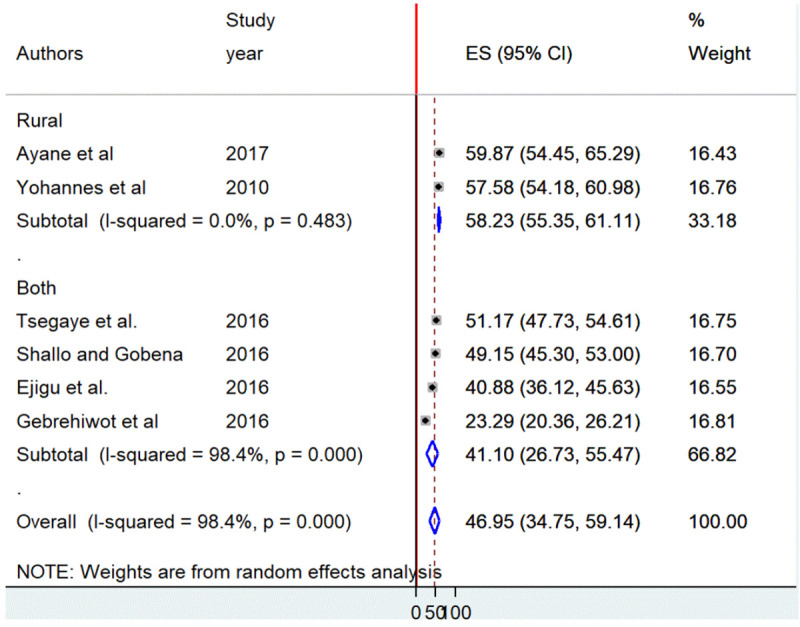
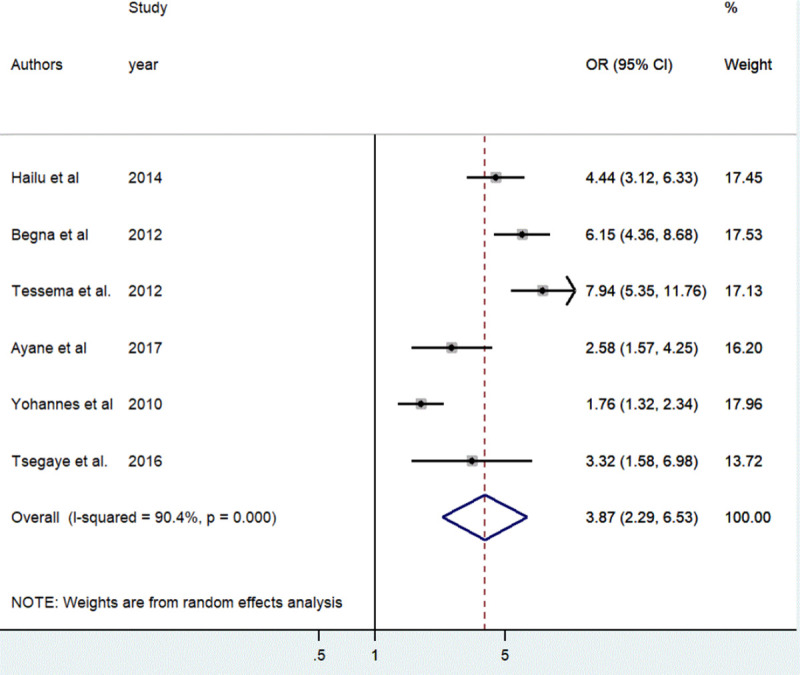
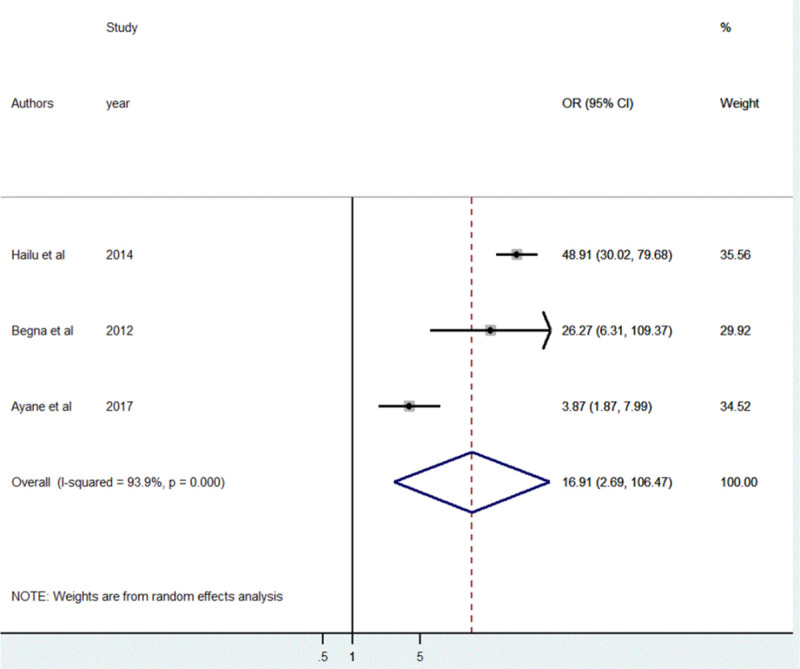
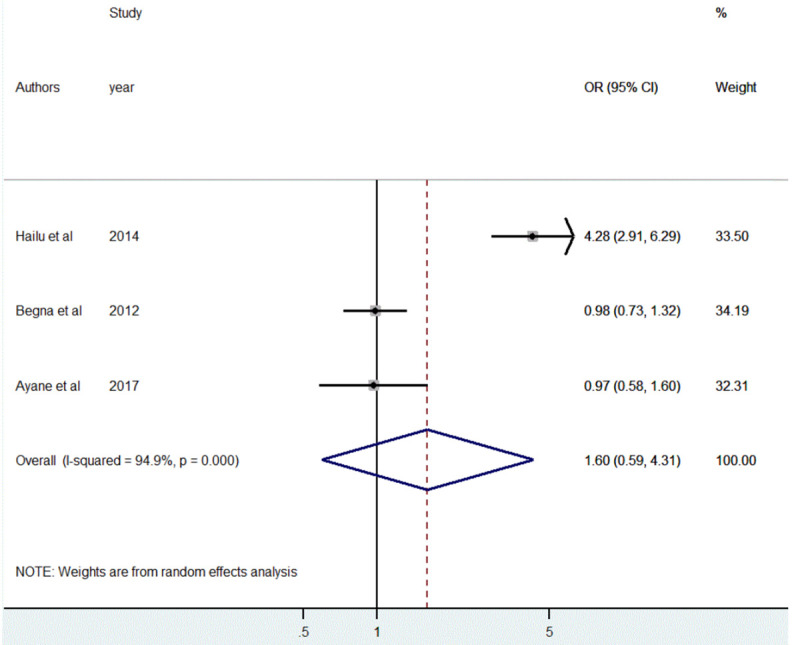
After reviewing 511 research articles, a total of nine articles with 5,682 study participants were included in this meta-analysis. The pooled prevalence of short birth spacing in Ethiopia was 46.9% [95% CI: (34.7, 59.1)]. Significant heterogeneity was observed between studies (I2 = 98.4, p <0.001). Not using contraceptives [OR = 3.87, 95% CI: (2.29, 6.53)] and duration of breastfeeding < 24 months [OR = 16.9, 95%CI: (2.69, 106.47)] had a significant association with short birth spacing.
Although a minimum inter-pregnancy interval of two years was recommended by the World Health Organization (WHO), significant numbers of women still practiced short birth spacing in Ethiopia. Duration of breastfeeding and non-use of contraceptives were factors significantly associated with short birth spacing. So, efforts should be made to improve breastfeeding practice and contraceptive utilization among women in Ethiopia.
紧密的生育间隔会增加母婴健康不良结局的风险。在埃塞俄比亚,短生育间隔的流行率在不同研究中差异很大。此外,避孕措施的使用、教育程度和母乳喂养持续时间经常被提及是影响短生育间隔的因素。因此,本荟萃分析旨在估计埃塞俄比亚育龄妇女短生育间隔的流行率及其与避孕措施使用、教育程度和母乳喂养持续时间的关联。
国际数据库:通过谷歌学术、PubMed、CINAHL、Cochrane 图书馆、HINARI 和全球卫生系统检索系统,检索了报道埃塞俄比亚育龄妇女短生育间隔流行率及其与避孕措施使用、教育程度和母乳喂养持续时间关联的文章。采用 STATA/SE 版本 14 统计软件对数据进行分析。采用随机效应模型估计短生育间隔的汇总流行率,并采用对数比值比来确定关联。此外,采用 Egger 检验和 I 平方统计量分别评估发表偏倚和异质性。
在审查了 511 篇研究文章后,共有 9 篇文章(5682 名研究参与者)纳入本荟萃分析。埃塞俄比亚短生育间隔的汇总流行率为 46.9%(95%置信区间:34.7%,59.1%)。研究之间存在显著的异质性(I2 = 98.4,p <0.001)。不使用避孕药具(OR = 3.87,95%置信区间:2.29,6.53)和母乳喂养持续时间<24 个月(OR = 16.9,95%置信区间:2.69,106.47)与短生育间隔有显著关联。
尽管世界卫生组织(WHO)建议生育间隔最短为两年,但埃塞俄比亚仍有相当数量的妇女实行短生育间隔。母乳喂养持续时间和不使用避孕药具是与短生育间隔显著相关的因素。因此,应努力改善埃塞俄比亚妇女的母乳喂养实践和避孕药具使用。