• 文献检索
  • 文档翻译
  • 深度研究
  • 学术资讯
  • Suppr Zotero 插件Zotero 插件
  • 邀请有礼
  • 套餐&价格
  • 历史记录
应用&插件
Suppr Zotero 插件Zotero 插件浏览器插件Mac 客户端Windows 客户端微信小程序
定价
高级版会员购买积分包购买API积分包
服务
文献检索文档翻译深度研究API 文档MCP 服务
关于我们
关于 Suppr公司介绍联系我们用户协议隐私条款
关注我们

Suppr 超能文献

核心技术专利:CN118964589B侵权必究
粤ICP备2023148730 号-1Suppr @ 2026

文献检索

告别复杂PubMed语法,用中文像聊天一样搜索,搜遍4000万医学文献。AI智能推荐,让科研检索更轻松。

立即免费搜索

文件翻译

保留排版,准确专业,支持PDF/Word/PPT等文件格式,支持 12+语言互译。

免费翻译文档

深度研究

AI帮你快速写综述,25分钟生成高质量综述,智能提取关键信息,辅助科研写作。

立即免费体验

埃塞俄比亚产后宫内节育器使用及其相关因素:系统评价和荟萃分析。

Postpartum intrauterine contraceptive device use and its associated factors in Ethiopia: systematic review and meta-analysis.

机构信息

Department of Midwifery, College of Health Sciences, Debre Tabor University, Debre Tabor, Ethiopia.

Department of Anesthesia, College of Health Sciences, Debre Tabor University, Debre Tabor, Ethiopia.

出版信息

Reprod Health. 2021 Nov 13;18(1):225. doi: 10.1186/s12978-021-01273-x.

DOI:10.1186/s12978-021-01273-x
PMID:34774058
原文链接:https://pmc.ncbi.nlm.nih.gov/articles/PMC8590214/
Abstract

BACKGROUND

The intrauterine contraceptive device, a type of long-acting reversible contraception, is one of the most effective and safe contraceptive methods. In Ethiopia, intrauterine contraceptive device is little known and practised to delay pregnancy. Therefore, this study aimed to assess post-partum intrauterine contraceptive device utilisation and its associated factors among women in Ethiopia.

METHOD

In the current meta-analysis, variables were searched from different electronic database systems, including PubMed, Google Scholar, EMBASE, HINAR, Scopus, Web of Sciences, and Grey literature. Data were extracted using a standardised data collection measurement tool. The data were also analysed by using STATA 16 statistical software. I tests assessed heterogeneity between the studies. A random-effect model was used to forecast the pooled utilisation of postpartum intrauterine contraceptive device.

RESULTS

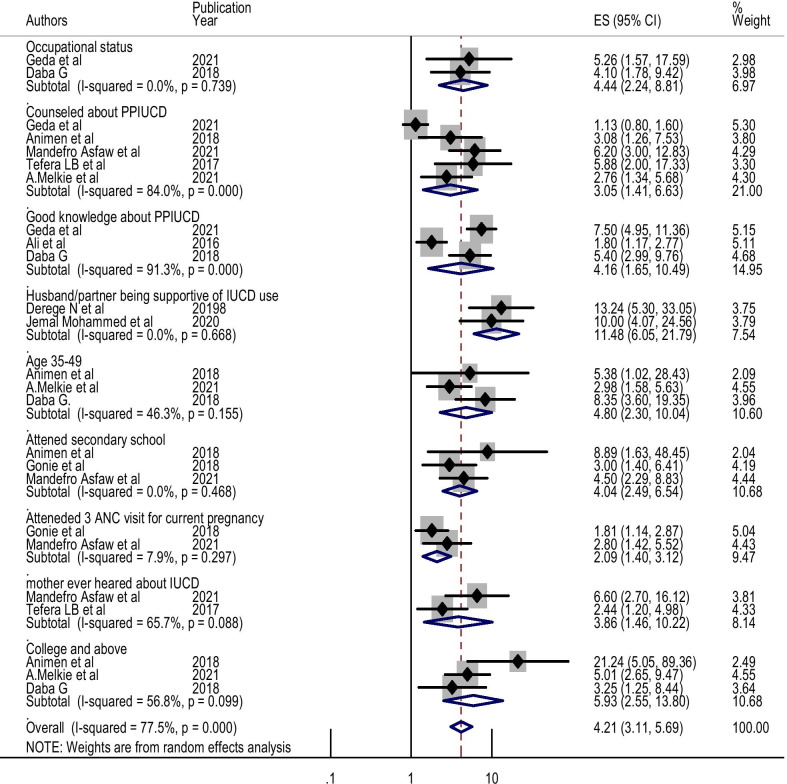
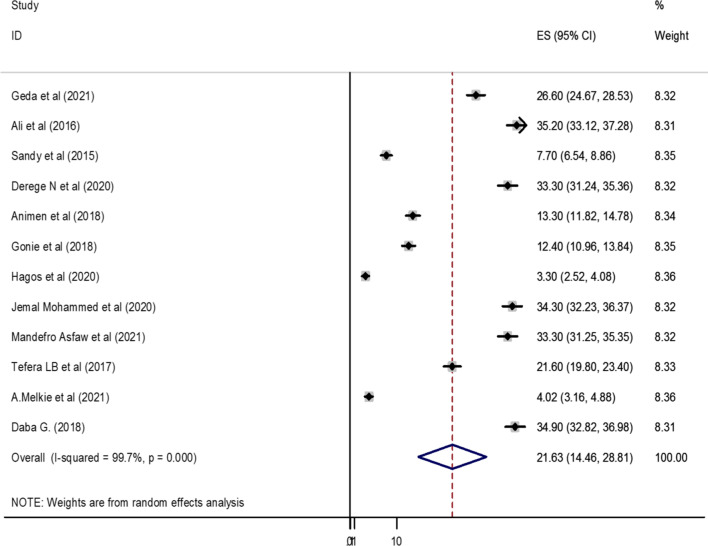
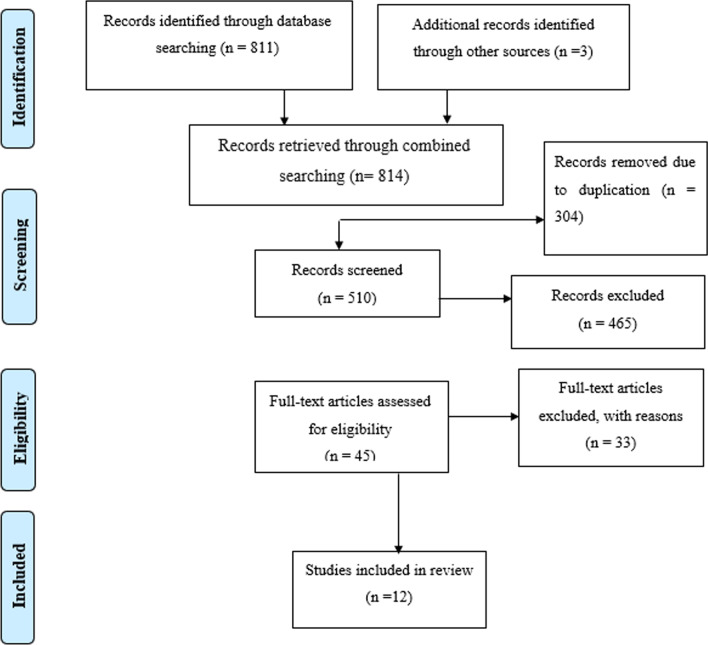
Twelve full-article studies were included. The pooled prevalence of post-partum intrauterine contraceptive device among women in Ethiopia was 21.63%. Occupation (OR = 4.44, 95% CI, 2.24-8.81), educational level of college and above (OR = 5.93, 95% CI, 2.55-13.8), antenatal care (OR = 2.09, 95% CI, 1.4-3.12), age (OR = 4.8, 95% CI, 2.3-10.04), good knowledge (OR = 4.16, 95% CI, 1.65-10.49), counseling (OR = 3.05, 95%CI, 1.41-6.63), husband support (OR = 11.48, 95% CI, 6.05-21.79) and awareness about IUCD (OR = 3.86, 95% CI, 1.46-10.2) were positively associated with utilization of postpartum intrauterine contraception device.

CONCLUSIONS

Utilisation of post-partum intrauterine contraceptive device was significantly low. Scaling up women's educational status and ANC use has paramount importance in increasing post-partum IUD use, which further improves maternal and child health in general. This finding may be useful in both reproductive health promotion at an individual level and policy-making regarding this issue.

摘要

背景

宫内节育器是一种长效可逆避孕方法,是最有效和安全的避孕方法之一。在埃塞俄比亚,宫内节育器鲜为人知,也很少用于延迟怀孕。因此,本研究旨在评估埃塞俄比亚妇女产后宫内节育器的使用情况及其相关因素。

方法

在本次荟萃分析中,变量从不同的电子数据库系统中检索,包括 PubMed、Google Scholar、EMBASE、HINAR、Scopus、Web of Sciences 和灰色文献。使用标准化数据收集测量工具提取数据。还使用 STATA 16 统计软件分析数据。I 检验评估了研究之间的异质性。使用随机效应模型预测产后宫内节育器的总体使用情况。

结果

纳入了 12 项全文研究。埃塞俄比亚妇女产后宫内节育器的总使用率为 21.63%。职业(OR=4.44,95%CI,2.24-8.81)、大专及以上学历(OR=5.93,95%CI,2.55-13.8)、产前护理(OR=2.09,95%CI,1.4-3.12)、年龄(OR=4.8,95%CI,2.3-10.04)、知识良好(OR=4.16,95%CI,1.65-10.49)、咨询(OR=3.05,95%CI,1.41-6.63)、丈夫支持(OR=11.48,95%CI,6.05-21.79)和对宫内节育器的认识(OR=3.86,95%CI,1.46-10.2)与产后宫内节育器的使用呈正相关。

结论

产后宫内节育器的使用率明显较低。提高妇女的教育水平和 ANC 的使用对于增加产后 IUD 的使用至关重要,这进一步普遍改善了母婴健康。这一发现对于个人层面的生殖健康促进和这一问题的政策制定都可能是有用的。
https://cdn.ncbi.nlm.nih.gov/pmc/blobs/a0f9/8590214/bab9de299b11/12978_2021_1273_Fig5_HTML.jpg
https://cdn.ncbi.nlm.nih.gov/pmc/blobs/a0f9/8590214/6cc6c007b791/12978_2021_1273_Fig1_HTML.jpg
https://cdn.ncbi.nlm.nih.gov/pmc/blobs/a0f9/8590214/9046a2014738/12978_2021_1273_Fig2_HTML.jpg
https://cdn.ncbi.nlm.nih.gov/pmc/blobs/a0f9/8590214/f0a46cc7adae/12978_2021_1273_Fig3_HTML.jpg
https://cdn.ncbi.nlm.nih.gov/pmc/blobs/a0f9/8590214/23ff4b80721a/12978_2021_1273_Fig4_HTML.jpg
https://cdn.ncbi.nlm.nih.gov/pmc/blobs/a0f9/8590214/bab9de299b11/12978_2021_1273_Fig5_HTML.jpg
https://cdn.ncbi.nlm.nih.gov/pmc/blobs/a0f9/8590214/6cc6c007b791/12978_2021_1273_Fig1_HTML.jpg
https://cdn.ncbi.nlm.nih.gov/pmc/blobs/a0f9/8590214/9046a2014738/12978_2021_1273_Fig2_HTML.jpg
https://cdn.ncbi.nlm.nih.gov/pmc/blobs/a0f9/8590214/f0a46cc7adae/12978_2021_1273_Fig3_HTML.jpg
https://cdn.ncbi.nlm.nih.gov/pmc/blobs/a0f9/8590214/23ff4b80721a/12978_2021_1273_Fig4_HTML.jpg
https://cdn.ncbi.nlm.nih.gov/pmc/blobs/a0f9/8590214/bab9de299b11/12978_2021_1273_Fig5_HTML.jpg

相似文献

1
Postpartum intrauterine contraceptive device use and its associated factors in Ethiopia: systematic review and meta-analysis.埃塞俄比亚产后宫内节育器使用及其相关因素:系统评价和荟萃分析。
Reprod Health. 2021 Nov 13;18(1):225. doi: 10.1186/s12978-021-01273-x.
2
Education for contraceptive use by women after childbirth.产后妇女避孕使用教育。
Cochrane Database Syst Rev. 2002(3):CD001863. doi: 10.1002/14651858.CD001863.
3
Immediate versus delayed postpartum insertion of contraceptive implant and IUD for contraception.即刻与产后延迟放置避孕埋植剂和宫内节育器避孕效果比较。
Cochrane Database Syst Rev. 2022 Oct 27;10(10):CD011913. doi: 10.1002/14651858.CD011913.pub3.
4
Immediate postabortal insertion of intrauterine devices.流产后立即放置宫内节育器。
Cochrane Database Syst Rev. 2002(3):CD001777. doi: 10.1002/14651858.CD001777.
5
Knowledge and practice of essential newborn care and associated factors among women in Ethiopia: systematic review and meta-analysis.知识和实践的基本新生儿护理和相关因素的妇女在埃塞俄比亚:系统评价和荟萃分析。
Reprod Health. 2022 Aug 4;19(1):172. doi: 10.1186/s12978-022-01480-0.
6
Knowledge and utilisation of preconception care and associated factors among women in Ethiopia: systematic review and meta-analysis.知识和利用孕前保健及相关因素在埃塞俄比亚的妇女:系统评价和荟萃分析。
Reprod Health. 2021 Apr 15;18(1):78. doi: 10.1186/s12978-021-01132-9.
7
Home treatment for mental health problems: a systematic review.心理健康问题的居家治疗:一项系统综述
Health Technol Assess. 2001;5(15):1-139. doi: 10.3310/hta5150.
8
Magnitude of postpartum hemorrhage and associated factors among women who gave birth in Ethiopia: a systematic review and meta-analysis.埃塞俄比亚产妇产后出血的严重程度及其相关因素:系统评价和荟萃分析。
Reprod Health. 2022 Sep 21;19(1):194. doi: 10.1186/s12978-022-01498-4.
9
Interventions targeted at women to encourage the uptake of cervical screening.针对女性的干预措施,以鼓励她们接受宫颈癌筛查。
Cochrane Database Syst Rev. 2021 Sep 6;9(9):CD002834. doi: 10.1002/14651858.CD002834.pub3.
10
Progesterone or progestogen-releasing intrauterine systems for heavy menstrual bleeding.用于治疗月经过多的孕激素或释放孕激素的宫内节育系统。
Cochrane Database Syst Rev. 2005 Oct 19(4):CD002126. doi: 10.1002/14651858.CD002126.pub2.

引用本文的文献

1
Magnitude and associated factors of postpartum family planning uptake among postpartum women in Ethiopia: an umbrella review.埃塞俄比亚产后妇女产后计划生育采用情况的规模及相关因素:一项综合综述
Front Glob Womens Health. 2024 Dec 18;5:1481601. doi: 10.3389/fgwh.2024.1481601. eCollection 2024.
2
Knowledge, attitude and practice towards COVID-19 among pregnant women in Africa: A systematic review and meta-analysis.非洲孕妇对COVID-19的知识、态度和行为:一项系统评价和荟萃分析。
Heliyon. 2024 May 25;10(11):e31926. doi: 10.1016/j.heliyon.2024.e31926. eCollection 2024 Jun 15.
3
Utilization of family planning and associated factors among women with disabilities in ethiopia: A systematic review and meta-analysis.

本文引用的文献

1
Assessment of intention to use postpartum intrauterine contraceptive device and associated factors among pregnant women attending antenatal clinics in ambo town public health institutions, Ethiopia, 2018.2018年埃塞俄比亚安博镇公共卫生机构产前诊所就诊孕妇使用产后宫内节育器的意愿及相关因素评估
Contracept Reprod Med. 2021 Apr 1;6(1):10. doi: 10.1186/s40834-021-00152-x.
2
Determinants of Postpartum Intrauterine Contraceptive Device Uptake among Women Delivering in Public Hospitals of South Gondar Zone, Northwest Ethiopia, 2019: An Unmatched Case-Control Study.2019年埃塞俄比亚西北部贡德尔南区公立医院分娩妇女产后宫内节育器使用情况的影响因素:一项非匹配病例对照研究
Obstet Gynecol Int. 2021 Feb 22;2021:1757401. doi: 10.1155/2021/1757401. eCollection 2021.
3
利用计划生育和相关因素在埃塞俄比亚残疾妇女:系统评价和荟萃分析。
PLoS One. 2023 Sep 8;18(9):e0291189. doi: 10.1371/journal.pone.0291189. eCollection 2023.
4
Immediate postpartum family planning utilization and its associated factors among postpartum women in Ethiopia: a systematic review and meta-analysis.埃塞俄比亚产后妇女产后即时计划生育的利用情况及其相关因素:一项系统评价和荟萃分析
Front Glob Womens Health. 2023 Aug 22;4:1095804. doi: 10.3389/fgwh.2023.1095804. eCollection 2023.
5
Strategies for Improving Postpartum Contraception Compared With Routine Maternal Care: A Systematic Review and Meta-Analysis.提高产后避孕措施与常规产妇保健相比的策略:系统评价和荟萃分析。
Int J Public Health. 2023 Apr 13;68:1605564. doi: 10.3389/ijph.2023.1605564. eCollection 2023.
6
Immediate postpartum intrauterine contraceptive device utilization and associated factors among women who gave birth in public health facilities of Adama town, Ethiopia.埃塞俄比亚阿达马镇公共卫生设施分娩女性产后即时宫内节育器的使用情况及相关因素
SAGE Open Med. 2022 Dec 16;10:20503121221142412. doi: 10.1177/20503121221142412. eCollection 2022.
7
HIV Serostatus Disclosure and Its Predictors Among Children Living With HIV in Ethiopia: A Systematic Review and Meta-Analysis.HIV 血清学检测结果披露及其在埃塞俄比亚 HIV 感染儿童中的预测因素:系统评价和荟萃分析。
Front Public Health. 2022 Jun 2;10:859469. doi: 10.3389/fpubh.2022.859469. eCollection 2022.
Immediate postpartum intrauterine contraceptive device utilization and influencing factors in Addis Ababa public hospitals: a cross-sectional study.亚的斯亚贝巴公立医院产后即时宫内节育器的使用情况及影响因素:一项横断面研究
Contracept Reprod Med. 2021 Feb 2;6(1):4. doi: 10.1186/s40834-021-00148-7.
4
Determinants of Postpartum IUCD Utilization Among Mothers Who Gave Birth in Gamo Zone Public Health Facilities, Southern Ethiopia: a Case-Control Study.埃塞俄比亚南部加莫地区公共卫生设施中分娩母亲产后宫内节育器使用情况的决定因素:一项病例对照研究
Open Access J Contracept. 2020 Sep 30;11:125-133. doi: 10.2147/OAJC.S257762. eCollection 2020.
5
Modern contraceptive use and factors associated with use among postpartum women in Ethiopia; further analysis of the 2016 Ethiopia demographic and health survey data.现代避孕方法的使用及与产后妇女使用相关的因素;对 2016 年埃塞俄比亚人口与健康调查数据的进一步分析。
BMC Public Health. 2020 May 12;20(1):661. doi: 10.1186/s12889-020-08802-6.
6
Factors associated with intrauterine contraceptive device use among women of reproductive age group in Addis Ababa, Ethiopia: A case control study.埃塞俄比亚亚的斯亚贝巴育龄妇女使用宫内节育器的相关因素:一项病例对照研究。
PLoS One. 2020 Feb 18;15(2):e0229071. doi: 10.1371/journal.pone.0229071. eCollection 2020.
7
A systematic review and meta-analysis of postpartum contraceptive use among women in low- and middle-income countries.低、中收入国家产后妇女避孕措施使用的系统评价和荟萃分析。
Reprod Health. 2019 Oct 29;16(1):154. doi: 10.1186/s12978-019-0824-4.
8
Factors influencing the likelihood of acceptance of postpartum intrauterine devices across four countries: India, Nepal, Sri Lanka, and Tanzania.影响四个国家(印度、尼泊尔、斯里兰卡和坦桑尼亚)产妇接受宫内节育器意愿的因素。
Int J Gynaecol Obstet. 2018 Sep;143 Suppl 1:13-19. doi: 10.1002/ijgo.12599.
9
Institutionalizing postpartum family planning and postpartum intrauterine device services in Nepal: Role of training and mentorship.尼泊尔将产后计划生育和产后宫内节育器服务制度化:培训和指导的作用。
Int J Gynaecol Obstet. 2018 Sep;143 Suppl 1:43-48. doi: 10.1002/ijgo.12604.
10
Acceptance rate, probability of follow-up, and expulsion of postpartum intrauterine contraceptive device offered at two primary health centers, North India.印度北部两个初级卫生中心提供的产后宫内节育器的接受率、随访概率和取出情况
J Family Med Prim Care. 2016 Oct-Dec;5(4):770-776. doi: 10.4103/2249-4863.201173.