Department of Neurosurgery, Qilu Hospital, Cheeloo College of Medicine and Institute of Brain and Brain-Inspired Science, Shandong University, Jinan 250012, Shandong, China.
Shandong Key Laboratory of Brain Function Remodeling, Jinan 250012, Shandong, China.
Aging (Albany NY). 2021 Feb 1;13(4):5055-5068. doi: 10.18632/aging.202424.
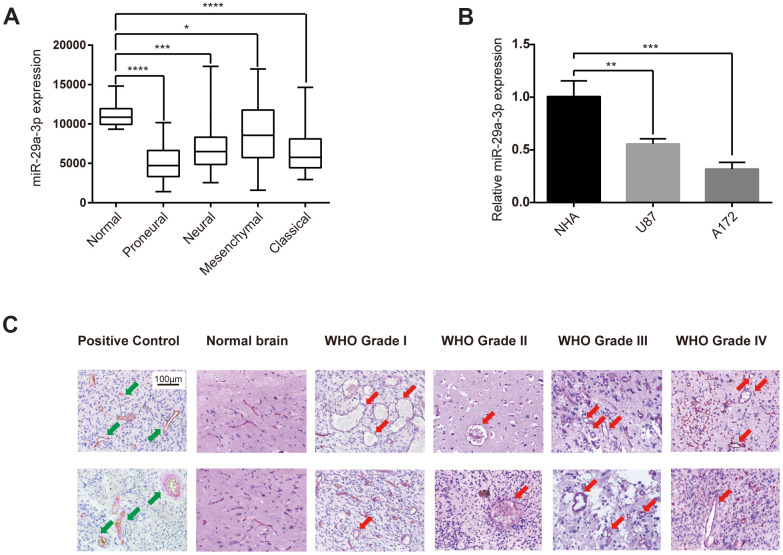
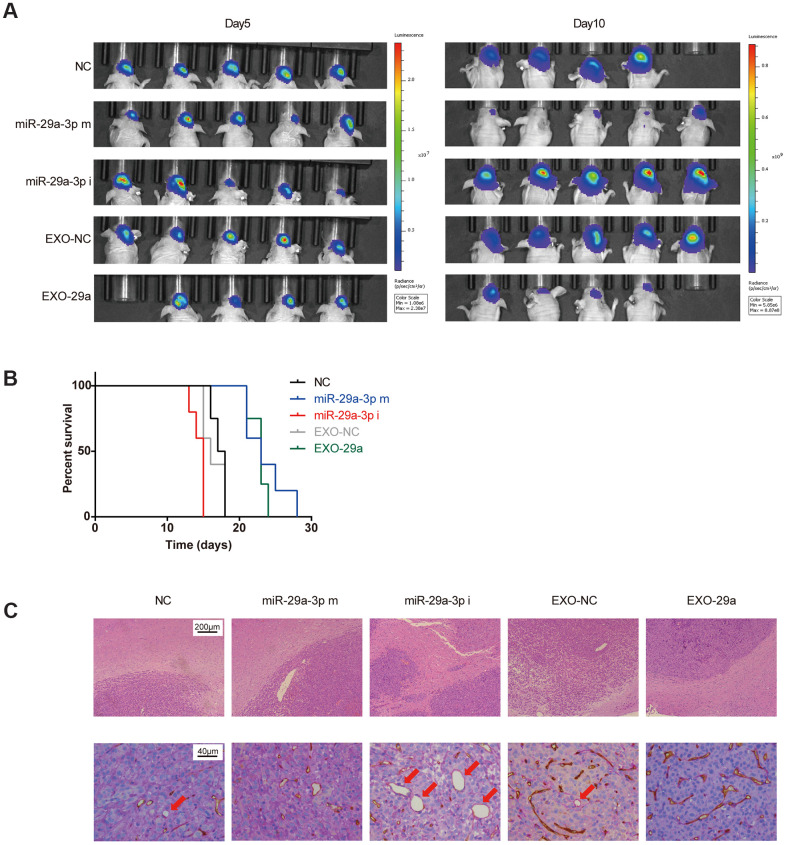
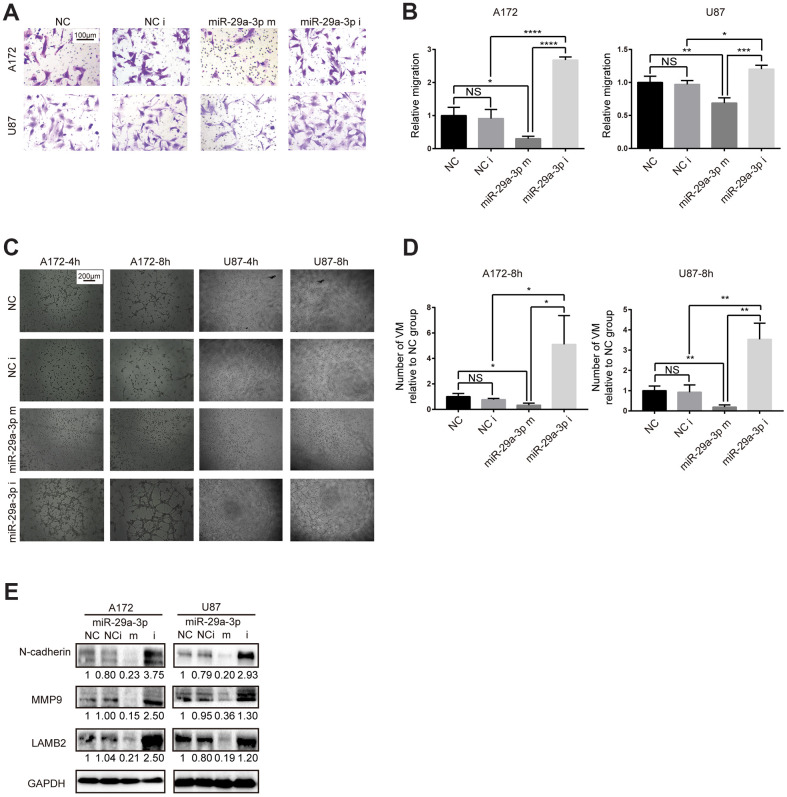
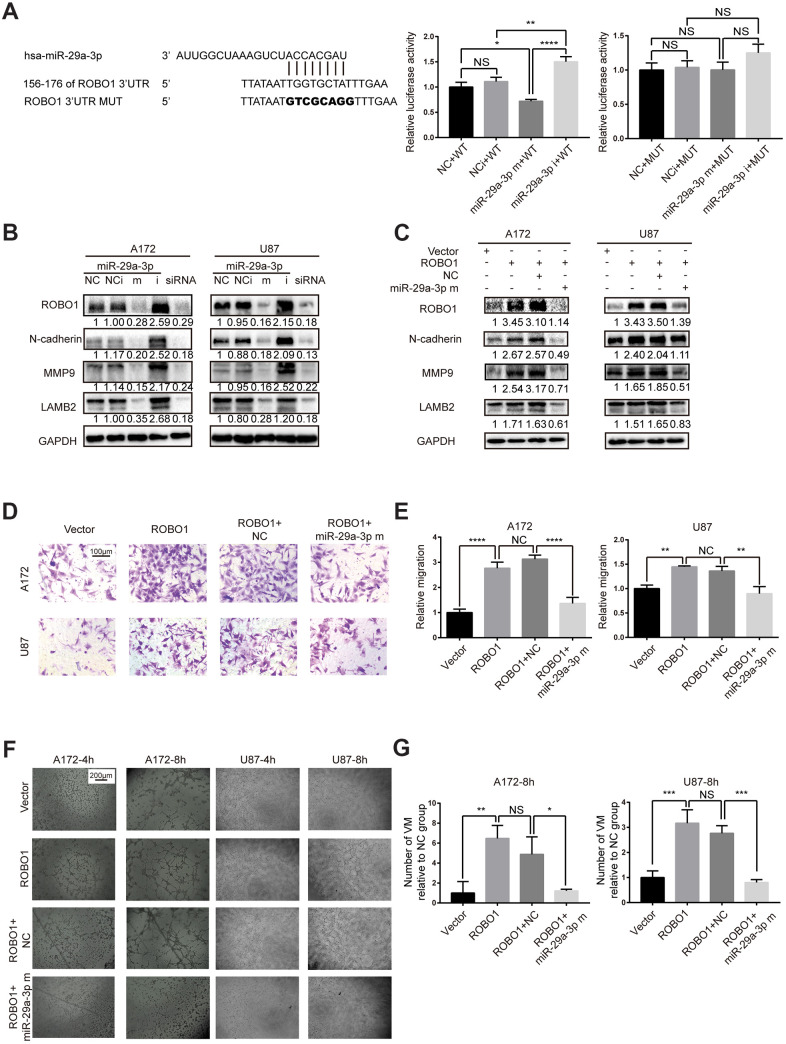
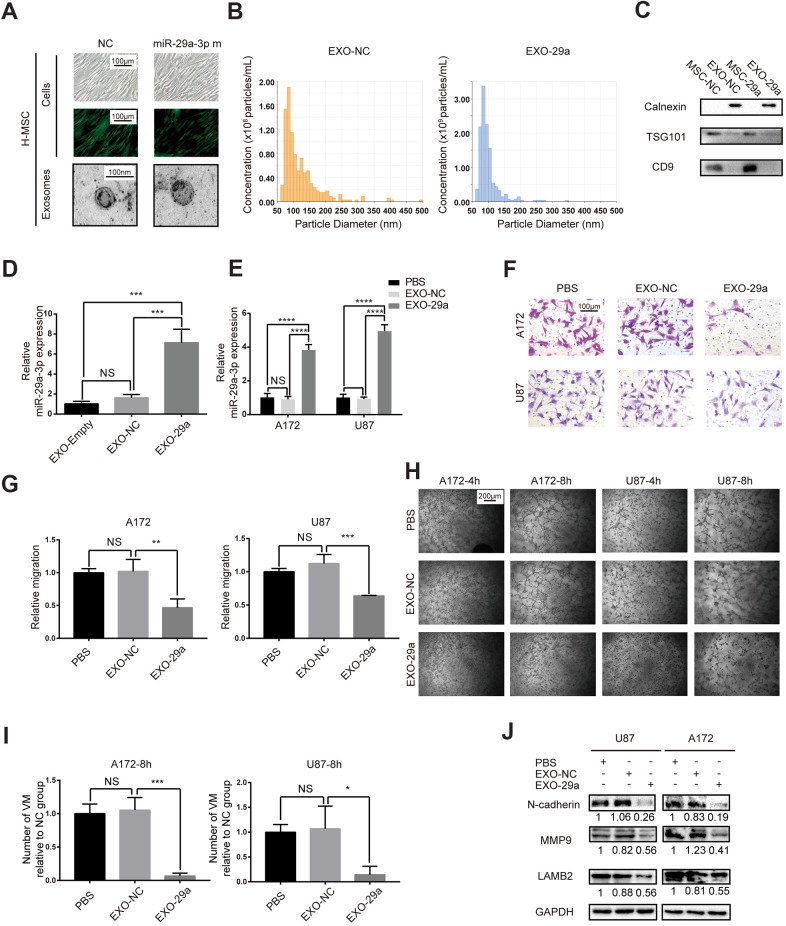
Vasculogenic mimicry (VM), the formation of an alternative microvascular circulation independent of VEGF-driven angiogenesis, is reluctant to anti-angiogenesis therapy for glioma patients. However, treatments targeting VM are lacking due to the poor understanding of the molecular mechanism involved in VM formation. By analysing the TCGA database, microRNA-29a-3p (miR-29a-3p) was found to be highly expressed in normal brain tissue compared with glioma. An study revealed an inhibitory role for miR-29a-3p in glioma cell migration and VM formation, and further study confirmed that ROBO1 is a direct target of miR-29a-3p. Based on this, we engineered human mesenchymal stem cells (MSCs) to produce miR-29a-3p-overexpressing exosomes. Treatment with these exosomes attenuated migration and VM formation in glioma cells. Moreover, the anti-glioma role of miR-29a-3p and miR-29a-3p-overexpressing exosomes were confirmed . Overall, the present study demonstrates that MSCs can be used to produce miR-29a-3p-overexpressing exosomes, which have great potential for anti-VM therapy and may act as supplements to anti-angiogenetic therapy in the clinic.
血管生成拟态(VM),即一种独立于 VEGF 驱动的血管生成的替代微血管循环的形成,使胶质瘤患者对抗血管生成治疗产生耐药性。然而,由于对 VM 形成中涉及的分子机制了解甚少,针对 VM 的治疗方法仍然缺乏。通过分析 TCGA 数据库,发现 microRNA-29a-3p(miR-29a-3p)在正常脑组织中的表达水平明显高于胶质瘤。一项研究揭示了 miR-29a-3p 在胶质瘤细胞迁移和 VM 形成中的抑制作用,并进一步证实 ROBO1 是 miR-29a-3p 的直接靶标。基于此,我们构建了过表达 miR-29a-3p 的人骨髓间充质干细胞(MSC)来源的外泌体。用这些外泌体处理后,胶质瘤细胞的迁移和 VM 形成受到抑制。此外,还证实了 miR-29a-3p 和过表达 miR-29a-3p 的外泌体具有抗胶质瘤作用。综上所述,本研究表明 MSC 可用于产生过表达 miR-29a-3p 的外泌体,这在外泌体在抗 VM 治疗方面具有巨大的潜力,并可能在临床上作为抗血管生成治疗的补充。