Sekine Hiroki, Motohashi Hozumi
Department of Gene Expression Regulation, Institute of Development, Aging and Cancer, Tohoku University, Sendai 980-8575, Japan.
Cancers (Basel). 2021 Feb 1;13(3):541. doi: 10.3390/cancers13030541.
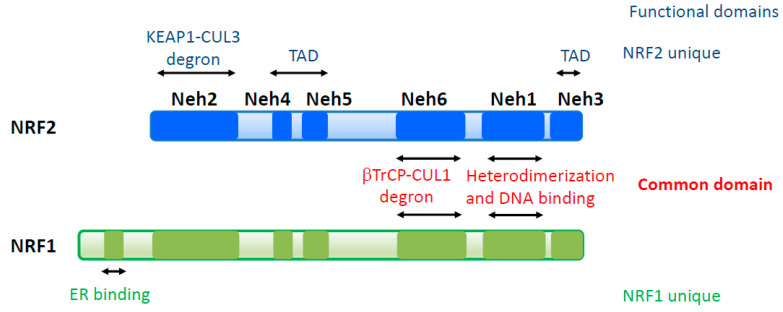
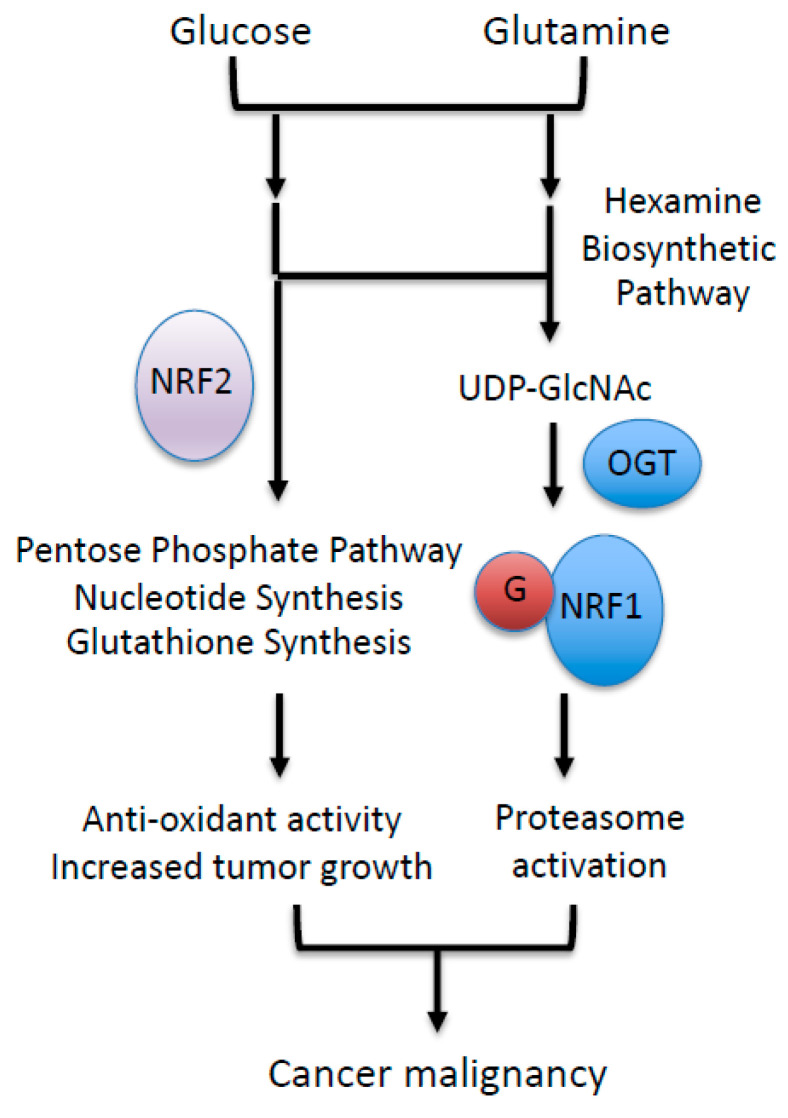
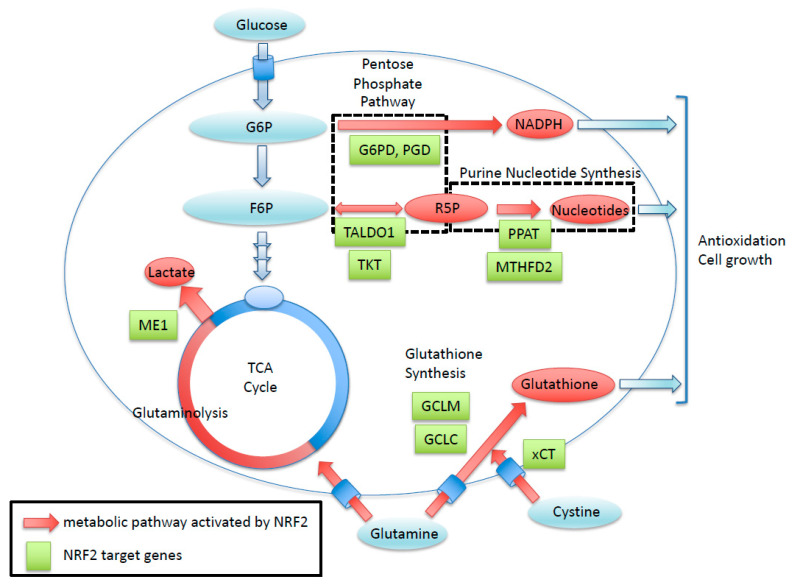
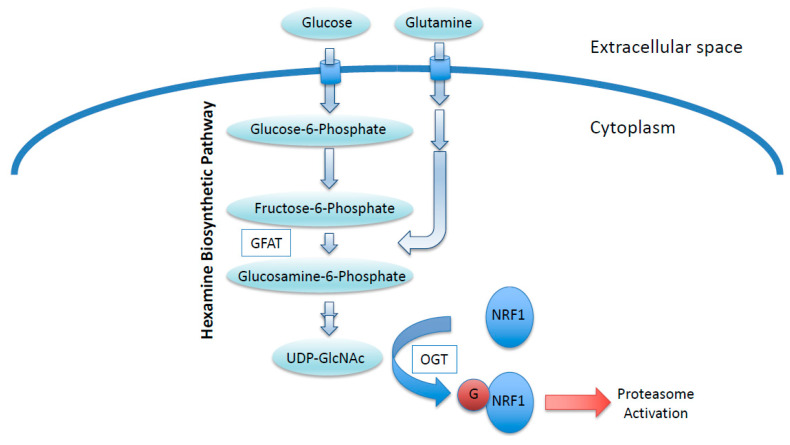
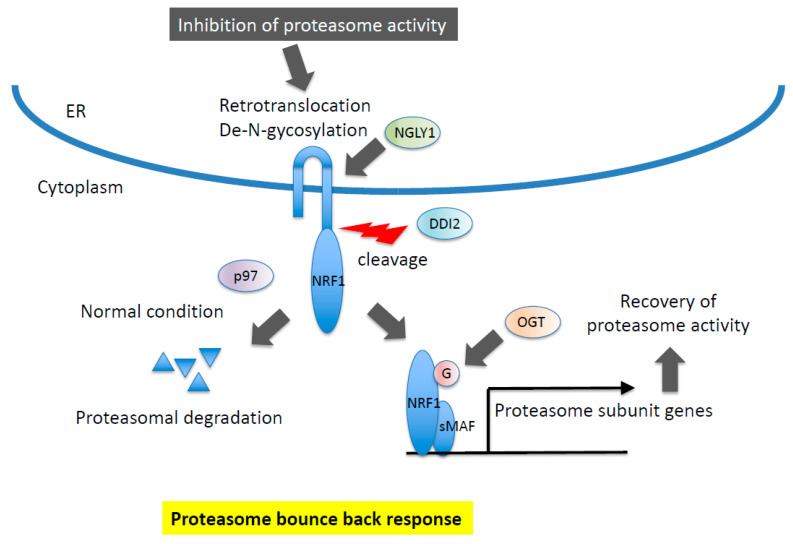
Cancer cells exhibit unique metabolic features and take advantage of them to enhance their survival and proliferation. While the activation of NRF2 (nuclear factor erythroid 2-like 2; NFE2L2), a CNC (cap'n'collar) family transcription factor, is effective for the prevention and alleviation of various diseases, NRF2 contributes to cancer malignancy by promoting aggressive tumorigenesis and conferring therapeutic resistance. NRF2-mediated metabolic reprogramming and increased antioxidant capacity underlie the malignant behaviors of NRF2-activated cancer cells. Another member of the CNC family, NRF1, plays a key role in the therapeutic resistance of cancers. Since NRF1 maintains proteasome activity by inducing proteasome subunit genes in response to proteasome inhibitors, NRF1 protects cancer cells from proteotoxicity induced by anticancer proteasome inhibitors. An important metabolite that activates NRF1 is UDP-GlcNAc (uridine diphosphate N-acetylglucosamine), which is abundantly generated in many cancer cells from glucose and glutamine via the hexosamine pathway. Thus, the metabolic signatures of cancer cells are closely related to the oncogenic and tumor-promoting functions of CNC family members. In this review, we provide a brief overview of NRF2-mediated cancer malignancy and elaborate on NRF1-mediated drug resistance affected by an oncometabolite UDP-GlcNAc.
癌细胞表现出独特的代谢特征,并利用这些特征来增强其存活和增殖能力。虽然CNC(cap'n'collar)家族转录因子NRF2(核因子红细胞2样2;NFE2L2)的激活对预防和缓解各种疾病有效,但NRF2通过促进侵袭性肿瘤发生和赋予治疗抗性而促进癌症恶性发展。NRF2介导的代谢重编程和抗氧化能力增强是NRF2激活的癌细胞恶性行为的基础。CNC家族的另一个成员NRF1在癌症的治疗抗性中起关键作用。由于NRF1通过响应蛋白酶体抑制剂诱导蛋白酶体亚基基因来维持蛋白酶体活性,NRF1保护癌细胞免受抗癌蛋白酶体抑制剂诱导的蛋白毒性。一种激活NRF1的重要代谢物是UDP-GlcNAc(尿苷二磷酸N-乙酰葡糖胺),它在许多癌细胞中通过己糖胺途径由葡萄糖和谷氨酰胺大量生成。因此,癌细胞的代谢特征与CNC家族成员的致癌和促肿瘤功能密切相关。在本综述中,我们简要概述了NRF2介导的癌症恶性发展,并详细阐述了受致癌代谢物UDP-GlcNAc影响的NRF1介导的耐药性。