Masullo Tiziana, Biondo Girolama, Natale Marilena Di, Tagliavia Marcello, Bennici Carmelo Daniele, Musco Marianna, Ragusa Maria Antonietta, Costa Salvatore, Cuttitta Angela, Nicosia Aldo
Institute for Studies on the Mediterranean-National Research Council (ISMED-CNR), Detached Unit of Palermo, Via Filippo Parlatore 65, 90145 Palermo, Italy.
Institute for Anthropic Impacts and Sustainability in Marine Environment-National Research Council (IAS-CNR), Detached Unit of Capo Granitola, Via del mare 3, 91021 Campobello di Mazara, Italy.
Biology (Basel). 2021 Feb 1;10(2):103. doi: 10.3390/biology10020103.
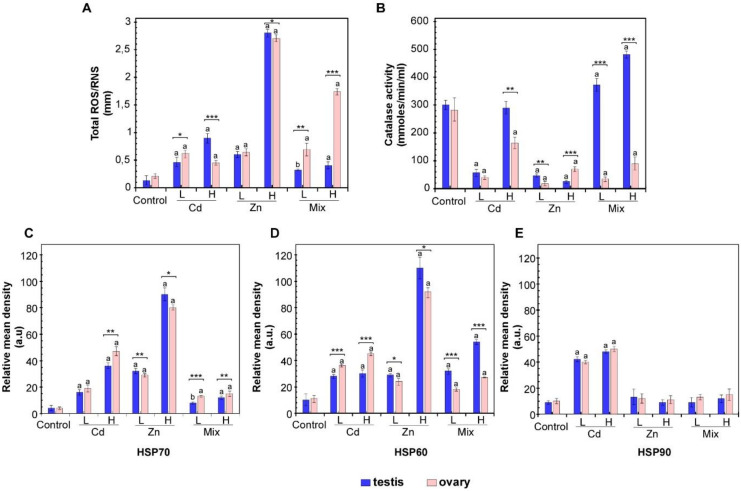
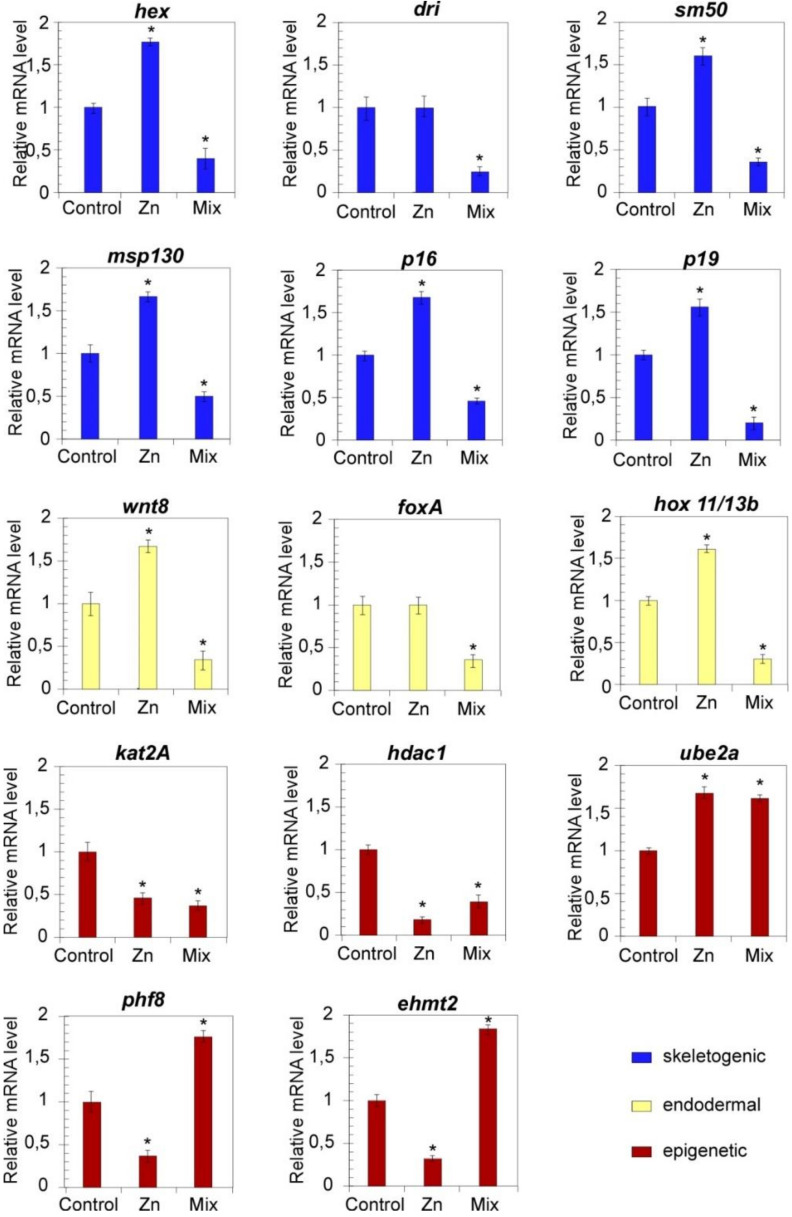
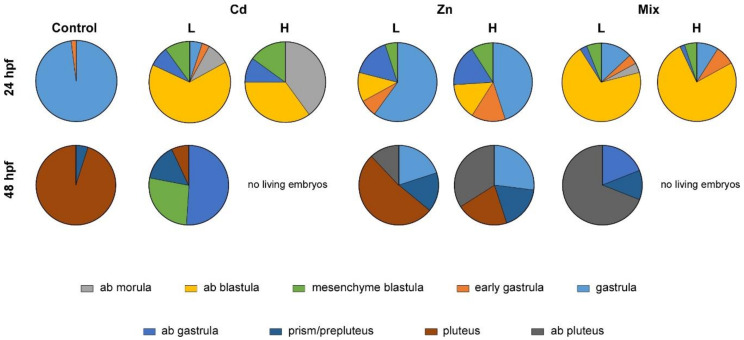
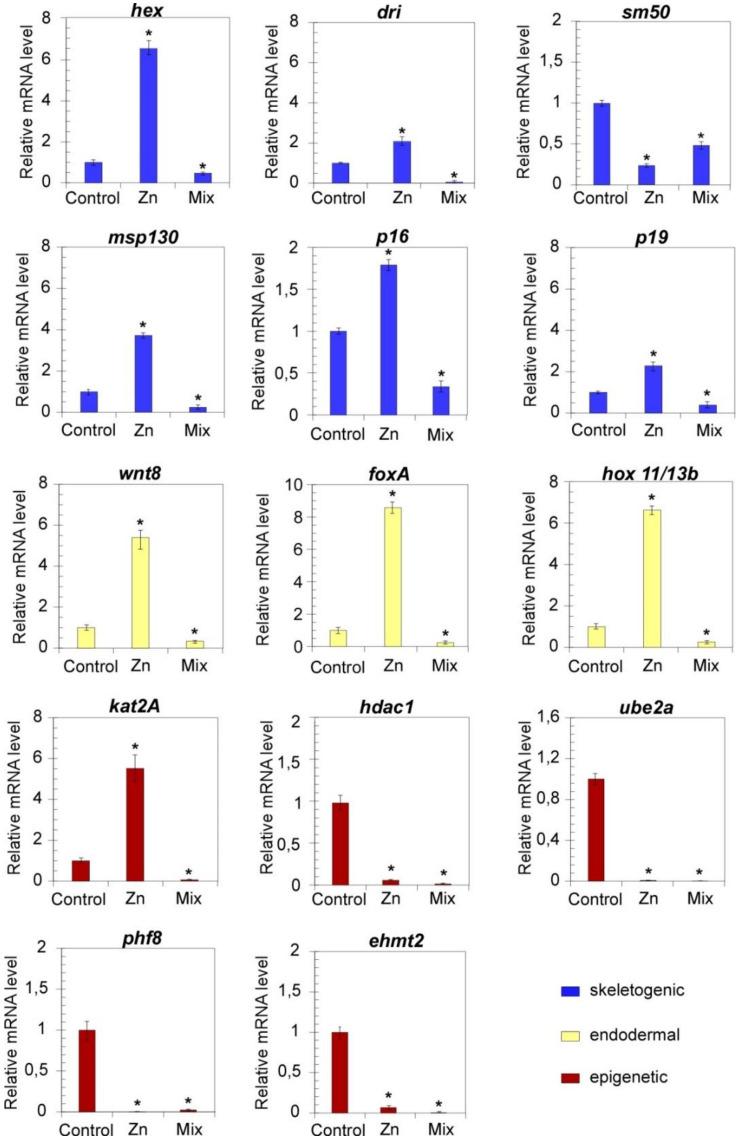
It is widely accepted that phenotypic traits can be modulated at the epigenetic level so that some conditions can affect the progeny of exposed individuals. To assess if the exposure of adult animals could result in effects on the offspring, the Mediterranean sea urchin and its well-characterized gene regulatory networks (GRNs) was chosen as a model. Adult animals were exposed to known concentrations of zinc and cadmium (both individually and in combination) for 10 days, and the resulting embryos were followed during the development. The oxidative stress occurring in parental gonads, embryo phenotypes and mortality, and the expression level of a set of selected genes, including members of the skeletogenic and endodermal GRNs, were evaluated. Increased oxidative stress at F, high rates of developmental aberration with impaired gastrulation, in association to deregulation of genes involved in skeletogenesis (), endodermal specification ( and epigenetic regulation (, e and ) occurred either at 24 or 48 hpf. Results strongly indicate that exposure to environmental pollutants can affect not only directly challenged animals but also their progeny (at least F), influencing optimal timing of genetic programme of embryo development, resulting in an overall impairment of developmental success.
人们普遍认为,表型性状可以在表观遗传水平上受到调控,因此某些条件可以影响受暴露个体的后代。为了评估成年动物的暴露是否会对其后代产生影响,地中海海胆及其特征明确的基因调控网络(GRNs)被选为模型。成年动物暴露于已知浓度的锌和镉(单独和组合)中10天,并在发育过程中跟踪产生的胚胎。评估了亲代性腺中发生的氧化应激、胚胎表型和死亡率,以及一组选定基因的表达水平,包括骨骼生成和内胚层GRNs的成员。在24或48 hpf时,F代出现氧化应激增加、原肠胚形成受损导致的高发育畸变率,以及与骨骼生成()、内胚层特化(和表观遗传调控(、e和)相关的基因失调。结果强烈表明,暴露于环境污染物不仅会直接影响受挑战的动物,还会影响它们的后代(至少F代),影响胚胎发育遗传程序的最佳时间,导致发育成功率整体受损。