Unit for Social Epidemiology, Department of Clinical Sciences Malmö, Lund University, Jan Waldenströms Street 35, 205 02, Malmö, Sweden.
Department of Gender Studies, Lund University, Lund, Sweden.
Int J Equity Health. 2021 Feb 3;20(1):54. doi: 10.1186/s12939-020-01368-0.
Intersectionality theory combined with an analysis of individual heterogeneity and discriminatory accuracy (AIHDA) can facilitate our understanding of health disparities. This enables the application of proportionate universalism for resource allocation in public health. Analyzing self-rated health (SRH) in Sweden, we show how an intersectional perspective allows for a detailed mapping of health inequalities while avoiding simplification and stigmatization based on indiscriminate interpretations of differences between group averages.
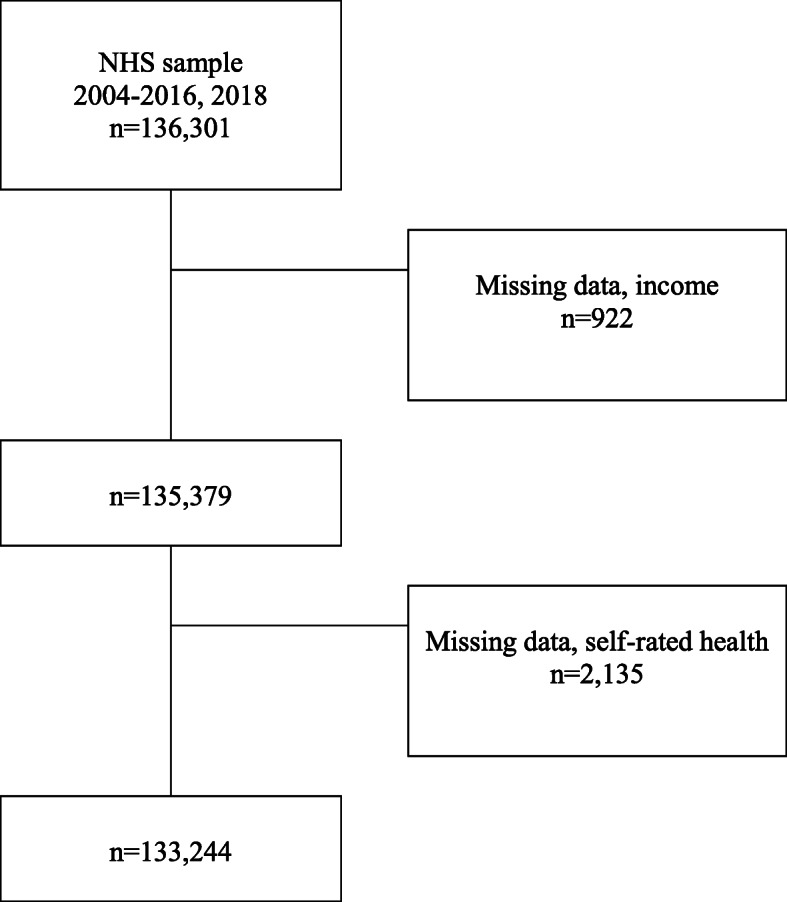
We analyzed participants (n=133,244) in 14 consecutive National Public Health Surveys conducted in Sweden in 2004-2016 and 2018. Applying AIHDA, we investigated the risk of bad SRH across 12 intersectional strata defined by gender, income and migration status, adjusted by age and survey year. We calculated odds ratios (with 95% confidence intervals) to evaluate between-strata differences, using native-born men with high income as the comparison reference. We calculated the area under the receiver operating characteristic curve (AU-ROC) to evaluate the discriminatory accuracy of the intersectional strata for identifying individuals according to their SRH status.
The analysis of intersectional strata showed clear average differences in the risk of bad SRH. For instance, the risk was seven times higher for immigrated women with low income (OR 7.00 [95% CI 6.14-7.97]) than for native men with high income. However, the discriminatory accuracy of the intersectional strata was small (AU-ROC=0.67).
The intersectional AIHDA approach provides more precise information on the existence (or the absence) of health inequalities, and can guide public health interventions according to the principle of proportionate universalism. The low discriminatory accuracy of the intersectional strata found in this study warrants universal interventions rather than interventions exclusively focused on strata with a higher average risk of bad SRH.
交叉性理论结合个体异质性和歧视准确性分析(AIHDA)可以帮助我们理解健康差距。这使得我们能够根据比例普遍主义原则为公共卫生资源分配提供依据。通过对瑞典自我报告健康(SRH)的分析,我们展示了交叉视角如何能够详细描绘健康不平等,同时避免基于对群体平均值之间差异的不加区分的解释而进行简化和污名化。
我们分析了 2004-2016 年和 2018 年在瑞典进行的 14 项连续国家公共卫生调查中的 133244 名参与者。应用 AIHDA,我们调查了 12 个交叉阶层中坏 SRH 的风险,这些阶层由性别、收入和移民状况定义,并按年龄和调查年份进行调整。我们使用以高收入的本地出生男性为比较参考,计算了各阶层之间的优势比(95%置信区间),以评估差异。我们计算了接收器操作特征曲线下的面积(AU-ROC),以评估交叉阶层根据 SRH 状况识别个体的区分准确性。
对交叉阶层的分析显示,坏 SRH 风险存在明显的平均差异。例如,低收入移民女性的风险比高收入本地男性高 7 倍(OR7.00[95%CI6.14-7.97])。然而,交叉阶层的区分准确性较小(AU-ROC=0.67)。
交叉性 AIHDA 方法提供了更精确的信息,说明健康不平等的存在(或不存在),并可以根据比例普遍主义原则指导公共卫生干预措施。本研究中发现的交叉阶层区分准确性较低,需要普遍干预,而不是专门针对坏 SRH 平均风险较高的阶层进行干预。