Department of Orthopaedic Surgery, Yong Loo Lin School of Medicine, National University of Singapore, NUHS Tower Block, Level 11, 1E Kent Ridge Road, Singapore, 119288, Singapore.
Tissue Engineering Program, Life Sciences Institute, National University of Singapore, DSO (Kent Ridge) Building, #04-01, 27 Medical Drive, Singapore, 117510, Singapore.
Stem Cell Res Ther. 2021 Feb 3;12(1):100. doi: 10.1186/s13287-021-02137-8.
Secretome profiles of mesenchymal stem cells (MSCs) are reflective of their local microenvironments. These biologically active factors exert an impact on the surrounding cells, eliciting regenerative responses that create an opportunity for exploiting MSCs towards a cell-free therapy for cartilage regeneration. The conventional method of culturing MSCs on a tissue culture plate (TCP) does not provide the physiological microenvironment for optimum secretome production. In this study, we explored the potential of electrospun fiber sheets with specific orientation in influencing the MSC secretome production and its therapeutic value in repairing cartilage.
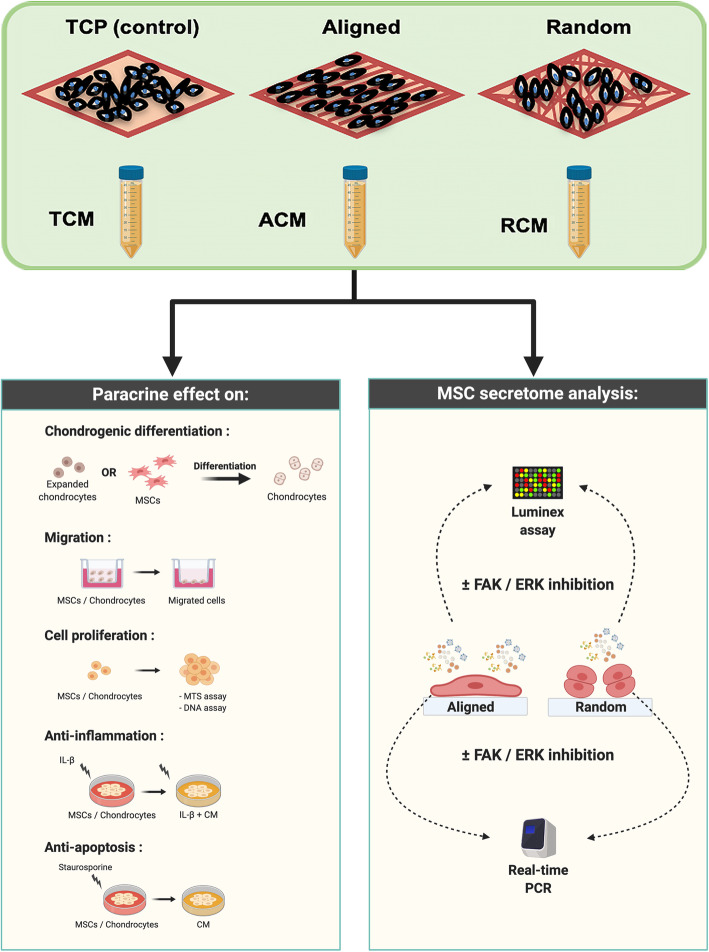
Conditioned media (CM) were generated from MSCs cultured either on TCP or electrospun fiber sheets of distinct aligned or random fiber orientation. The paracrine potential of CM in affecting chondrogenic differentiation, migration, proliferation, inflammatory modulation, and survival of MSCs and chondrocytes was assessed. The involvement of FAK and ERK mechanotransduction pathways in modulating MSC secretome were also investigated.
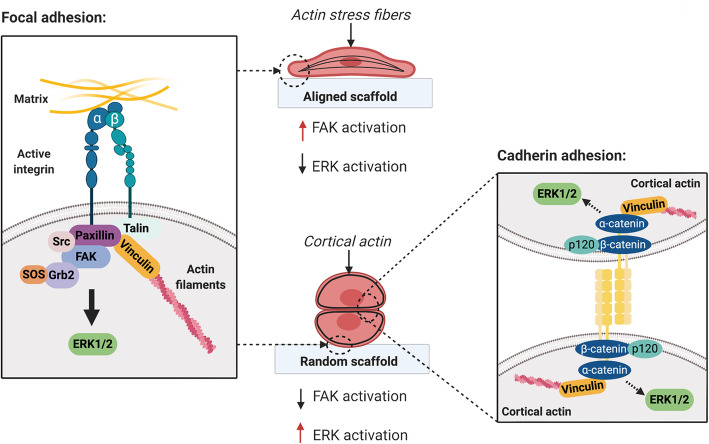
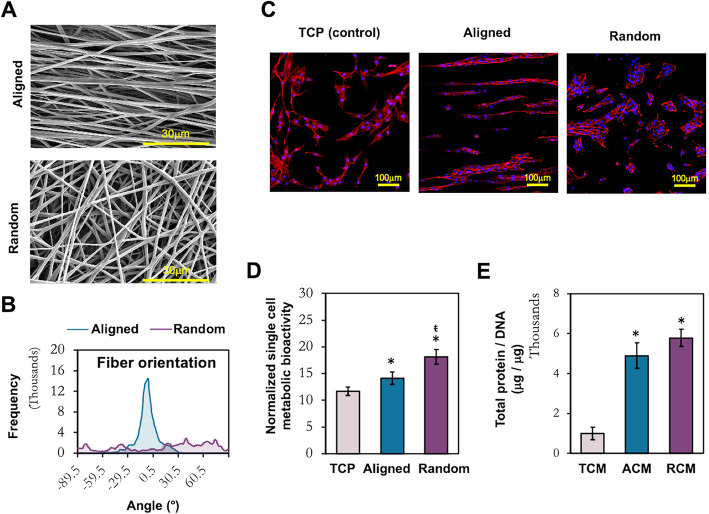
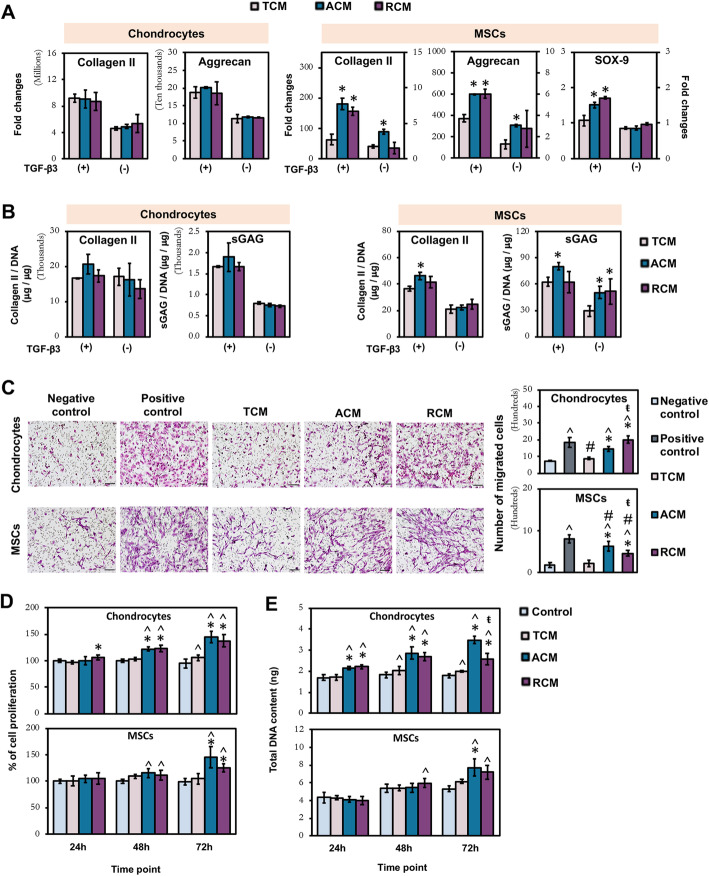
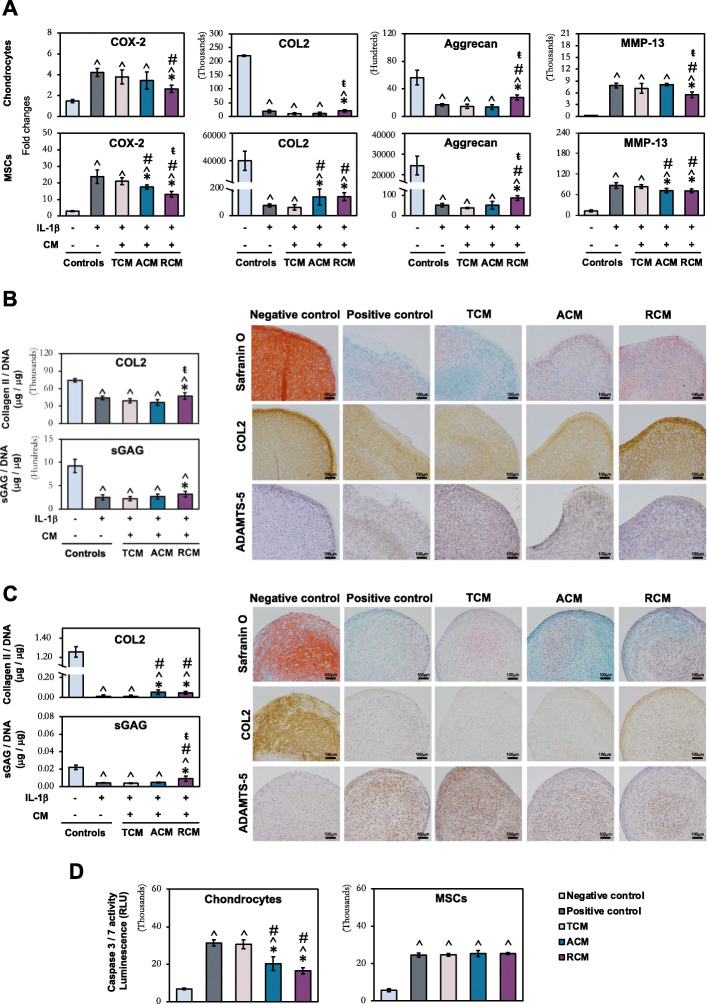
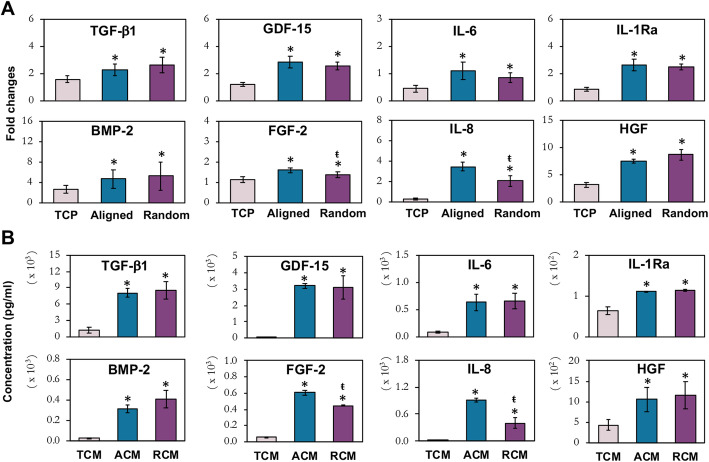
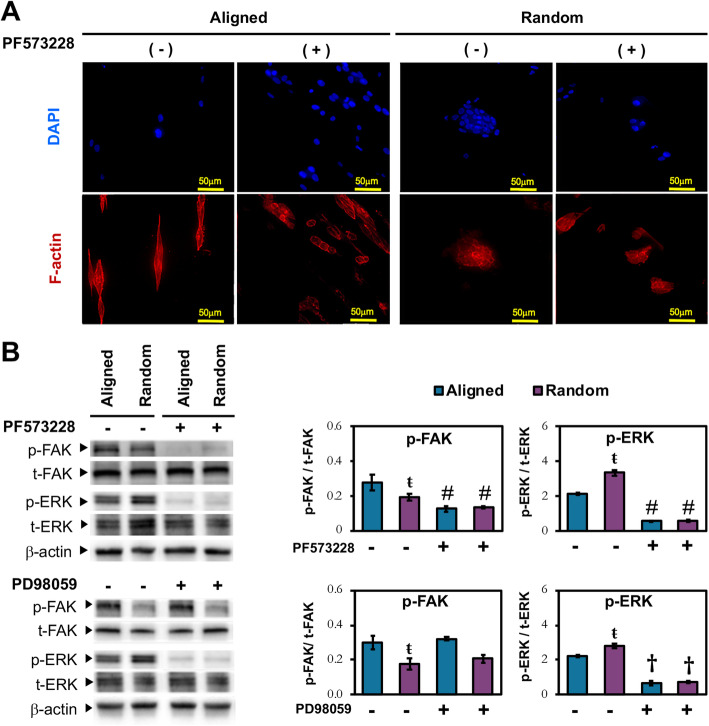
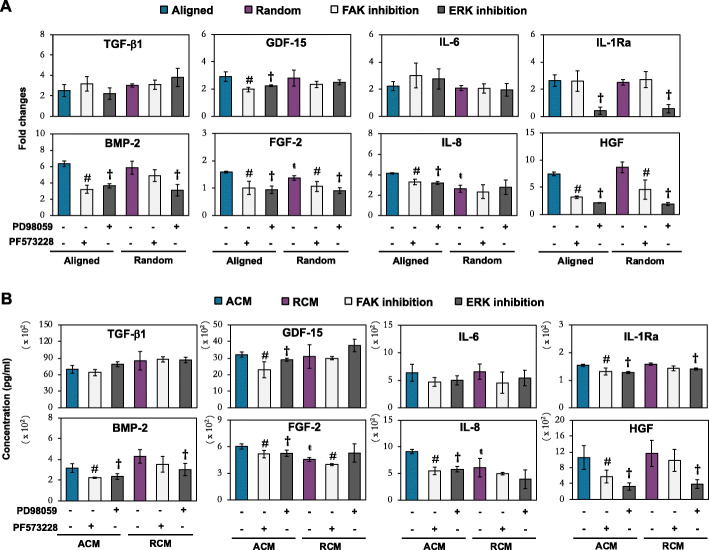
We showed that conditioned media of MSCs cultured on electrospun fiber sheets compared to that generated from TCP have improved secretome yield and profile, which enhanced the migration and proliferation of MSCs and chondrocytes, promoted MSC chondrogenesis, mitigated inflammation in both MSCs and chondrocytes, as well as protected chondrocytes from apoptosis. Amongst the fiber sheet-generated CM, aligned fiber-generated CM (ACM) was better at promoting cell proliferation and augmenting MSC chondrogenesis, while randomly oriented fiber-generated CM (RCM) was more efficient in mitigating the inflammation assault. FAK and ERK signalings were shown to participate in the modulation of MSC morphology and its secretome production.
This study demonstrates topographical-dependent MSC paracrine activities and the potential of employing electrospun fiber sheets to improve the MSC secretome for cartilage regeneration.
间充质干细胞(MSCs)的分泌组谱反映了其局部微环境。这些具有生物活性的因子对周围细胞产生影响,引发再生反应,为利用 MSCs 实现无细胞治疗软骨再生创造了机会。传统的在组织培养板(TCP)上培养 MSC 的方法不能为最佳分泌组产生提供生理微环境。在这项研究中,我们探索了具有特定取向的静电纺丝纤维片在影响 MSC 分泌组产生及其在修复软骨方面的治疗价值的潜力。
从在 TCP 或具有不同取向的静电纺丝纤维片上培养的 MSC 中生成条件培养基(CM)。评估 CM 的旁分泌潜能对 MSC 向软骨分化、迁移、增殖、炎症调节和存活以及软骨细胞的影响。还研究了 FAK 和 ERK 机械转导途径在调节 MSC 分泌组中的作用。
我们表明,与 TCP 相比,静电纺丝纤维片上培养的 MSC 的条件培养基具有更好的分泌组产量和特征,这增强了 MSC 和软骨细胞的迁移和增殖,促进了 MSC 向软骨分化,减轻了 MSC 和软骨细胞的炎症,以及保护软骨细胞免受凋亡。在纤维片生成的 CM 中,定向纤维生成的 CM(ACM)更能促进细胞增殖和增强 MSC 向软骨分化,而随机定向纤维生成的 CM(RCM)在减轻炎症攻击方面更有效。FAK 和 ERK 信号通路被证明参与了 MSC 形态及其分泌组产生的调节。
这项研究证明了 MSC 旁分泌活性的拓扑依赖性和利用静电纺丝纤维片改善 MSC 分泌组用于软骨再生的潜力。