Casajuana Ester Mar, Day Richard M
Applied Biomedical Engineering Group, Centre for Precision Healthcare, UCL Division of Medicine, University College London, London WC1E 6JF, UK.
Pharmaceutics. 2023 Feb 16;15(2):663. doi: 10.3390/pharmaceutics15020663.
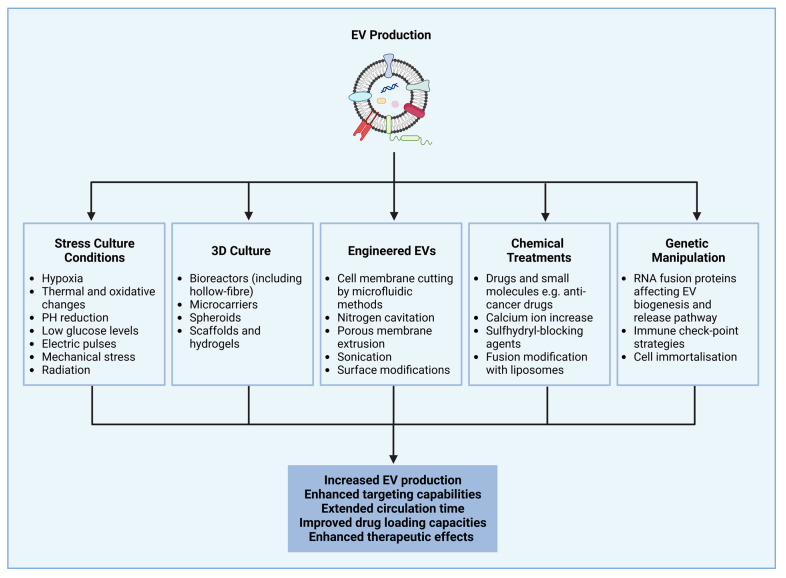
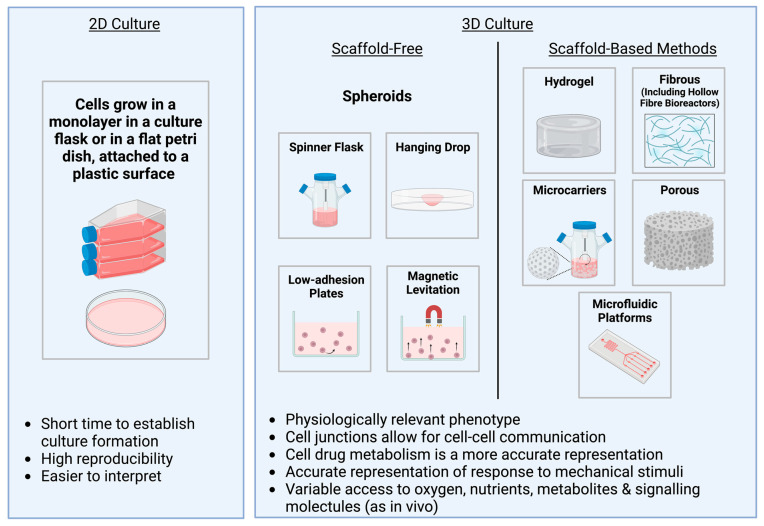
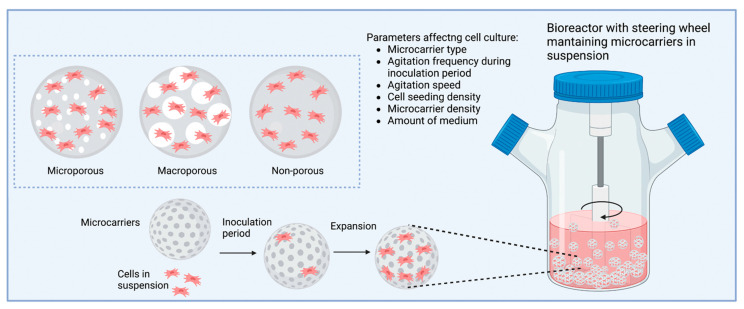
In recent years, extracellular vesicles (EVs) have emerged as promising biomarkers, cell-free therapeutic agents, and drug delivery carriers. Despite their great clinical potential, poor yield and unscalable production of EVs remain significant challenges. When using 3D culture methods, such as scaffolds and bioreactors, large numbers of cells can be expanded and the cell environment can be manipulated to control the cell phenotype. This has been employed to successfully increase the production of EVs as well as to enhance their therapeutic effects. The physiological relevance of 3D cultures, such as spheroids, has also provided a strategy for understanding the role of EVs in the pathogenesis of several diseases and to evaluate their role as tools to deliver drugs. Additionally, 3D culture methods can encapsulate EVs to achieve more sustained therapeutic effects as well as prevent premature clearance of EVs to enable more localised delivery and concentrated exosome dosage. This review highlights the opportunities and drawbacks of different 3D culture methods and their use in EV research.
近年来,细胞外囊泡(EVs)已成为有前景的生物标志物、无细胞治疗剂和药物递送载体。尽管它们具有巨大的临床潜力,但EVs产量低和无法规模化生产仍然是重大挑战。当使用3D培养方法,如支架和生物反应器时,可以大量扩增细胞,并可操纵细胞环境以控制细胞表型。这已被成功用于增加EVs的产量以及增强其治疗效果。3D培养物(如球体)的生理相关性也为理解EVs在几种疾病发病机制中的作用以及评估它们作为药物递送工具的作用提供了一种策略。此外,3D培养方法可以封装EVs,以实现更持久的治疗效果,并防止EVs过早清除,从而实现更局部化的递送和浓缩外泌体剂量。本综述强调了不同3D培养方法在EV研究中的机遇和缺点及其应用。