Department of Experimental Biology, Wrocław University of Environmental and Life Sciences, Norwida 27B Street, A7 Building, 50-375, Wrocław, Poland.
International Institute of Translational Medicine, Malin, Jesionowa 11, 55-114, Wisznia Mała, Poland.
Stem Cell Res Ther. 2021 Feb 3;12(1):97. doi: 10.1186/s13287-020-02102-x.
Protein tyrosine phosphatase 1B (PTP1B) is one of the major negative regulators of leptin and insulin signaling, and has been strongly implicated in insulin resistance development in the course of obesity and metabolic syndrome conditions; however, its exact role in controlling adipose tissue biogenesis is still poorly understood.
This investigation aimed to elucidate whether selective inhibition of PTP1B using MSI-1436 compound may improve and restore the defective adipogenicity of ASCs isolated from EMS-affected horses.
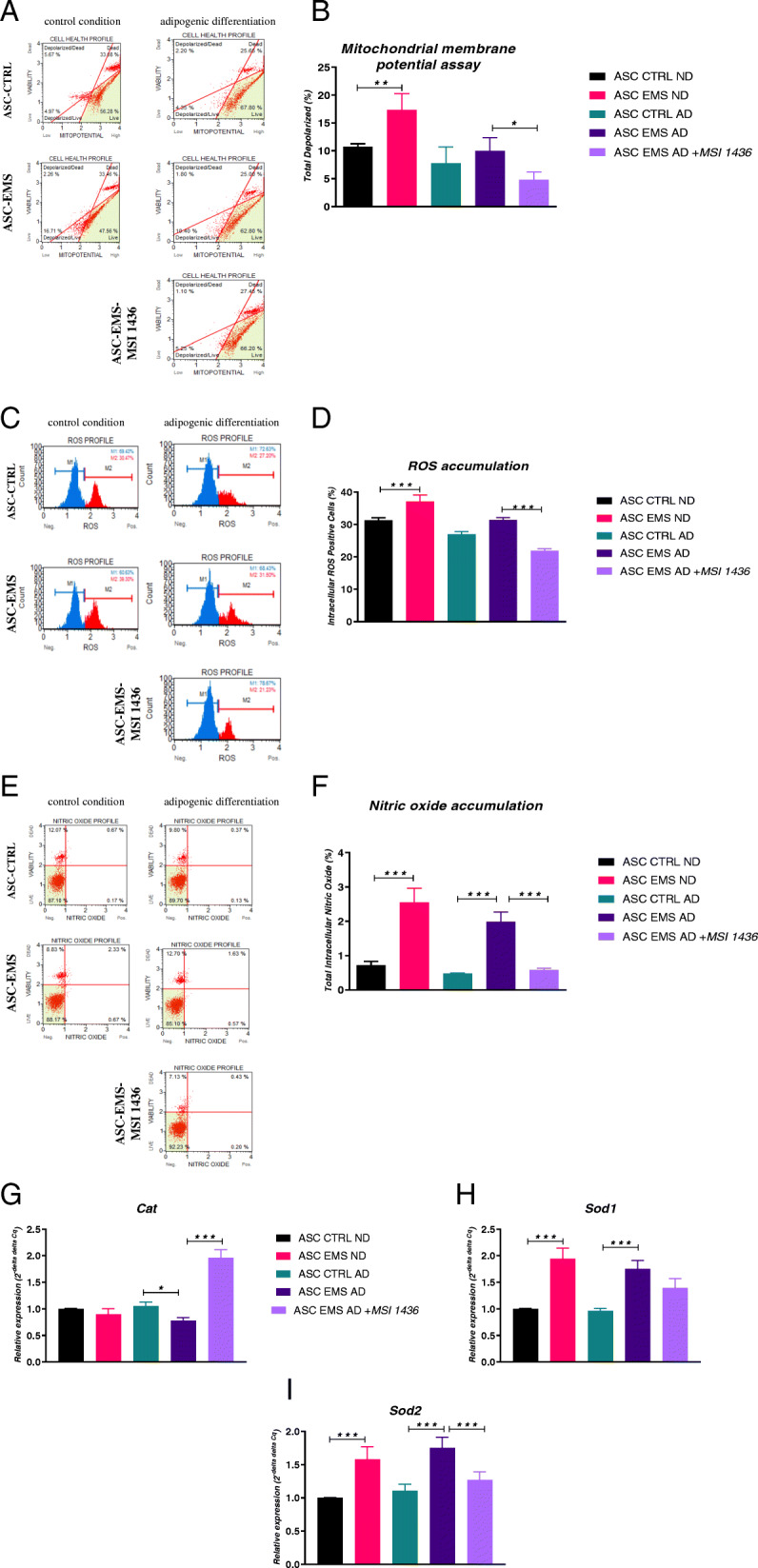
Equine ASC EMS cells were cultured under adipogenic conditions in the presence of PTP1B inhibitor and were subsequently tested for expression of the main adipogenic-related genes using RT-qPCR, changes in free fatty acid profiles by means of GC-MS technique, and for mitochondrial dynamics improvement through the analysis of mitochondrial transmembrane potential and oxidative stress.
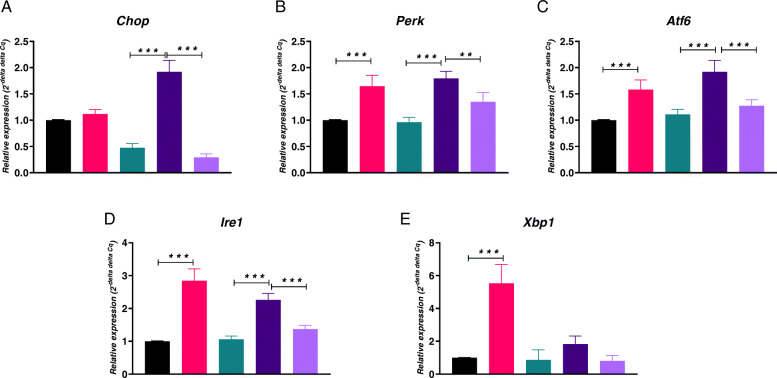
Selective inhibition of PTP1B in equine ASC EMS cells improved substantially adipogenic differentiation by promoting cellular proliferation and normalizing expression of C/EBPalpha, PPARγ, and Adipoq markers that are critical for proper adipogenesis. Levels of secreted adiponectin and PPARγ were also shown to be increased in MSI-1436-conditioned cells, while total leptin levels markedly dropped under the same conditions. Moreover, MSI-1436 treatment enabled the regulation of metabolic-related transcripts that are crosslink to adipogenesis, namely Akt1, Akt2, and SHBG. The obtained results demonstrated also an obvious reduction in intracellular accumulated ROS and NO, as well as mitigated ER stress through the downregulation of Chop, Perk, Atf6, Ire1, and Xbp1 transcripts upon PTP1B inhibition. Furthermore, general fluctuations in FFA composition of all differentiated groups have been highlighted, where palmitic acid, palmitoleic acid, stearic acid, and linolelaidic acid that are known to be associated with the development of metabolic disorders were found to be normalized upon PTP1B inhibition during adipogenic differentiation.
The presented data provides the evidence that the use of PTP1B inhibitor may be successful in controlling and enhancing adipogenic differentiation of impaired equine ASCs affected by metabolic syndrome, and thus offers new insights for the management of obesity through the regulation of adipose tissue dynamics.
蛋白酪氨酸磷酸酶 1B(PTP1B)是瘦素和胰岛素信号的主要负调节因子之一,在肥胖和代谢综合征条件下胰岛素抵抗的发展中起着重要作用;然而,其在控制脂肪组织生成中的确切作用仍知之甚少。
本研究旨在阐明使用 MSI-1436 化合物选择性抑制 PTP1B 是否可以改善和恢复代谢综合征影响的马的 ASC 中受损的脂肪生成能力。
在存在 PTP1B 抑制剂的情况下,将马 ASC EMS 细胞在成脂条件下培养,并使用 RT-qPCR 检测主要脂肪生成相关基因的表达,通过 GC-MS 技术检测游离脂肪酸谱的变化,以及通过分析线粒体跨膜电位和氧化应激来改善线粒体动力学。
选择性抑制马 ASC EMS 细胞中的 PTP1B 可通过促进细胞增殖和正常化关键的适当脂肪生成的 C/EBPalpha、PPARγ 和 Adipoq 标志物的表达,显著改善脂肪生成分化。在 MSI-1436 条件下,细胞中分泌的脂联素和 PPARγ 的水平也有所增加,而在相同条件下,瘦素的总水平明显下降。此外,MSI-1436 处理还可调节与脂肪生成相关的代谢相关转录本,即 Akt1、Akt2 和 SHBG。研究结果还表明,通过下调 PTP1B 抑制时的 Chop、Perk、Atf6、Ire1 和 Xbp1 转录本,可明显减少细胞内积累的 ROS 和 NO,减轻内质网应激。此外,还强调了所有分化组的 FFA 组成的一般波动,其中棕榈酸、棕榈油酸、硬脂酸和亚油酸,已知与代谢紊乱的发展有关,在脂肪生成分化过程中发现它们在 PTP1B 抑制时得到了正常化。
所提供的数据表明,使用 PTP1B 抑制剂可能成功控制和增强代谢综合征影响的马 ASC 的脂肪生成分化,从而为通过调节脂肪组织动力学来治疗肥胖提供了新的见解。