Department of Experimental Biology, Faculty of Biology and Animal Science, Wrocław University of Environmental and Life Sciences, Norwida 27B, 50-375, Wrocław, Poland.
Department of Medicine and Epidemiology, UC Davis School of Veterinary Medicine, Davis, CA, 95516, USA.
Cell Commun Signal. 2023 Sep 11;21(1):230. doi: 10.1186/s12964-023-01254-6.
Equine metabolic syndrome (EMS), which encompasses insulin resistance, low-grade inflammation and predisposition to laminitis is a critical endocrine disorder among the most prevalent conditions affecting horses from different breeds. According to the most recent research, low human sex hormone-binding globulin (SHBG) serum levels correlate with an increased risk of obesity, insulin resistance and diabetes, and may contribute to overall metabolic dysregulations. This study aimed to test whether exogenous SHBG could protect EMS affected adipose-derived stromal stem cells (EqASC) from apoptosis, oxidative stress, ER stress and thus improve insulin sensitivity.
EqASC wells were treated with two different concentrations (50 and 100 nM) of exogenous SHBG, whose biocompatibility was tested after 24, 48 and 72 h of incubation. Several parameters including cell viability, apoptosis, cell cycle, reactive oxygen species levels, ER stress, Pi3K/MAPK activation and insulin transducers expression were analysed.
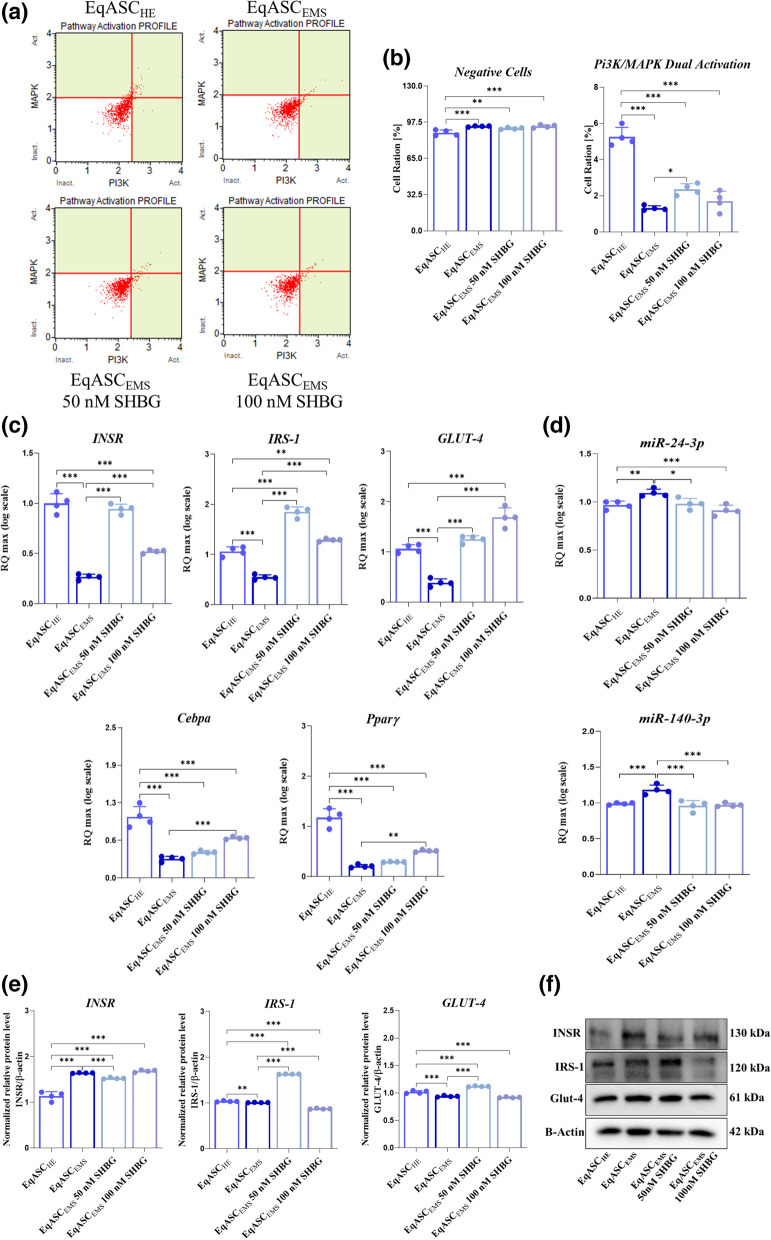
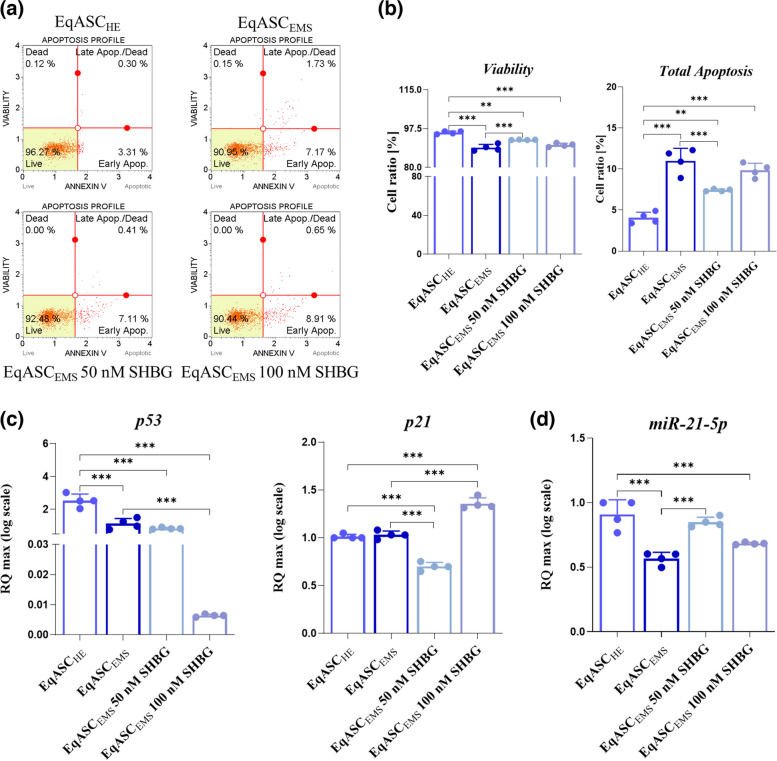
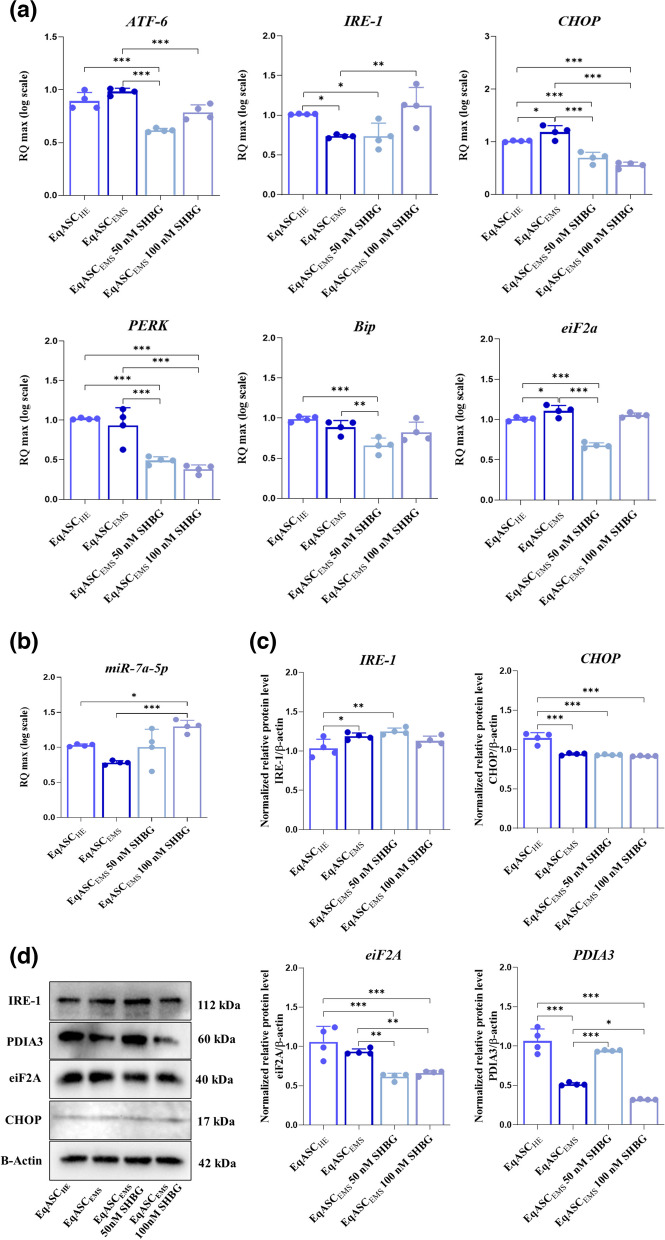
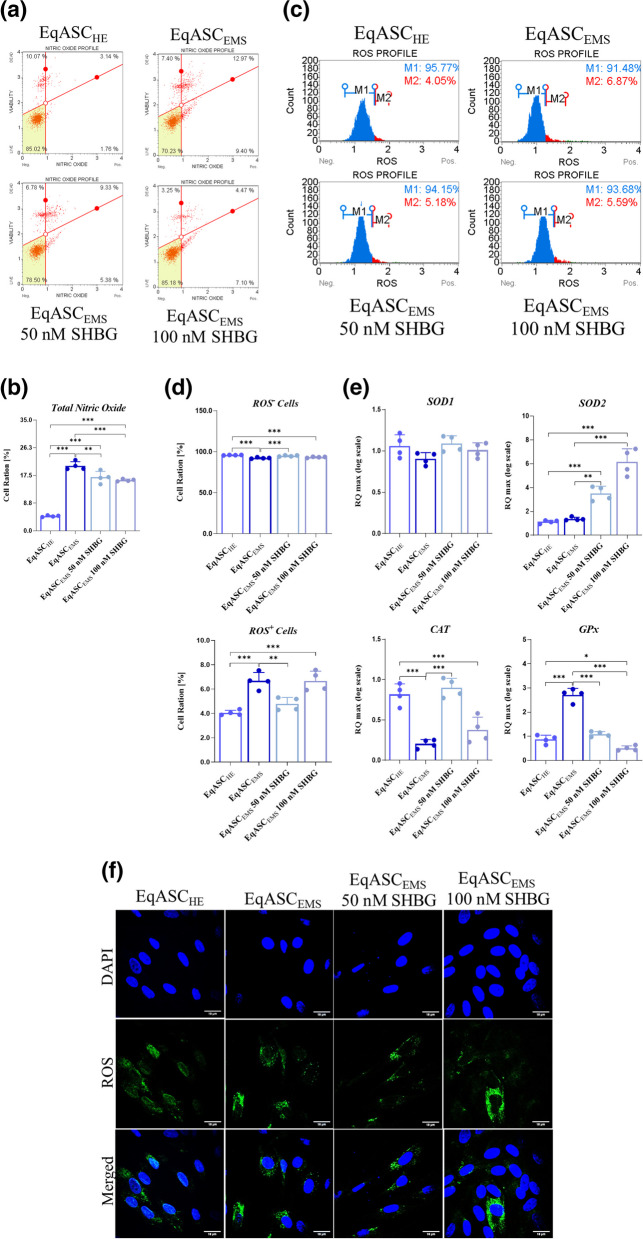
Obtained data demonstrated that exogenous SHBG treatment significantly promoted ASCs cells proliferation, cell cycle and survival with reduced expression of p53 and p21 pro-apoptotic mediators. Furthermore, SHBG alleviated the oxidative stress caused by EMS and reduced the overaccumulation of intracellular ROS, by reducing ROS + cell percentage and regulating gene expression of endogenous antioxidant enzymes (Sod 1, Cat, GPx), SHBG treatment exhibited antioxidant activity by modulating total nitric oxide (NO) levels in EMS cells as well. SHBG treatment dampened the activation of ER stress sensors and effectors in EqASC cells via the upregulation of MiR-7a-5p, the decrease in the expression levels of ATF-6, CHOP and eiF2A and the restoration of PDIA3 chaperone protein levels. As a consequence, SHBG application substantially improved insulin sensitivity through the modulation of Pi3K/Akt/Glut4 insulin signalling cascades.
Our results suggest that the SHBG is endowed with crucial beneficial effects on ASCs metabolic activities and could serve as a valuable therapeutic target for the development of efficient EMS treatment protocols. Video Abstract.
马代谢综合征(EMS)包括胰岛素抵抗、低度炎症和易发性蹄叶炎,是影响不同品种马的最常见疾病之一,是一种关键的内分泌紊乱。根据最新研究,低人血清性激素结合球蛋白(SHBG)水平与肥胖、胰岛素抵抗和糖尿病的风险增加相关,并可能导致整体代谢失调。本研究旨在测试外源性 SHBG 是否可以保护 EMS 影响的脂肪来源基质干细胞(EqASC)免于凋亡、氧化应激、内质网应激,从而提高胰岛素敏感性。
EqASC 孔用两种不同浓度(50 和 100 nM)的外源性 SHBG 处理,孵育 24、48 和 72 小时后测试其生物相容性。分析了细胞活力、凋亡、细胞周期、活性氧(ROS)水平、内质网应激、Pi3K/MAPK 激活和胰岛素转导子表达等多个参数。
所得数据表明,外源性 SHBG 处理可显著促进 ASCs 细胞增殖、细胞周期和存活,减少促凋亡介质 p53 和 p21 的表达。此外,SHBG 通过减轻 EMS 引起的氧化应激和减少细胞内 ROS 的过度积累来减轻氧化应激,降低 ROS+细胞的百分比并调节内源性抗氧化酶(Sod1、Cat、GPx)的基因表达。SHBG 处理还通过调节 EMS 细胞中的总一氧化氮(NO)水平来发挥抗氧化作用。SHBG 处理通过上调 MiR-7a-5p、降低 ATF-6、CHOP 和 eiF2A 的表达水平以及恢复 PDIA3 伴侣蛋白水平,抑制 EqASC 细胞中内质网应激传感器和效应器的激活。结果,SHBG 通过调节 Pi3K/Akt/Glut4 胰岛素信号通路,显著改善了胰岛素敏感性。
我们的结果表明,SHBG 对 ASCs 的代谢活动具有重要的有益作用,可能成为开发有效的 EMS 治疗方案的有价值的治疗靶点。