Cambridge Research Center, AbbVie, 200 Sidney Street, Cambridge, MA, 02139, USA.
AbbVie Inc., 1 North Waukegan Rd., North Chicago, IL, 60064, USA.
Sci Rep. 2021 Feb 3;11(1):2879. doi: 10.1038/s41598-021-82658-7.
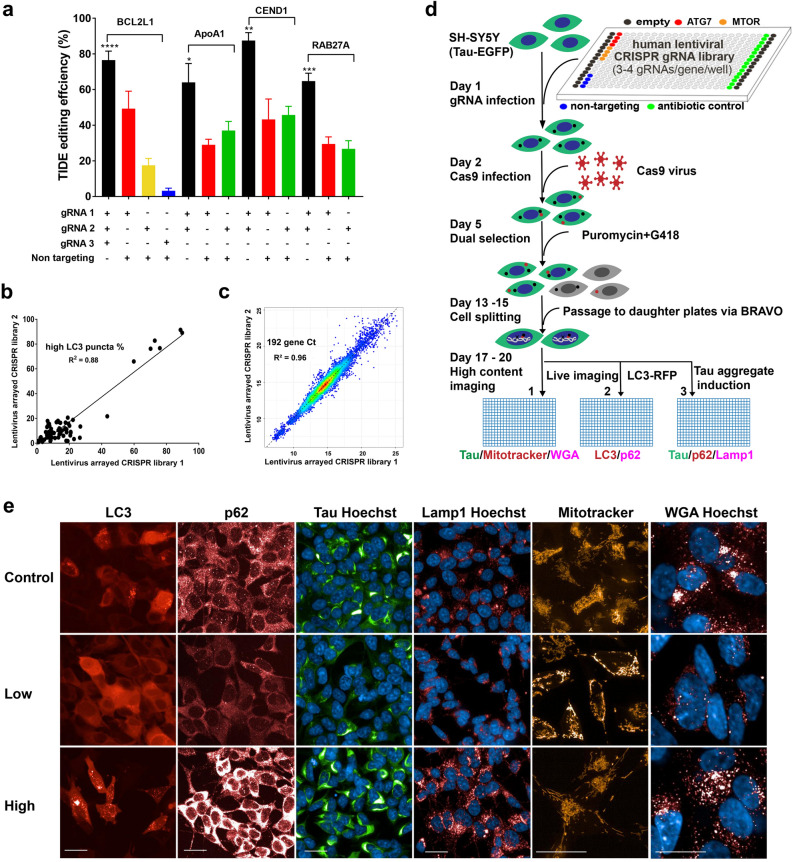
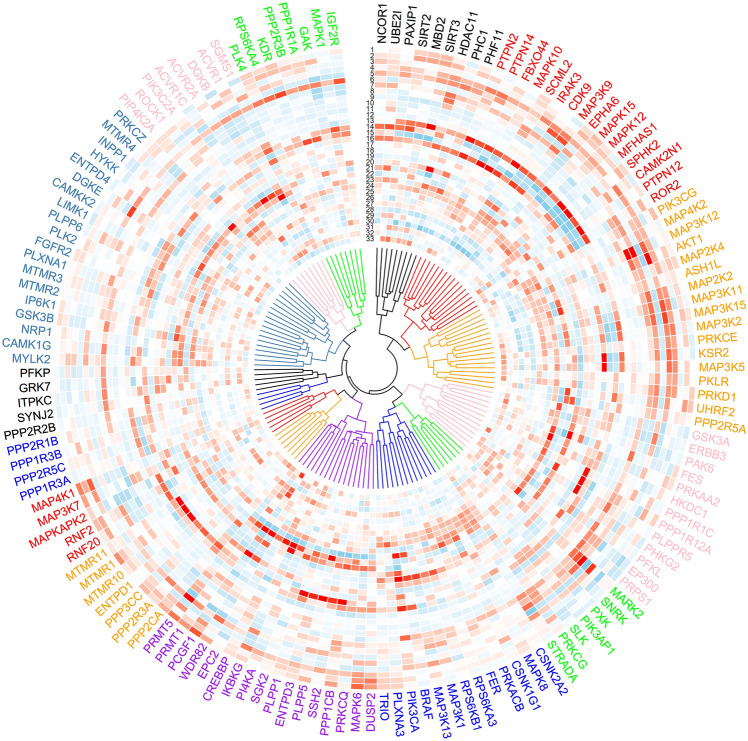
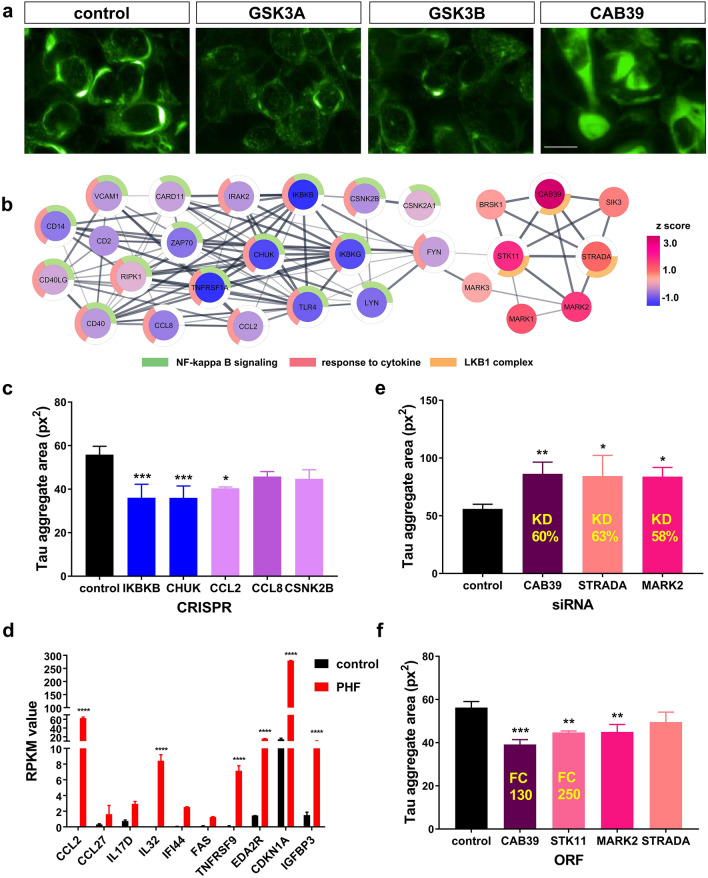
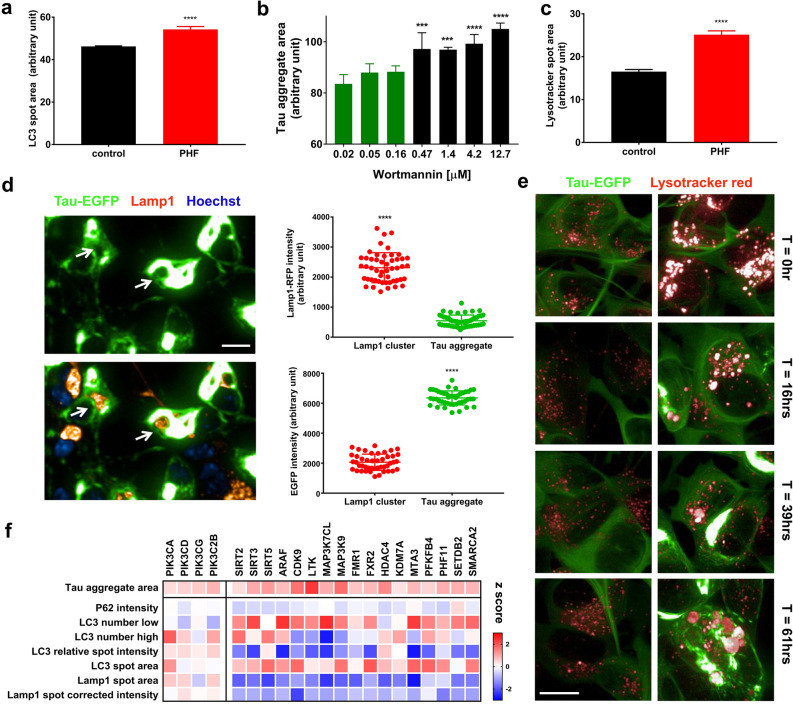
Alzheimer's disease (AD) is a common neurodegenerative disease with poor prognosis. New options for drug discovery targets are needed. We developed an imaging based arrayed CRISPR method to interrogate the human genome for modulation of in vitro correlates of AD features, and used this to assess 1525 human genes related to tau aggregation, autophagy and mitochondria. This work revealed (I) a network of tau aggregation modulators including the NF-κB pathway and inflammatory signaling, (II) a correlation between mitochondrial morphology, respiratory function and transcriptomics, (III) machine learning predicted novel roles of genes and pathways in autophagic processes and (IV) individual gene function inferences and interactions among biological processes via multi-feature clustering. These studies provide a platform to interrogate underexplored aspects of AD biology and offer several specific hypotheses for future drug discovery efforts.
阿尔茨海默病(AD)是一种常见的神经退行性疾病,预后较差。需要寻找新的药物发现靶点。我们开发了一种基于成像的阵列 CRISPR 方法,用于研究人类基因组对 AD 特征体外相关物的调节作用,并使用该方法评估了与 tau 聚集、自噬和线粒体相关的 1525 个人类基因。这项工作揭示了(I)tau 聚集调节剂的网络,包括 NF-κB 通路和炎症信号,(II)线粒体形态、呼吸功能和转录组学之间的相关性,(III)机器学习预测了基因和途径在自噬过程中的新作用,(IV)通过多特征聚类进行个体基因功能推断和生物过程中的相互作用。这些研究为研究 AD 生物学中未被充分探索的方面提供了一个平台,并为未来的药物发现工作提供了一些具体的假设。