Computer Science and Artificial Intelligence Laboratory, Massachusetts Institute of Technology, Cambridge, MA, USA.
Broad Institute of MIT and Harvard, Cambridge, MA, USA.
Nature. 2021 Feb;590(7845):300-307. doi: 10.1038/s41586-020-03145-z. Epub 2021 Feb 3.
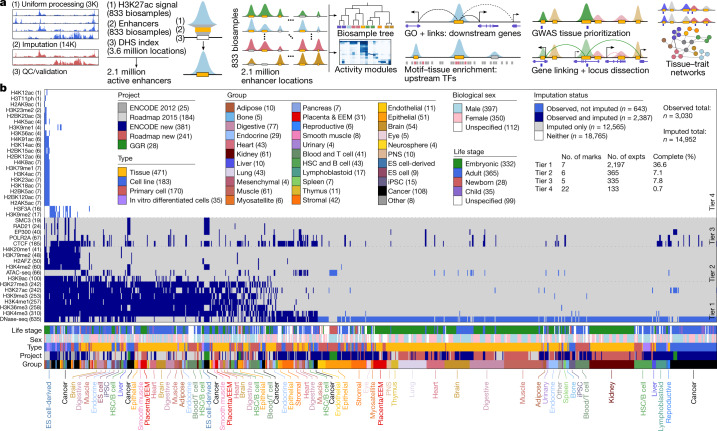
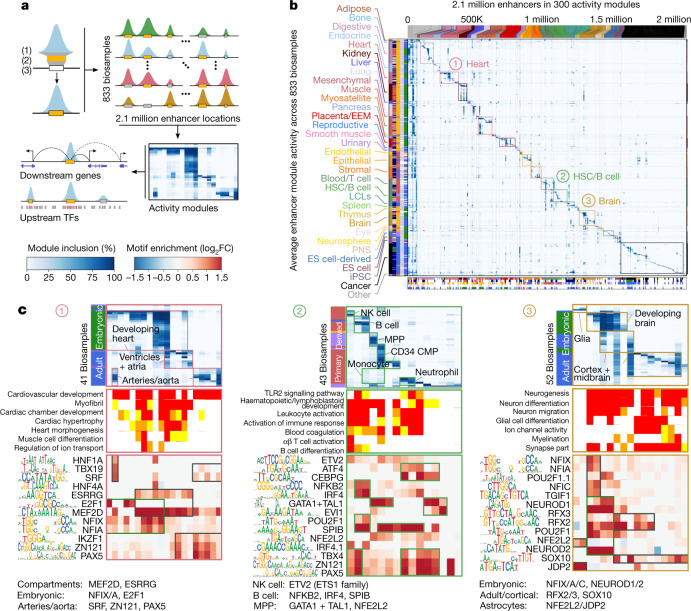
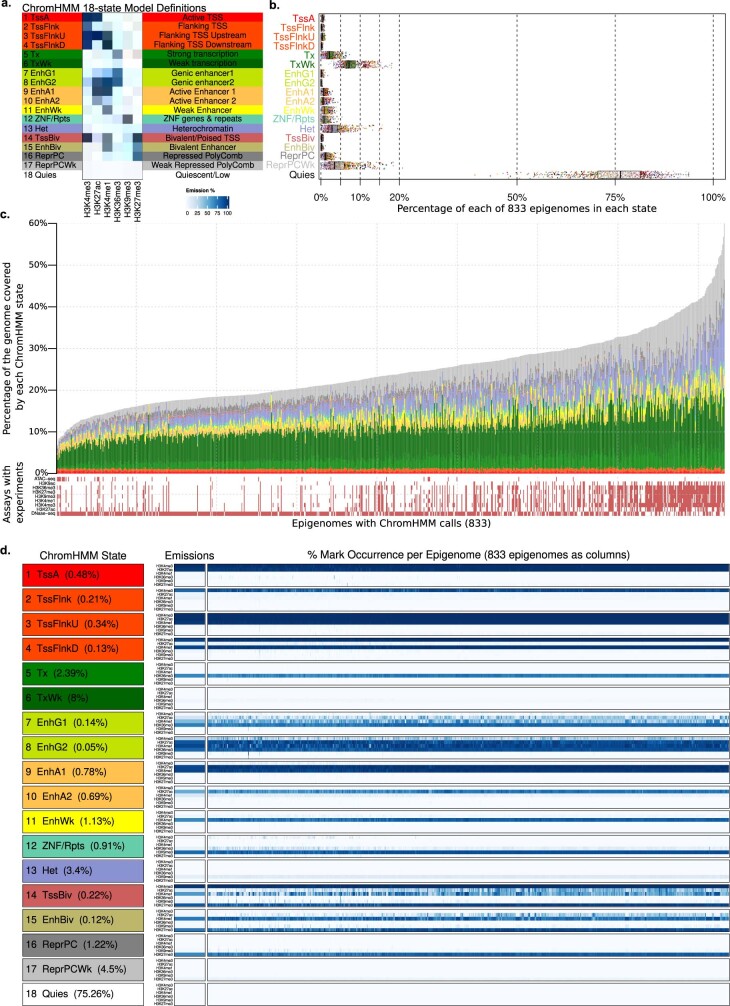
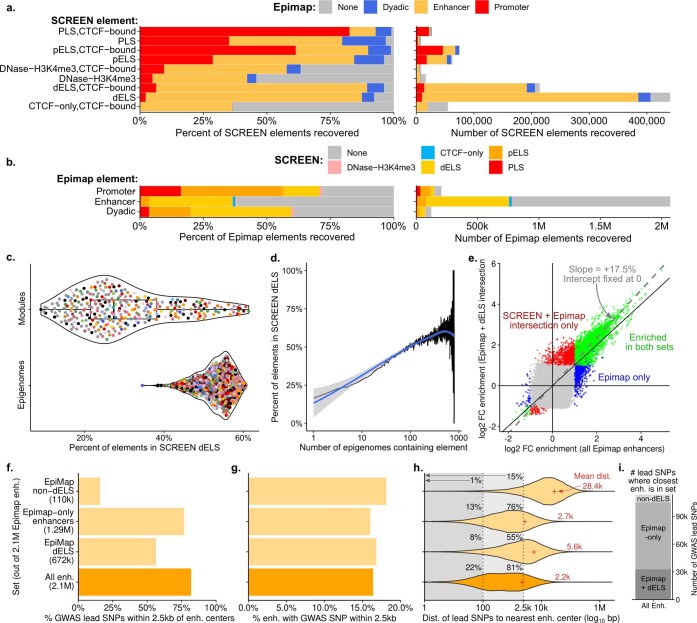
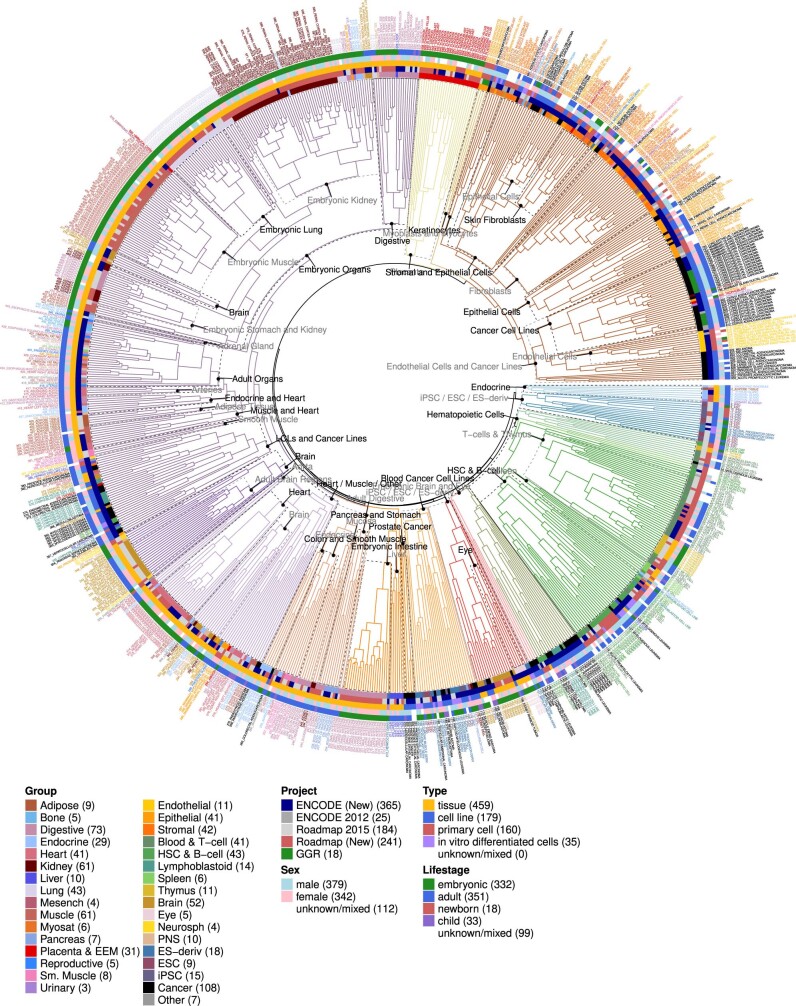
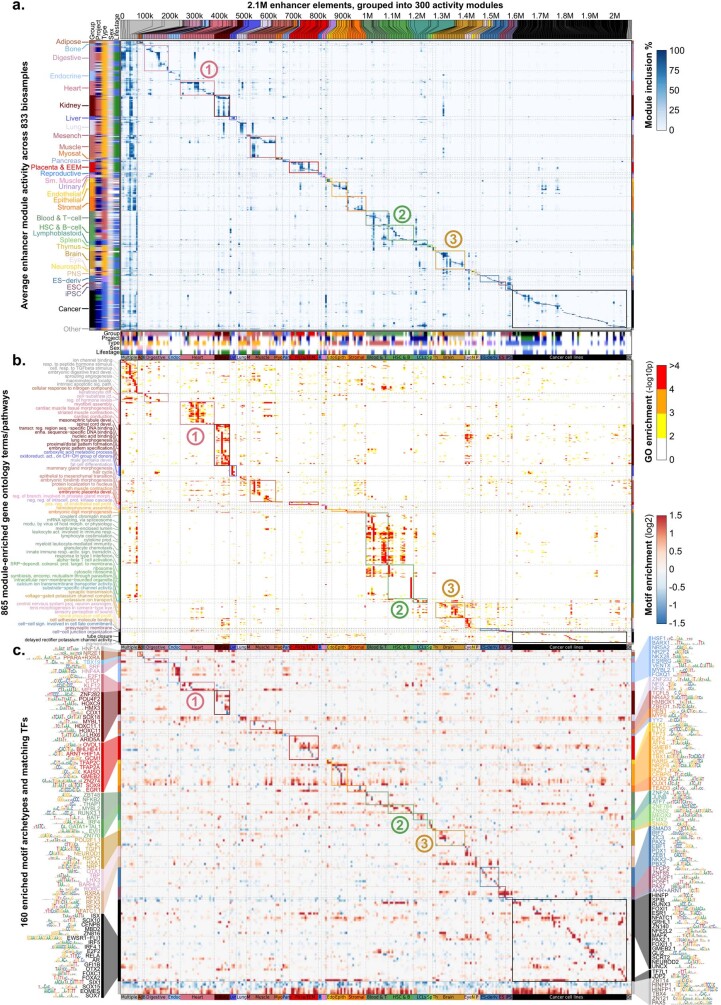
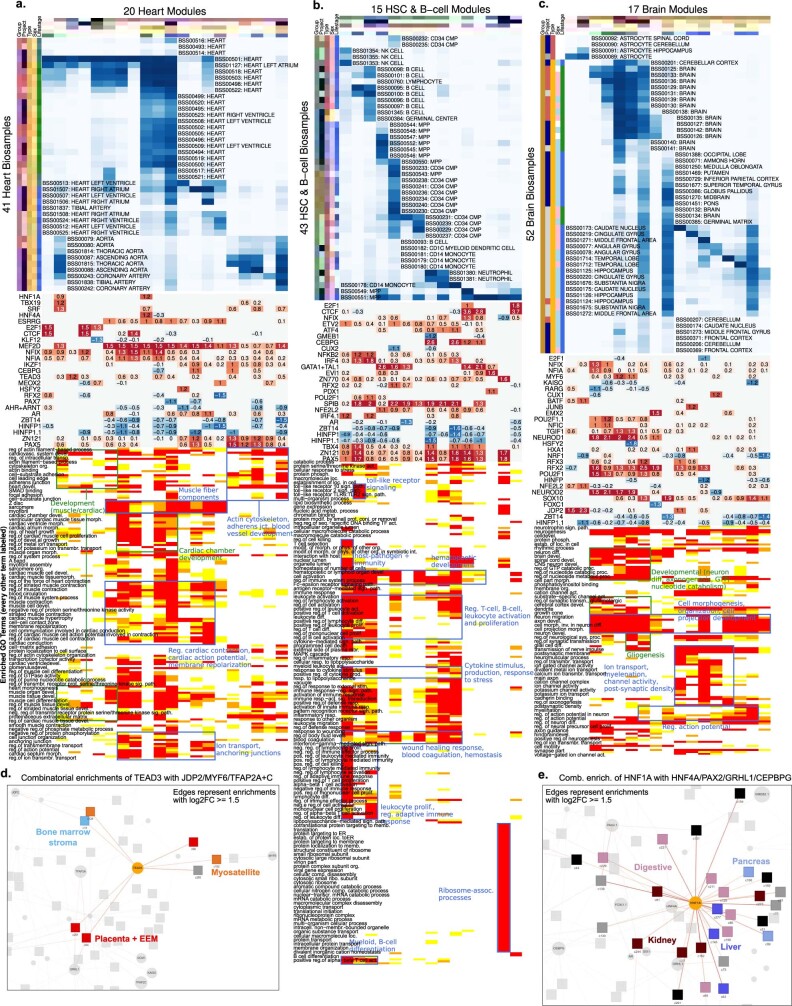
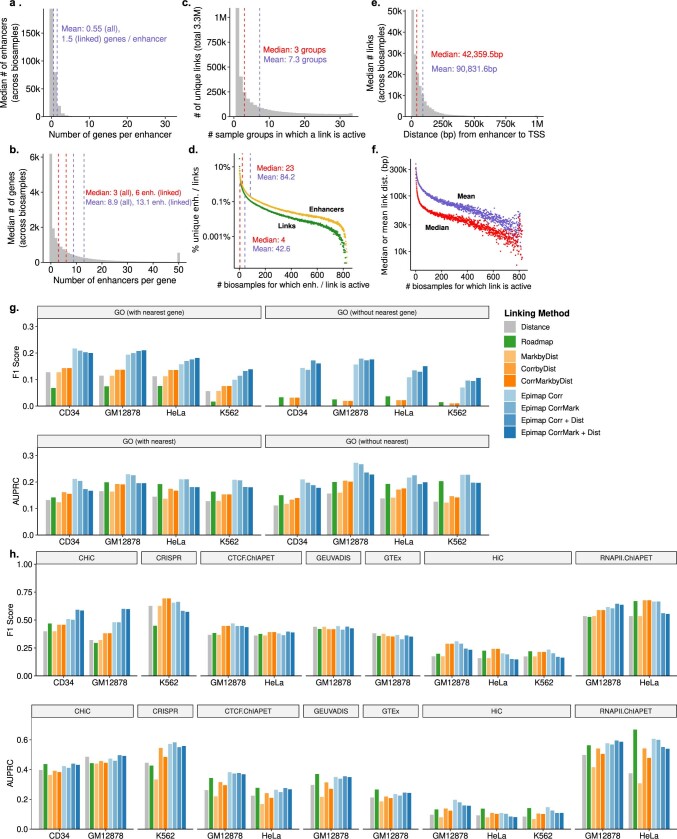
Annotating the molecular basis of human disease remains an unsolved challenge, as 93% of disease loci are non-coding and gene-regulatory annotations are highly incomplete. Here we present EpiMap, a compendium comprising 10,000 epigenomic maps across 800 samples, which we used to define chromatin states, high-resolution enhancers, enhancer modules, upstream regulators and downstream target genes. We used this resource to annotate 30,000 genetic loci that were associated with 540 traits, predicting trait-relevant tissues, putative causal nucleotide variants in enriched tissue enhancers and candidate tissue-specific target genes for each. We partitioned multifactorial traits into tissue-specific contributing factors with distinct functional enrichments and disease comorbidity patterns, and revealed both single-factor monotropic and multifactor pleiotropic loci. Top-scoring loci frequently had multiple predicted driver variants, converging through multiple enhancers with a common target gene, multiple genes in common tissues, or multiple genes and multiple tissues, indicating extensive pleiotropy. Our results demonstrate the importance of dense, rich, high-resolution epigenomic annotations for the investigation of complex traits.
注释人类疾病的分子基础仍然是一个未解决的挑战,因为 93%的疾病基因座是非编码的,基因调控注释极不完整。在这里,我们展示了 EpiMap,这是一个包含 800 个样本的 10000 个表观基因组图谱的汇编,我们用它来定义染色质状态、高分辨率增强子、增强子模块、上游调节剂和下游靶基因。我们利用这一资源注释了与 540 个特征相关的 30000 个遗传基因座,预测了与特征相关的组织、丰富组织增强子中潜在的因果核苷酸变异体以及每个组织的候选特异性靶基因。我们将多因素性状划分为具有不同功能富集和疾病共病模式的组织特异性贡献因素,并揭示了单因素单态和多因素多态基因座。排名靠前的基因座通常有多个预测的驱动变异体,通过具有共同靶基因的多个增强子、多个共同组织中的基因或多个基因和多个组织汇聚,表明广泛的多效性。我们的研究结果表明,密集、丰富、高分辨率的表观基因组注释对于复杂性状的研究非常重要。