Liu YangYingQiu, Dong JunYi, Song QingWei, Zhang Nan, Wang WeiWei, Gao BingBing, Tian ShiYun, Dong ChunBo, Liang ZhanHua, Xie LiZhi, Miao YanWei
Department of Radiology, First Affiliated Hospital of Dalian Medical University, Dalian, China.
Department of Neurology, First Affiliated Hospital of Dalian Medical University, Dalian, China.
Front Neurosci. 2021 Jan 18;14:570848. doi: 10.3389/fnins.2020.570848. eCollection 2020.
To quantitatively assess the blood oxygen levels of the cerebral vein using quantitative susceptibility mapping (QSM), and to analyze the correlation between magnetic susceptibility value (MSV) and clinical laboratory indicators/cognitive scores in patients with Alzheimer's disease (AD).
Fifty-nine patients (21 males and 38 females) with clinically confirmed AD (AD group) and 22 control subjects (12 males, 10 females; CON group) were recruited. Clinical data and laboratory examination indexes were collected. All patients underwent Mini-mental State Examination, Montreal Cognitive Assessment, Clock Drawing Task, and Activity of Daily Living Scale test, as well as a routine MRI and enhanced gradient echo T2 star weighted angiography (ESWAN).
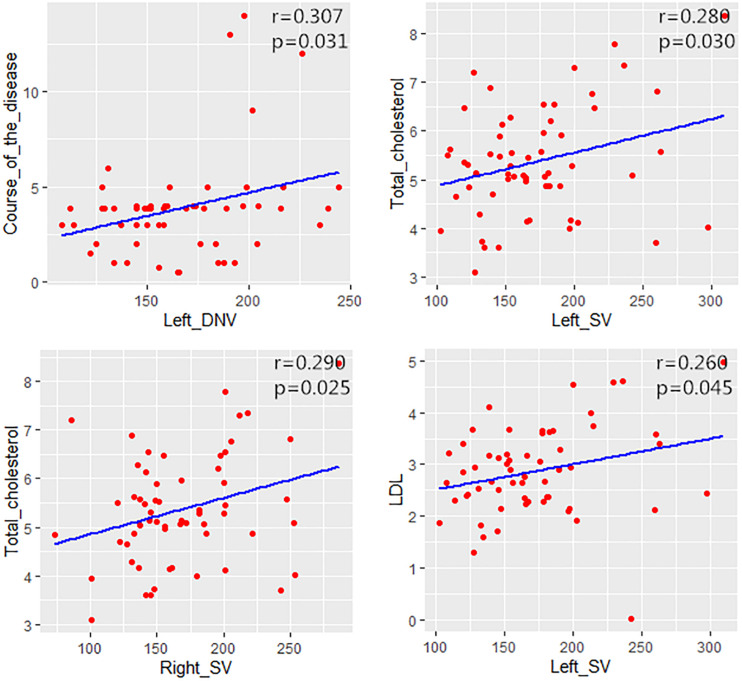
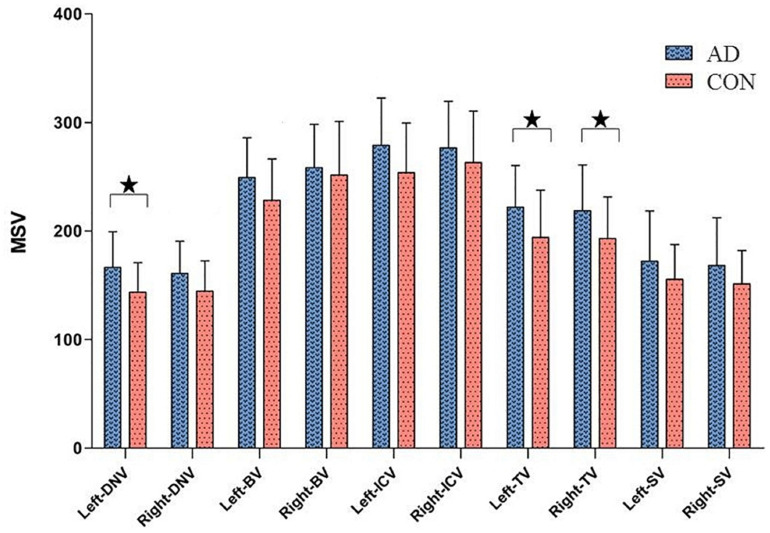
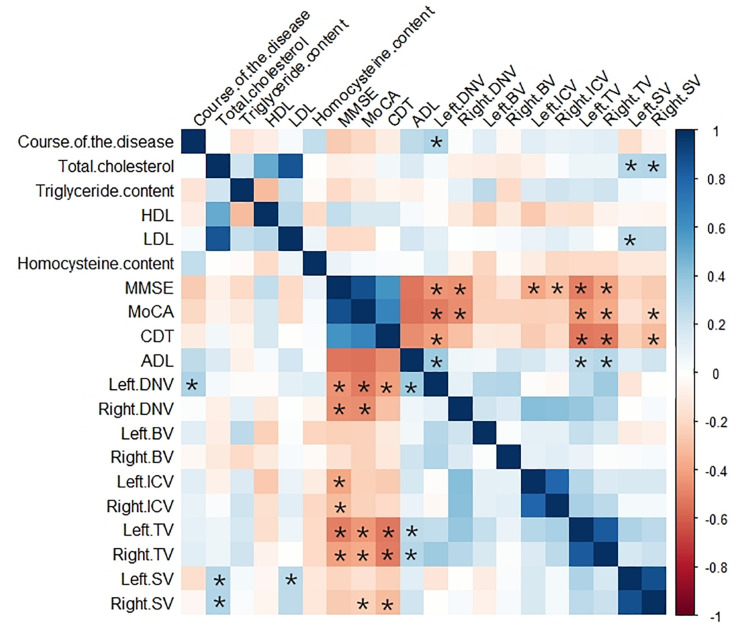
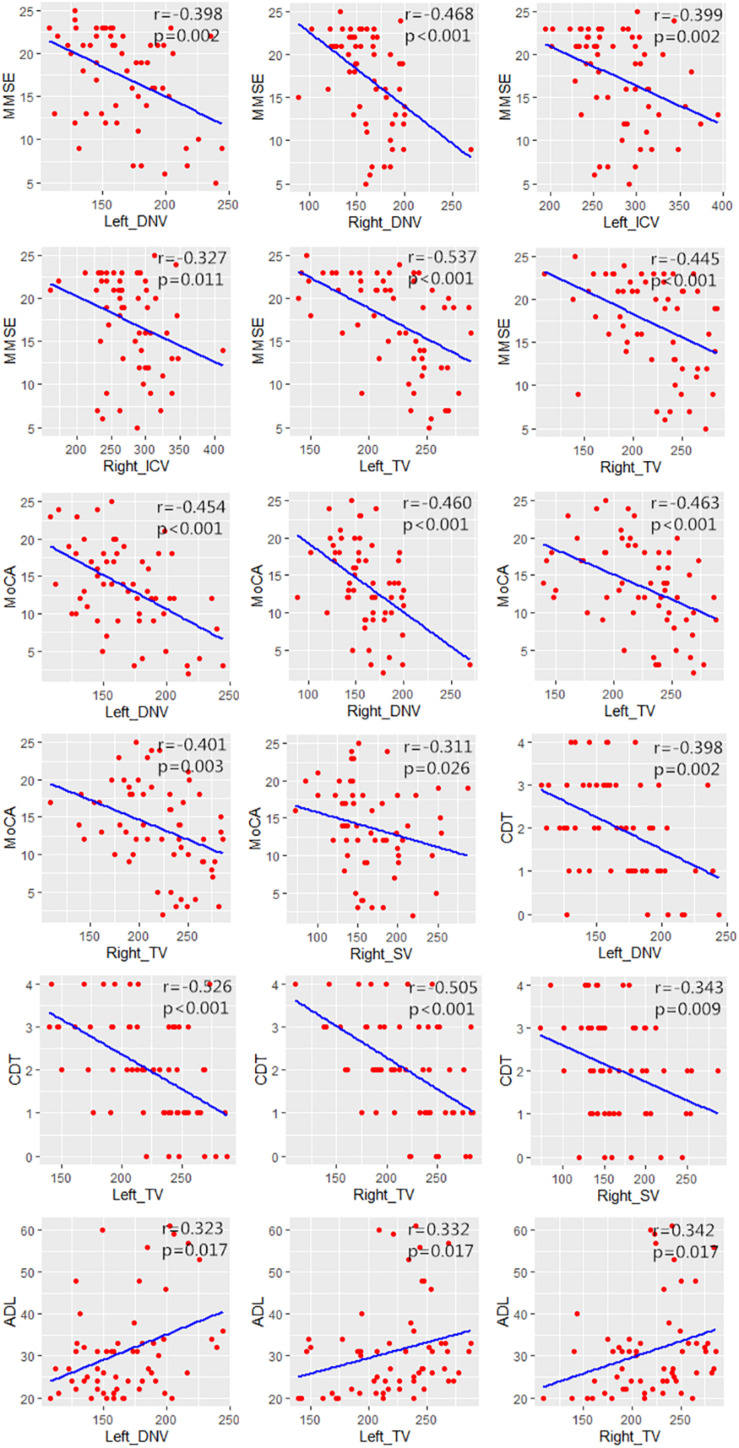
Higher cerebral venous MSV was observed in AD group compared to CON group, significant differences were observed for bilateral thalamus veins and left dentate nucleus veins. The MSV of bilateral thalamus veins, bilateral internal cerebral veins, and bilateral dentate nucleus veins had significant negative correlation with Mini-mental State Examination score; the MSV of bilateral thalamus veins, bilateral dentate nucleus veins, right septal vein had a significant negative correlation with Montreal Cognitive Assessment scores; a significant negative correlation between the MSV of bilateral thalamus veins, left dentate nucleus vein, right septal vein and the Clock Drawing Task score; the MSV of bilateral thalamus veins, left dentate nucleus vein had a significant negative correlation with Activity of Daily Living Scale score. The MSV of left dentate nucleus vein was positively correlated with the course of the disease, the MSV of bilateral septal vein were positively correlated with the total cholesterol, and the MSV of left septal vein had a positive correlation with LDL.
Decreasing cerebral venous oxygen level in AD patients may affect cognitive status, and associated with the deterioration of the disease in AD patients.
采用定量磁化率成像(QSM)定量评估脑静脉血氧水平,并分析阿尔茨海默病(AD)患者的磁化率值(MSV)与临床实验室指标/认知评分之间的相关性。
招募59例临床确诊的AD患者(AD组,男21例,女38例)和22例对照者(CON组,男12例,女10例)。收集临床资料和实验室检查指标。所有患者均接受简易精神状态检查、蒙特利尔认知评估、画钟试验和日常生活活动量表测试,以及常规MRI和增强梯度回波T2*加权血管造影(ESWAN)。
与CON组相比,AD组脑静脉MSV更高,双侧丘脑静脉和左侧齿状核静脉存在显著差异。双侧丘脑静脉、双侧大脑内静脉和双侧齿状核静脉的MSV与简易精神状态检查评分呈显著负相关;双侧丘脑静脉、双侧齿状核静脉、右侧隔静脉的MSV与蒙特利尔认知评估评分呈显著负相关;双侧丘脑静脉、左侧齿状核静脉、右侧隔静脉的MSV与画钟试验评分呈显著负相关;双侧丘脑静脉、左侧齿状核静脉的MSV与日常生活活动量表评分呈显著负相关。左侧齿状核静脉的MSV与病程呈正相关,双侧隔静脉的MSV与总胆固醇呈正相关,左侧隔静脉的MSV与低密度脂蛋白呈正相关。
AD患者脑静脉血氧水平降低可能影响认知状态,并与AD患者病情恶化相关。