Experimental Neuropathology Unit, Institute of Experimental Neurology, Division of Neuroscience, San Raffaele Scientific Institute, 20132 Milan, Italy.
Neuromuscular and Neuroimmunology Service, Humanitas Clinical and Research Institute IRCCS, 20089 Milan, Italy.
Int J Mol Sci. 2020 Oct 10;21(20):7471. doi: 10.3390/ijms21207471.
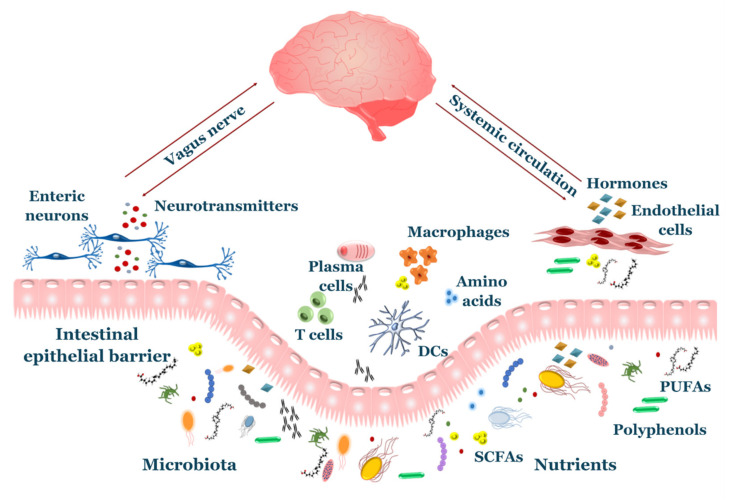
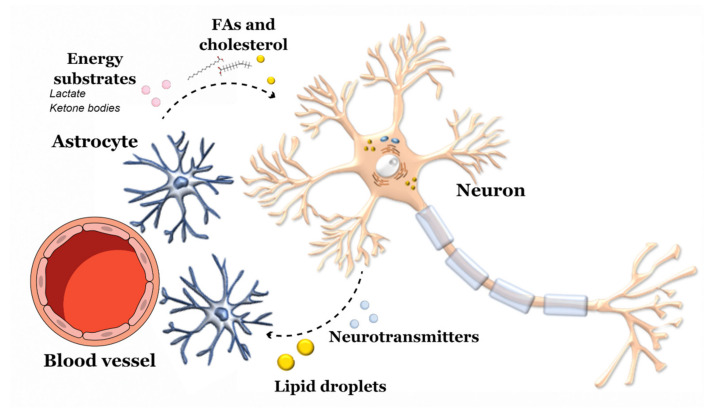
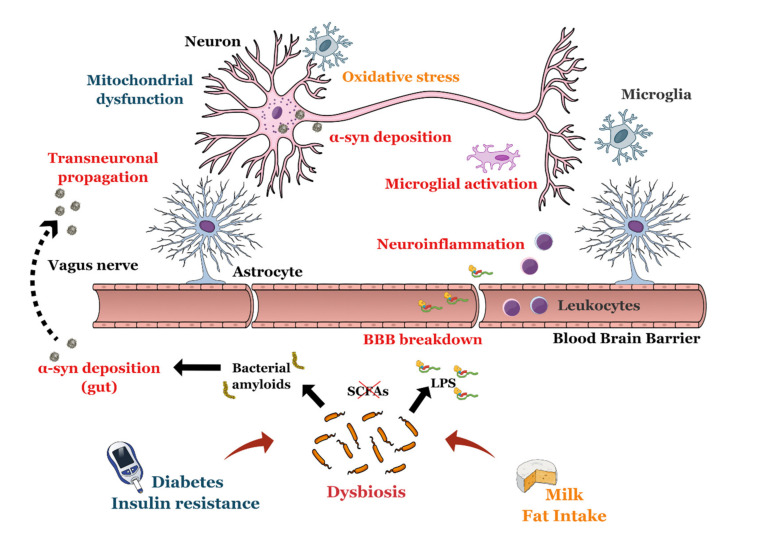
Increasing evidence gives support for the idea that extra-neuronal factors may affect brain physiology and its predisposition to neurodegenerative diseases. Epidemiological and experimental studies show that nutrition and metabolic disorders such as obesity and type 2 diabetes increase the risk of Alzheimer's and Parkinson's diseases after midlife, while the relationship with amyotrophic lateral sclerosis is uncertain, but suggests a protective effect of features of metabolic syndrome. The microbiota has recently emerged as a novel factor engaging strong interactions with neurons and glia, deeply affecting their function and behavior in these diseases. In particular, recent evidence suggested that gut microbes are involved in the seeding of prion-like proteins and their spreading to the central nervous system. Here, we present a comprehensive review of the impact of metabolism, diet and microbiota in neurodegeneration, by affecting simultaneously several aspects of health regarding energy metabolism, immune system and neuronal function. Advancing technologies may allow researchers in the future to improve investigations in these fields, allowing the buildup of population-based preventive interventions and development of targeted therapeutics to halt progressive neurologic disability.
越来越多的证据支持这样一种观点,即神经元外因素可能会影响大脑的生理机能及其易患神经退行性疾病的倾向。流行病学和实验研究表明,营养和代谢紊乱,如肥胖和 2 型糖尿病,会增加中年后患阿尔茨海默病和帕金森病的风险,而与肌萎缩侧索硬化症的关系尚不确定,但表明代谢综合征的某些特征具有保护作用。微生物组最近成为一个新的因素,与神经元和神经胶质细胞发生强烈相互作用,深刻影响它们在这些疾病中的功能和行为。特别是,最近的证据表明,肠道微生物可能参与了朊病毒样蛋白的播散及其向中枢神经系统的传播。在这里,我们通过影响与能量代谢、免疫系统和神经元功能有关的健康的几个方面,全面综述了代谢、饮食和微生物组对神经退行性变的影响。先进的技术可能使未来的研究人员能够改进这些领域的研究,从而建立基于人群的预防干预措施,并开发针对特定疾病的治疗方法,以阻止进行性神经功能障碍。