Bernardes Lisandra S, Carvalho Mariana A, Harnik Simone B, Teixeira Manoel J, Ottolia Juliana, Castro Daniella, Velloso Adriano, Francisco Rossana, Listik Clarice, Galhardoni Ricardo, Aparecida da Silva Valquiria, Moreira Larissa I, de Amorim Filho Antonio G, Fernandes Ana M, Ciampi de Andrade Daniel
Disciplina de Obstetrícia, Departamento de Obstetrícia e Ginecologia, Faculdade de Medicina da FMUSP, Universidade de São Paulo, São Paulo, Brazil.
School of Medicine, Faculdade Israelita de Ciências da Saúde Albert Einstein, São Paulo, Brazil.
Pain Rep. 2021 Jan 27;6(1):e882. doi: 10.1097/PR9.0000000000000882. eCollection 2021 Jan-Feb.
The question of whether the human fetus experiences pain has received substantial attention in recent times. With the advent of high-definition 4-dimensional ultrasound (4D-US), it is possible to record fetal body and facial expressions.
To determine whether human fetuses demonstrate discriminative acute behavioral responses to nociceptive input.
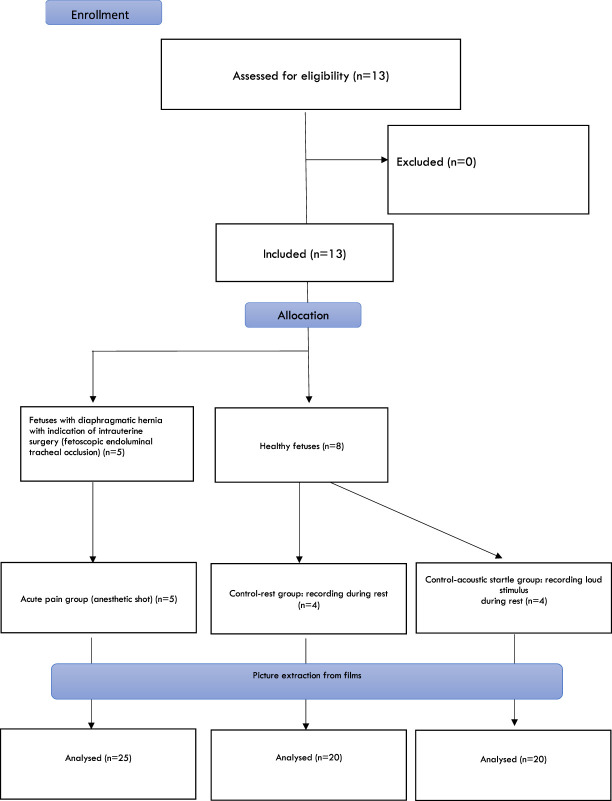
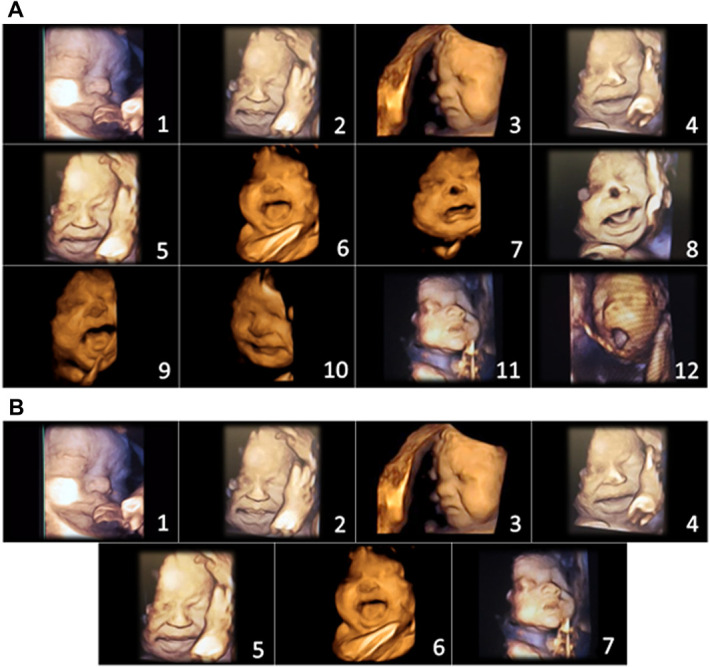
This cross-sectional study included 5 fetuses with diaphragmatic hernia with indication of intrauterine surgery (fetoscopic endoluminal tracheal occlusion) and 8 healthy fetuses, who were scanned with 4D-US in 1 of 3 conditions: (1) acute pain group: Fetuses undergoing intrauterine surgery were assessed in the preoperative period during the anesthetic injection into the thigh; (2) control group at rest: Facial expressions at rest were recorded during scheduled ultrasound examinations; and (3) control group acoustic startle: Fetal facial expressions were recorded during acoustic stimulus (500-4000 Hz; 60-115 dB).
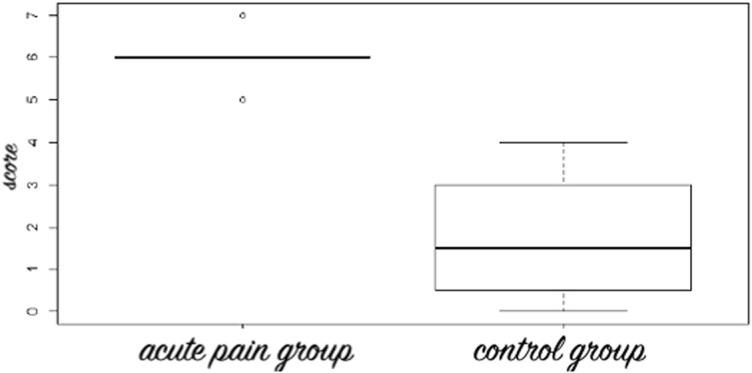
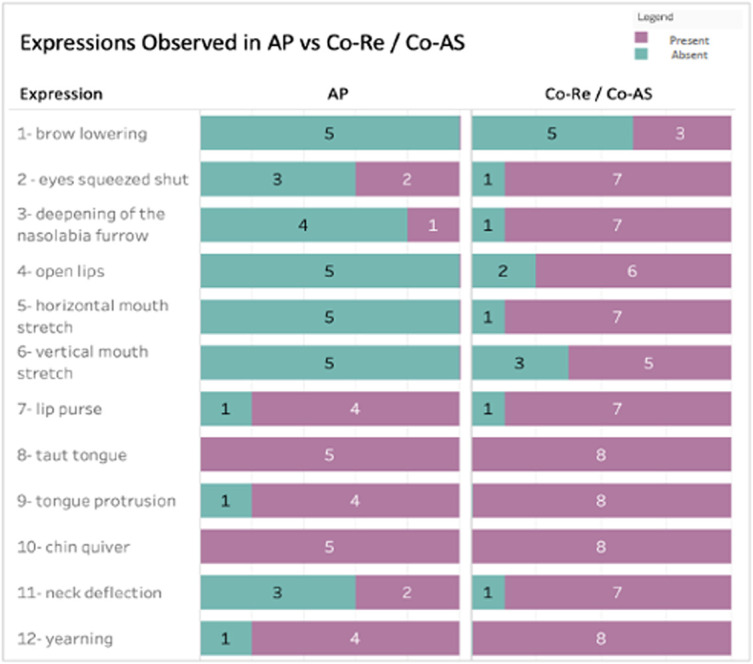
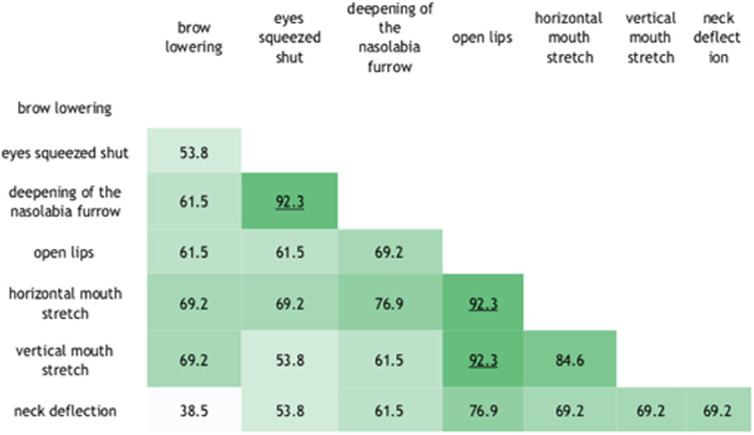
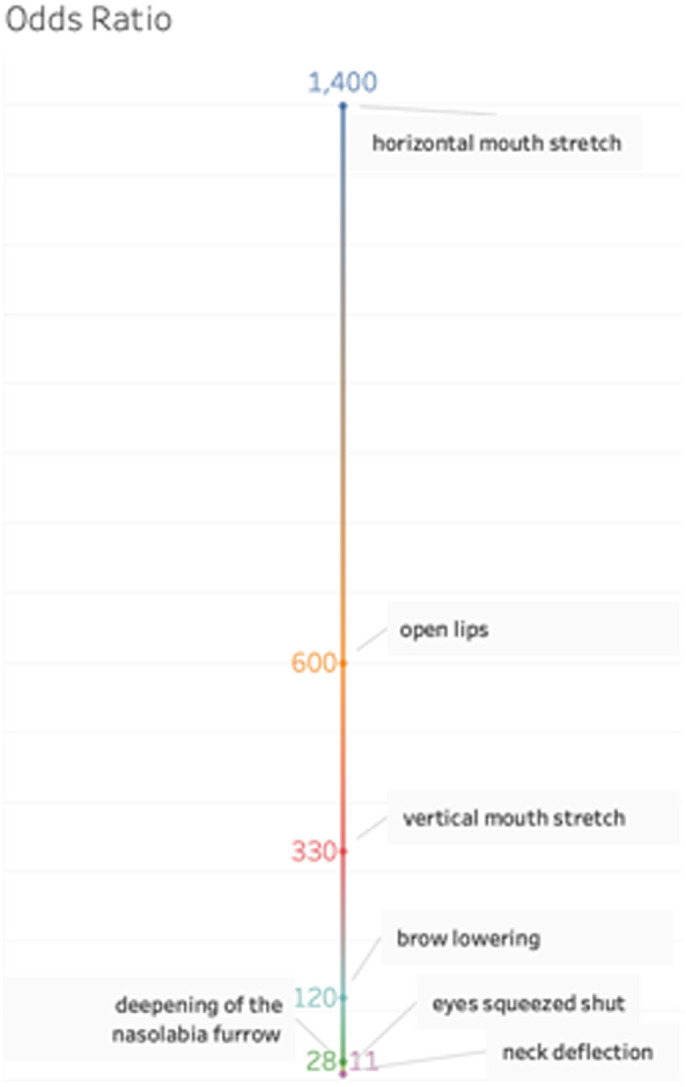
Raters blinded to the fetuses' groups scored 65 pictures of fetal facial expressions based on the presence of 12 items (facial movements). Analyses of redundancy and usefulness excluded 5 items for being of low discrimination capacity (P>0.2). The final version of the pain assessment tool consisted of a total of 7 items: brow lowering/eyes squeezed shut/deepening of the nasolabial furrow/open lips/horizontal mouth stretch/vertical mouth stretch/neck deflection. Odd ratios for a facial expression to be detected in acute pain compared with control conditions ranged from 11 (neck deflection) to 1,400 (horizontal mouth stretch). Using the seven-item final tool, we showed that 5 is the cutoff value discriminating pain from nonpainful startle and rest.
This study inaugurates the possibility to study pain responses during the intrauterine life, which may have implications for the postoperative management of pain after intrauterine surgical interventions.
人类胎儿是否会感知疼痛的问题近年来受到了广泛关注。随着高清四维超声(4D-US)的出现,记录胎儿的身体和面部表情成为可能。
确定人类胎儿是否对伤害性刺激表现出有区别的急性行为反应。
这项横断面研究纳入了5例患有膈疝且有宫内手术指征(胎儿镜下腔内气管阻塞)的胎儿以及8例健康胎儿,在以下三种情况之一中用4D-US进行扫描:(1)急性疼痛组:接受宫内手术的胎儿在术前大腿注射麻醉剂期间进行评估;(2)静息对照组:在定期超声检查期间记录静息时的面部表情;(3)听觉惊吓对照组:在听觉刺激(500 - 4000赫兹;60 - 115分贝)期间记录胎儿面部表情。
对胎儿分组情况不知情的评估者根据12项(面部动作)对65张胎儿面部表情图片进行评分。对冗余度和有用性的分析排除了5项辨别能力低的项目(P>0.2)。疼痛评估工具的最终版本总共包含7项:眉毛下垂/眼睛紧闭/鼻唇沟加深/嘴唇张开/嘴巴水平伸展/嘴巴垂直伸展/颈部偏转。与对照情况相比,急性疼痛时检测到面部表情的比值比范围从11(颈部偏转)到1400(嘴巴水平伸展)。使用七项最终工具,我们表明5是区分疼痛与非疼痛惊吓及静息的临界值。
本研究开启了研究子宫内生活期间疼痛反应的可能性,这可能对宫内手术干预后的疼痛术后管理有影响。