Thill Bridget
University of Mary, Bismarck, ND, USA.
Linacre Q. 2022 Feb;89(1):73-100. doi: 10.1177/00243639211059245. Epub 2021 Dec 6.
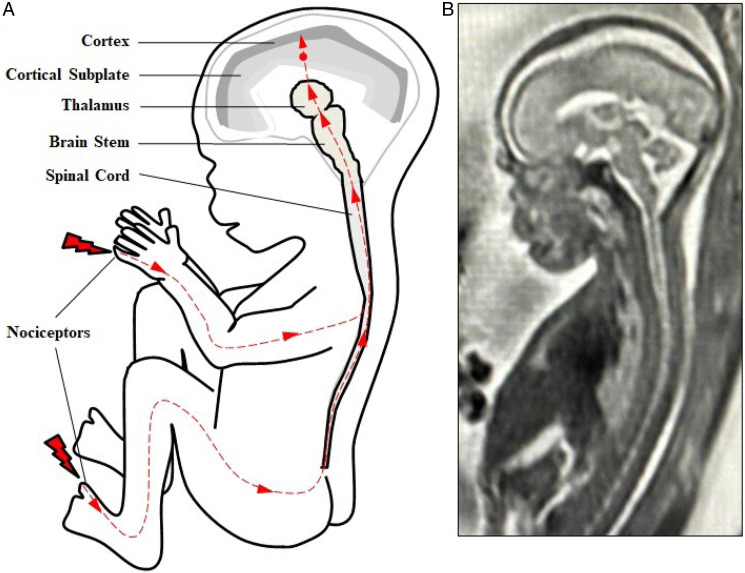
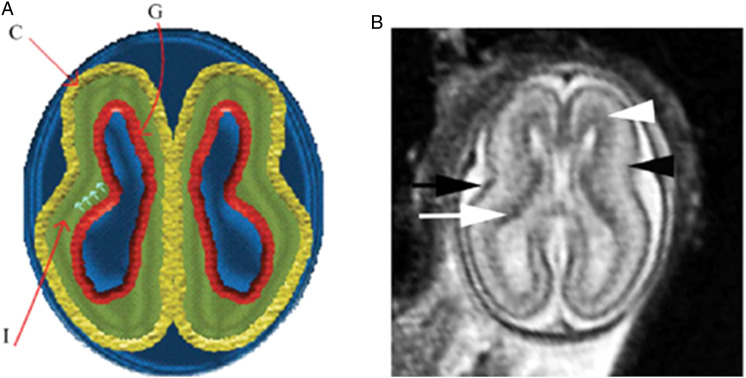
Fetal pain perception has important implications for fetal surgery, as well as for abortion. Current neuroscientific evidence indicates the possibility of fetal pain perception during the first trimester (<14 weeks gestation). Evidence for this conclusion is based on the following findings: (1) the neural pathways for pain perception via the cortical subplate are present as early as 12 weeks gestation, and via the thalamus as early as 7-8 weeks gestation; (2) the cortex is not necessary for pain to be experienced; (3) consciousness is mediated by subcortical structures, such as the thalamus and brainstem, which begin to develop during the first trimester; (4) the neurochemicals do not cause fetal unconsciousness; and (5) the use of fetal analgesia suppresses the hormonal, physiologic, and behavioral responses to pain, avoiding the potential for both short- and long-term sequelae. As the medical evidence has shifted in acknowledging fetal pain perception prior to viability, there has been a gradual change in the fetal pain debate, from disputing the existence of fetal pain to debating the significance of fetal pain. The presence of fetal pain creates tension in the practice of medicine with respect to beneficence and nonmaleficence.
胎儿疼痛感知对于胎儿手术以及堕胎都具有重要意义。当前的神经科学证据表明,在妊娠早期(<14周)胎儿有可能感知疼痛。这一结论的证据基于以下发现:(1)通过皮质下板层感知疼痛的神经通路早在妊娠12周时就已存在,通过丘脑感知疼痛的神经通路早在妊娠7 - 8周时就已存在;(2)疼痛体验并不需要皮质;(3)意识由丘脑和脑干等皮质下结构介导,这些结构在妊娠早期就开始发育;(4)神经化学物质不会导致胎儿失去意识;(5)使用胎儿镇痛可抑制对疼痛的激素、生理和行为反应,避免短期和长期后遗症的可能性。随着医学证据转向承认胎儿在能存活之前就有疼痛感知,胎儿疼痛辩论逐渐发生了变化,从质疑胎儿疼痛的存在转向辩论胎儿疼痛的意义。胎儿疼痛的存在在医学实践中引发了关于行善和不伤害原则的紧张局面。