Vaitekenas Andrew, Tai Anna S, Ramsay Joshua P, Stick Stephen M, Kicic Anthony
Occupation and the Environment, School of Public Health, Curtin University, Perth, WA 6102, Australia.
Wal-Yan Respiratory Research Centre, Telethon Kids Institute, The University of Western Australia, Crawley, WA 6009, Australia.
Antibiotics (Basel). 2021 Feb 2;10(2):145. doi: 10.3390/antibiotics10020145.
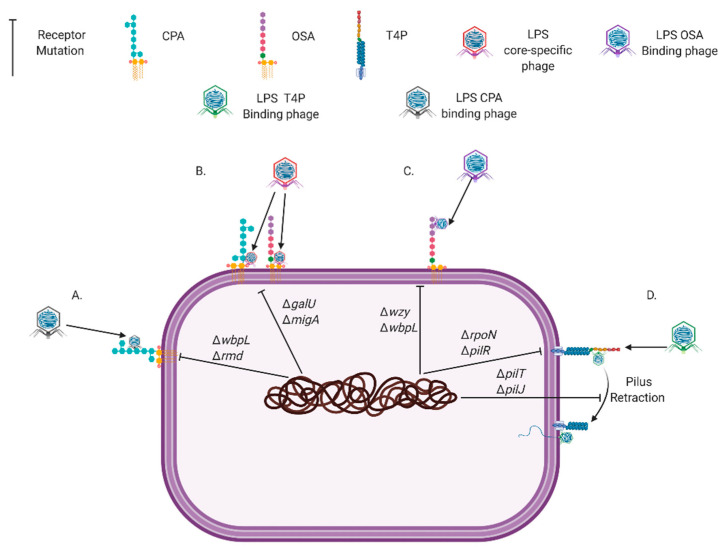
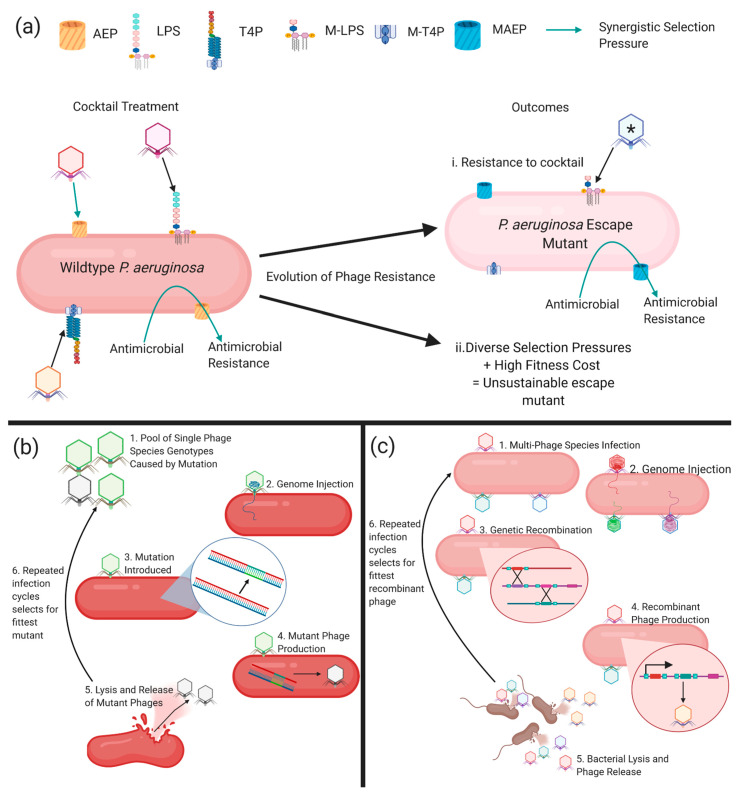
Antimicrobial resistance poses a significant threat to modern healthcare as it limits treatment options for bacterial infections, particularly impacting those with chronic conditions such as cystic fibrosis (CF). Viscous mucus accumulation in the lungs of individuals genetically predisposed to CF leads to recurrent bacterial infections, necessitating prolonged antimicrobial chemotherapy. infections are the predominant driver of CF lung disease, and airway isolates are frequently resistant to multiple antimicrobials. Bacteriophages, or phages, are viruses that specifically infect bacteria and are a promising alternative to antimicrobials for CF infections. However, the narrow host range of -targeting phages and the rapid evolution of phage resistance could limit the clinical efficacy of phage therapy. A promising approach to overcome these issues is the strategic development of mixtures of phages (cocktails). The aim is to combine phages with broad host ranges and target multiple distinct bacterial receptors to prevent the evolution of phage resistance. However, further research is required to identify and characterize phage resistance mechanisms in CF-derived which differ from their non-CF counterparts. In this review, we consider the mechanisms of phage resistance and how these could be overcome by an effective future phage therapy formulation.
抗菌药物耐药性对现代医疗保健构成重大威胁,因为它限制了细菌感染的治疗选择,尤其对患有诸如囊性纤维化(CF)等慢性病的患者影响较大。在具有CF遗传易感性的个体中,肺部黏稠黏液的积聚导致反复发生细菌感染,需要长期进行抗菌化疗。感染是CF肺部疾病的主要驱动因素,气道分离株常常对多种抗菌药物耐药。噬菌体是专门感染细菌的病毒,对于CF感染而言,是一种有前景的抗菌药物替代物。然而,靶向噬菌体的宿主范围狭窄以及噬菌体耐药性的快速演变可能会限制噬菌体疗法的临床疗效。一种有前景的克服这些问题的方法是战略性地开发噬菌体混合物(鸡尾酒疗法)。其目的是将具有广泛宿主范围的噬菌体组合起来,并靶向多种不同的细菌受体,以防止噬菌体耐药性的演变。然而,需要进一步研究来确定和表征CF来源的细菌中的噬菌体耐药机制,这些机制与非CF来源的细菌不同。在本综述中,我们考虑了噬菌体耐药的机制以及未来有效的噬菌体治疗制剂如何克服这些机制。