Department of Mathematics, Khalifa University of Science and Technology, Abu Dhabi, UAE.
Khalifa University Centre for Biotechnology, Khalifa University of Science and Technology, Abu Dhabi, UAE.
Sci Rep. 2021 Feb 4;11(1):3077. doi: 10.1038/s41598-021-82530-8.
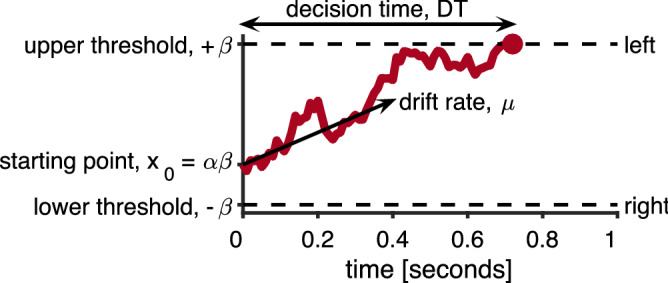
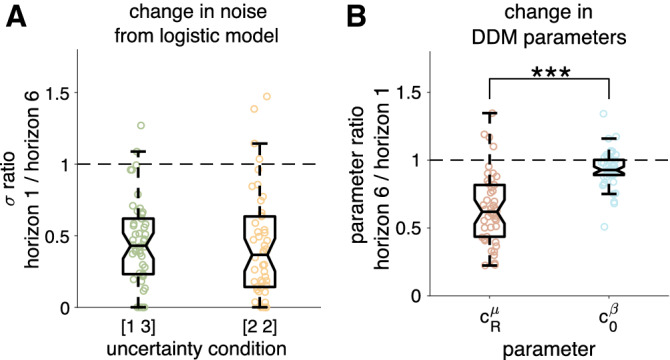
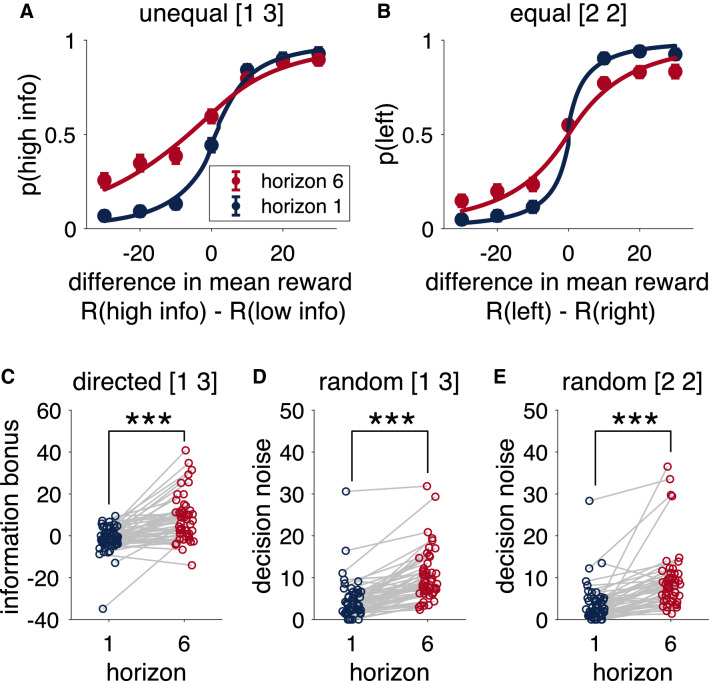
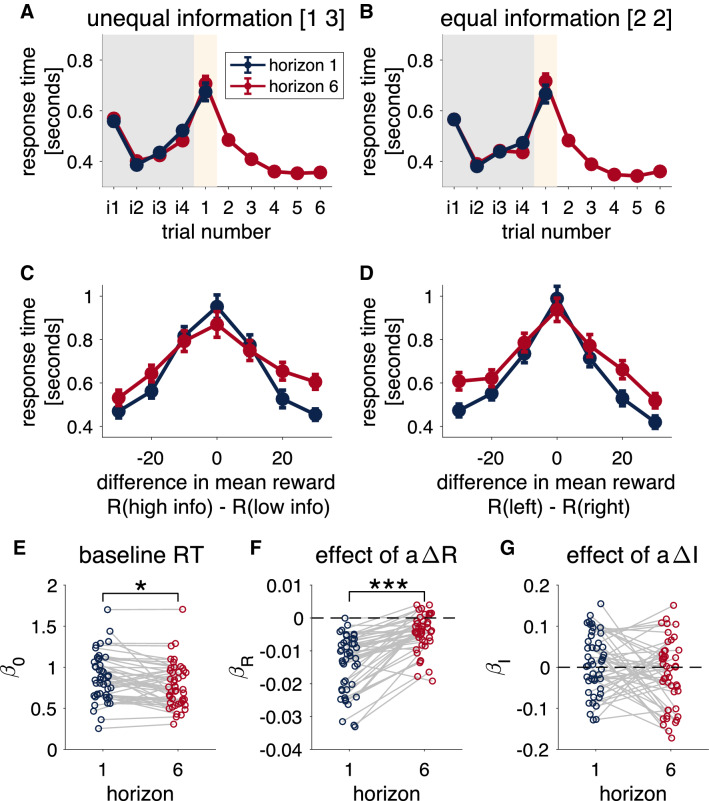
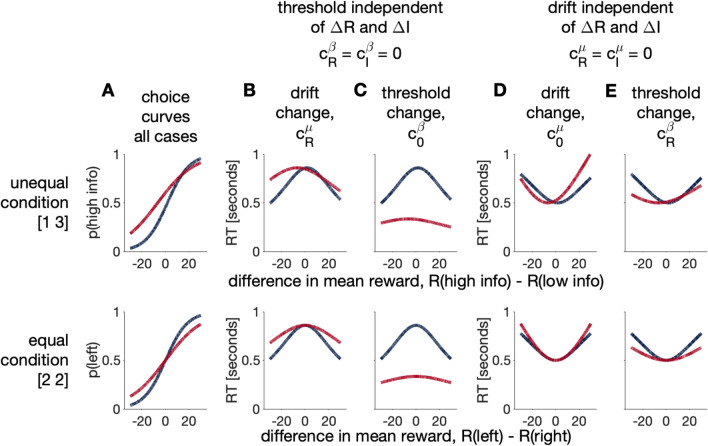
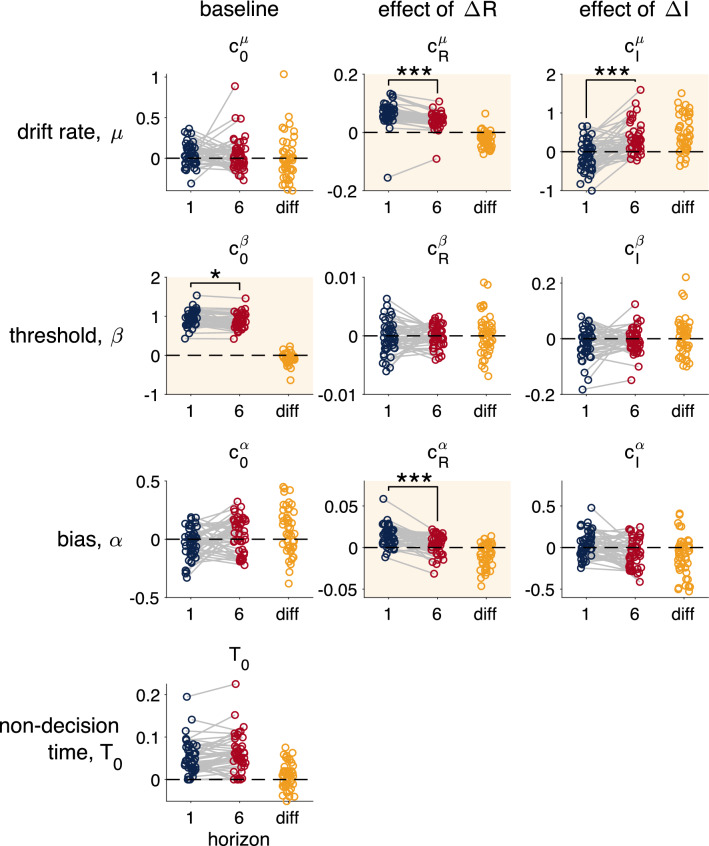
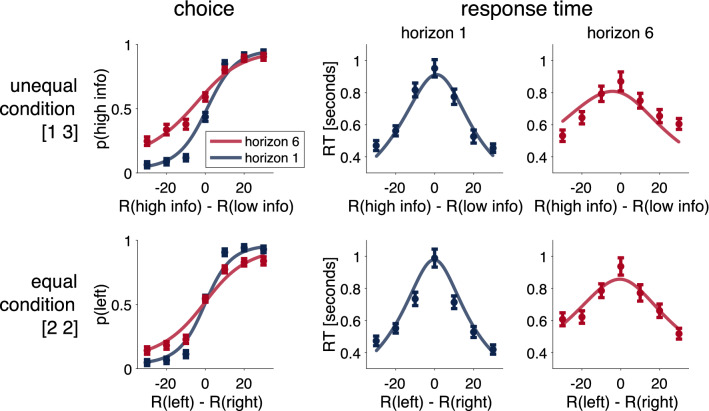
Growing evidence suggests that behavioral variability plays a critical role in how humans manage the tradeoff between exploration and exploitation. In these decisions a little variability can help us to overcome the desire to exploit known rewards by encouraging us to randomly explore something else. Here we investigate how such 'random exploration' could be controlled using a drift-diffusion model of the explore-exploit choice. In this model, variability is controlled by either the signal-to-noise ratio with which reward is encoded (the 'drift rate'), or the amount of information required before a decision is made (the 'threshold'). By fitting this model to behavior, we find that while, statistically, both drift and threshold change when people randomly explore, numerically, the change in drift rate has by far the largest effect. This suggests that random exploration is primarily driven by changes in the signal-to-noise ratio with which reward information is represented in the brain.
越来越多的证据表明,行为可变性在人类如何在探索和利用之间的权衡中起着关键作用。在这些决策中,一点点的可变性可以帮助我们克服利用已知奖励的欲望,鼓励我们随机探索其他事物。在这里,我们研究了如何使用探索-利用选择的漂移-扩散模型来控制这种“随机探索”。在这个模型中,可变性由奖励编码的信噪比(“漂移率”)或做出决策之前所需的信息量(“阈值”)控制。通过将这个模型拟合到行为中,我们发现虽然从统计学上讲,当人们随机探索时,漂移和阈值都会发生变化,但在数值上,漂移率的变化影响最大。这表明随机探索主要是由大脑中奖励信息的表示信号与噪声比的变化驱动的。