Vassos Nikolaos, Jakob Jens, Kähler Georg, Reichardt Peter, Marx Alexander, Dimitrakopoulou-Strauss Antonia, Rathmann Nils, Wardelmann Eva, Hohenberger Peter
Mannheim University Medical Center, Division of Surgical Oncology and Thoracic Surgery, University of Heidelberg, 68167 Mannheim, Germany.
Mannheim University Medical Center, Department of Surgery, University of Heidelberg, 68167 Mannheim, Germany.
Cancers (Basel). 2021 Feb 3;13(4):586. doi: 10.3390/cancers13040586.
Neoadjuvant imatinib mesylate (IM) for advanced, non-metastatic gastrointestinal stromal tumors (GIST) of stomach is recommended to downsize the tumor prompting less-extensive operations and preservation of organ function.
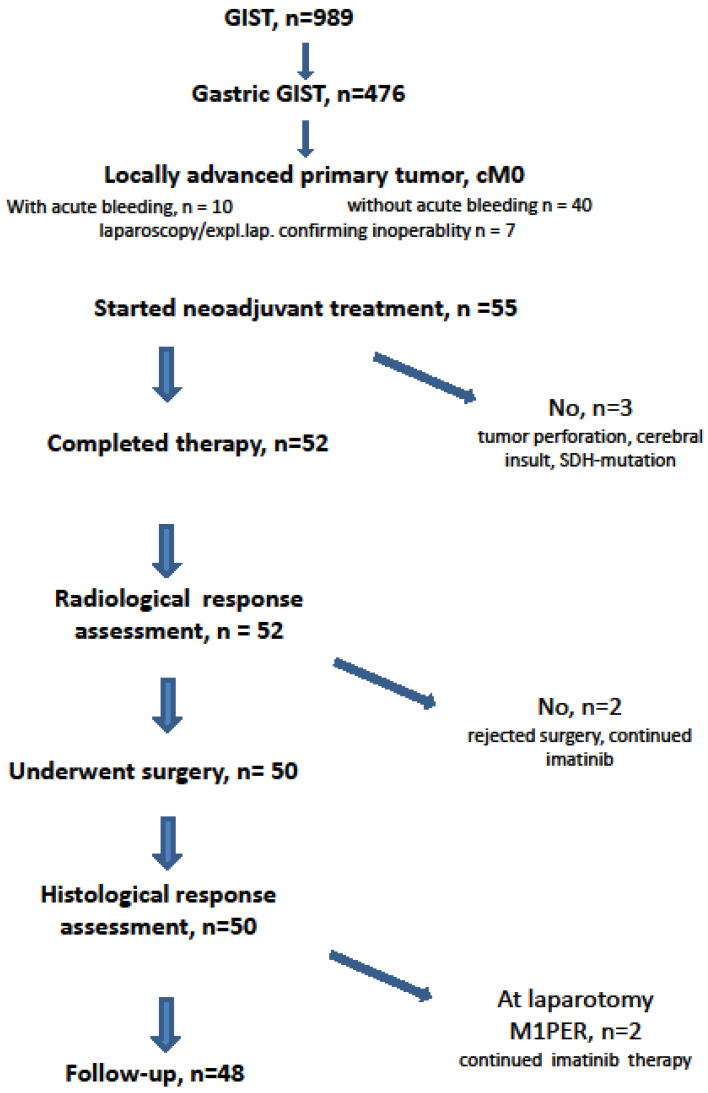
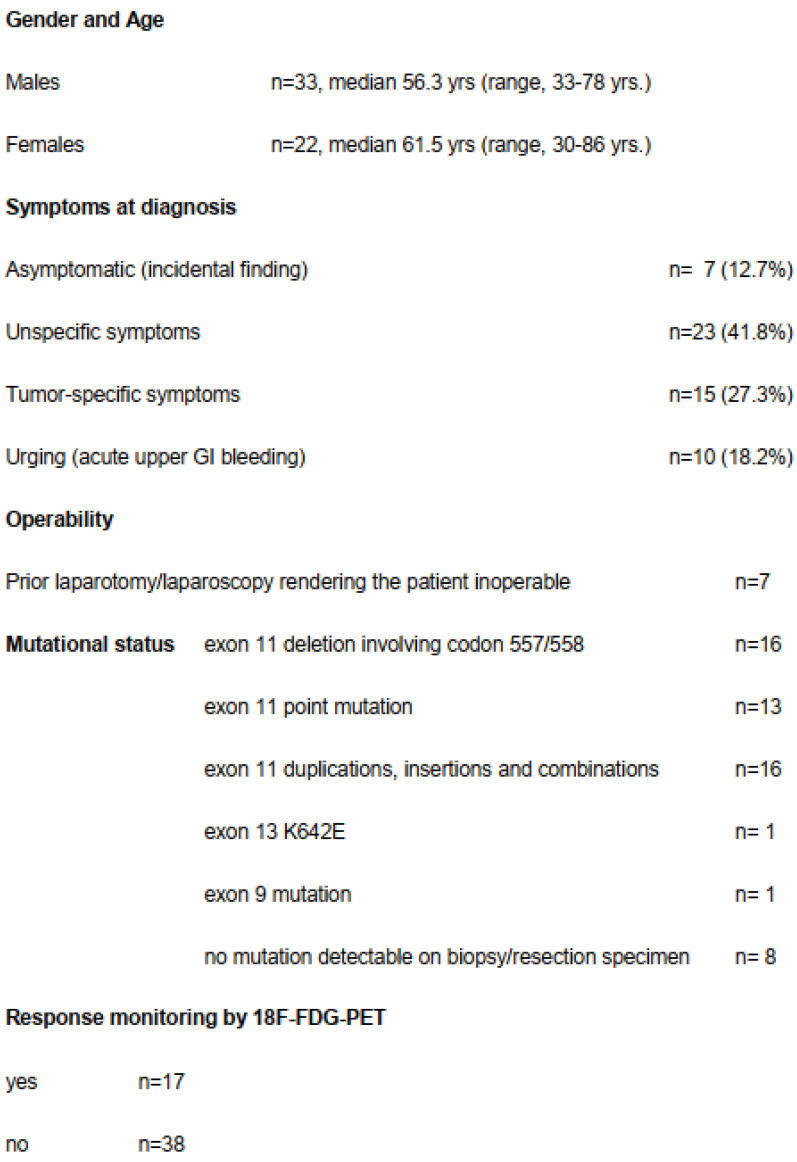
We analyzed the clinical-histopathological profile and oncological outcome of 55 patients (median age 58.2 years; range, 30-86 years) with biopsy-proven, cM0, gastric GIST who underwent IM therapy followed by surgery with a median follow-up of 82 months.
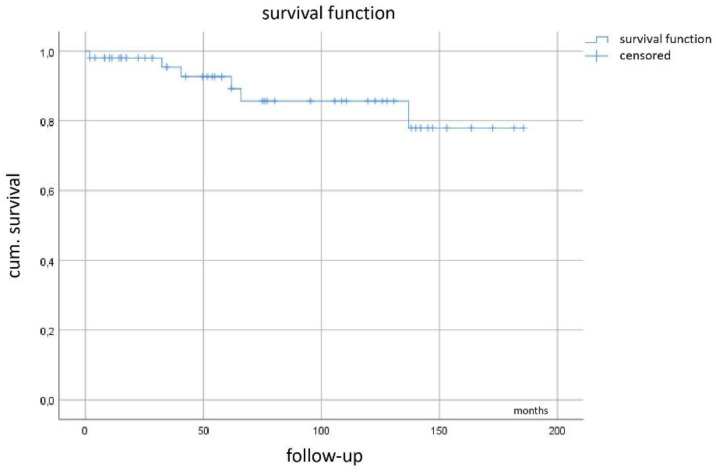
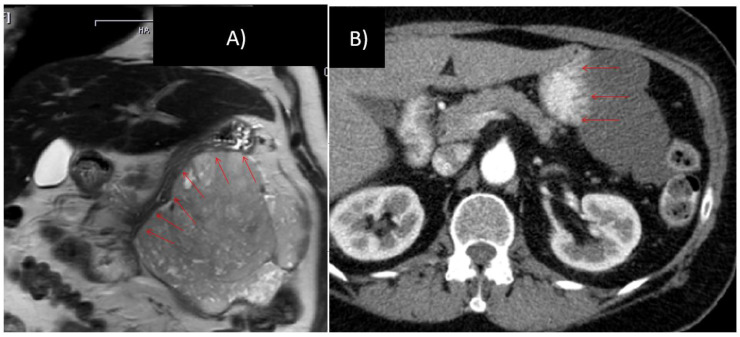
Initial median tumor size was 113 mm (range, 65-330 mm) and 10 patients started with acute upper GI bleeding. After a median 10 months (range, 2-21 months) of treatment, tumor size had shrunk to 62 mm (range, 22-200 mm). According to Response Evaluation Criteria In Solid Tumors version 1.0 and version 1.1 (RECIST 1.1), 39 (75%) patients had partial response and 14 patients had stable disease, with no progressive disease. At plateau response, 50 patients underwent surgery with an R0 resection rate of 94% and pathological complete response in 24%. In 12 cases (24%), downstaging allowed laparoscopic resection. The mean recurrence-free survival (RFS) was 123 months (95%CI; 99-147) and the estimated 5-year RFS was 84%.
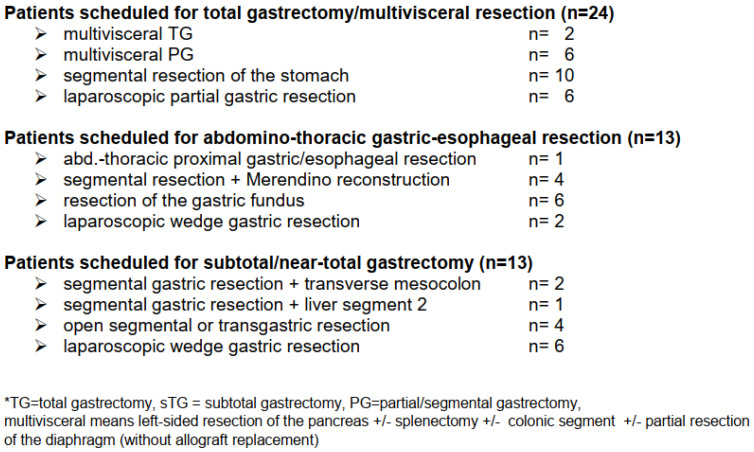
Neoadjuvant IM allowed stomach preservation in 96% of our patients with excellent long-term RFS, even when starting treatment during an episode of upper GI bleeding. Preservation of the stomach provides the physiological basis for the use of oral IM in the adjuvant or metastatic setting.
对于晚期、非转移性胃胃肠道间质瘤(GIST),推荐使用新辅助甲磺酸伊马替尼(IM)来缩小肿瘤,从而减少手术范围并保留器官功能。
我们分析了55例经活检证实为cM0期胃GIST患者(中位年龄58.2岁;范围30 - 86岁)的临床病理特征和肿瘤学结局,这些患者接受了IM治疗,随后接受手术,中位随访时间为82个月。
初始肿瘤中位大小为113毫米(范围65 - 330毫米),10例患者以急性上消化道出血起病。经过中位10个月(范围2 - 21个月)的治疗,肿瘤大小缩小至62毫米(范围22 - 200毫米)。根据实体瘤疗效评价标准第1.0版和第1.1版(RECIST 1.1),39例(75%)患者部分缓解,14例患者病情稳定,无疾病进展。在达到平台期缓解时,50例患者接受手术,R0切除率为94%,病理完全缓解率为24%。12例(24%)患者因降期得以行腹腔镜切除。平均无复发生存期(RFS)为123个月(95%CI;99 - 147),估计5年RFS为84%。
新辅助IM使96% 的患者保留了胃,长期RFS良好,即使在上消化道出血发作期间开始治疗也是如此。胃的保留为辅助或转移性情况下使用口服IM提供了生理基础。