Wan Zhi, Xu Yading, Šavija Branko
Faculty of Civil Engineering and Geosciences, Delft University of Technology, 2628CN Delft, The Netherlands.
Materials (Basel). 2021 Feb 3;14(4):713. doi: 10.3390/ma14040713.
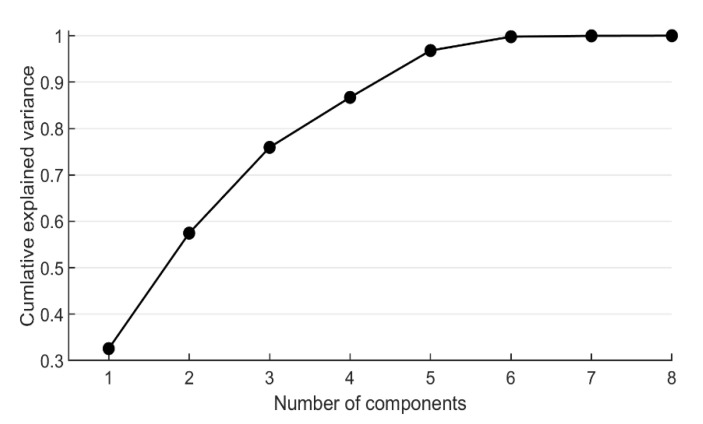
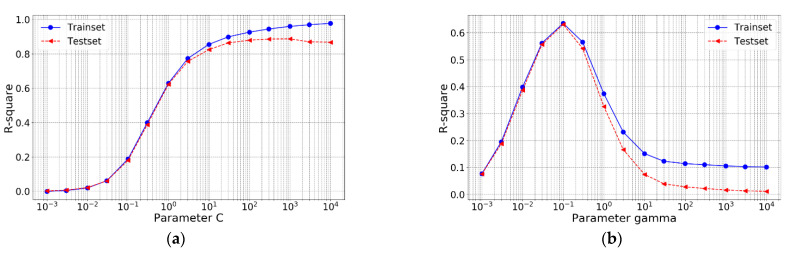
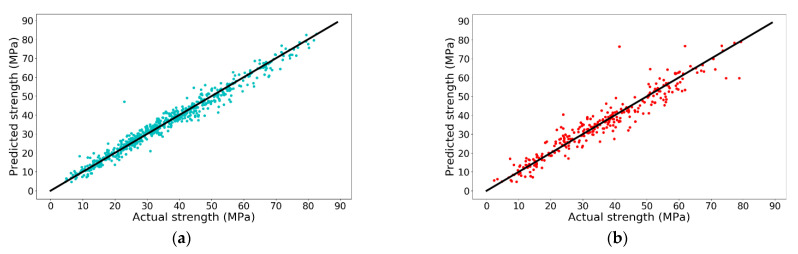
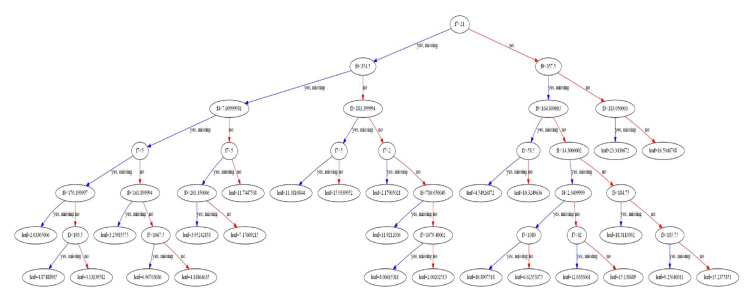
Compressive strength is the most significant metric to evaluate the mechanical properties of concrete. Machine learning (ML) methods have shown promising results for predicting compressive strength of concrete. However, at present, no in-depth studies have been devoted to the influence of dimensionality reduction on the performance of different ML models for this application. In this work, four representative ML models, i.e., Linear Regression (LR), Support Vector Regression (SVR), Extreme Gradient Boosting (XGBoost), and Artificial Neural Network (ANN), are trained and used to predict the compressive strength of concrete based on its mixture composition and curing age. For each ML model, three kinds of features are used as input: the eight original features, six Principal Component Analysis (PCA)-selected features, and six manually selected features. The performance as well as the training speed of those four ML models with three different kinds of features is assessed and compared. Based on the obtained results, it is possible to make a relatively accurate prediction of concrete compressive strength using SVR, XGBoost, and ANN with an R-square of over 0.9. When using different features, the highest R-square of the test set occurs in the XGBoost model with manually selected features as inputs (R-square = 0.9339). The prediction accuracy of the SVR model with manually selected features (R-square = 0.9080) or PCA-selected features (R-square = 0.9134) is better than the model with original features (R-square = 0.9003) without dramatic running time change, indicating that dimensionality reduction has a positive influence on SVR model. For XGBoost, the model with PCA-selected features shows poorer performance (R-square = 0.8787) than XGBoost model with original features or manually selected features. A possible reason for this is that the PCA-selected features are not as distinguishable as the manually selected features in this study. In addition, the running time of XGBoost model with PCA-selected features is longer than XGBoost model with original features or manually selected features. In other words, dimensionality reduction by PCA seems to have an adverse effect both on the performance and the running time of XGBoost model. Dimensionality reduction has an adverse effect on the performance of LR model and ANN model because the R-squares on test set of those two models with manually selected features or PCA-selected features are lower than models with original features. Although the running time of ANN is much longer than the other three ML models (less than 1s) in three scenarios, dimensionality reduction has an obviously positive influence on running time without losing much prediction accuracy for ANN model.
抗压强度是评估混凝土力学性能的最重要指标。机器学习(ML)方法在预测混凝土抗压强度方面已显示出有前景的结果。然而,目前尚未有深入研究探讨降维对该应用中不同ML模型性能的影响。在这项工作中,训练了四种代表性的ML模型,即线性回归(LR)、支持向量回归(SVR)、极端梯度提升(XGBoost)和人工神经网络(ANN),并用于根据混凝土的混合组成和养护龄期预测其抗压强度。对于每个ML模型,使用三种特征作为输入:八个原始特征、六个主成分分析(PCA)选择的特征和六个手动选择的特征。评估并比较了这四种具有三种不同特征的ML模型的性能以及训练速度。根据所得结果,使用SVR、XGBoost和ANN可以相对准确地预测混凝土抗压强度,决定系数R平方超过0.9。当使用不同特征时,测试集的最高R平方出现在以手动选择的特征作为输入的XGBoost模型中(R平方 = 0.9339)。具有手动选择特征(R平方 = 0.9080)或PCA选择特征(R平方 = 0.9134)的SVR模型的预测精度优于具有原始特征(R平方 = 0.9003)的模型,且运行时间没有显著变化,这表明降维对SVR模型有积极影响。对于XGBoost,具有PCA选择特征的模型表现比具有原始特征或手动选择特征的XGBoost模型更差(R平方 = 0.8787)。一个可能的原因是,在本研究中,PCA选择的特征不如手动选择的特征具有可区分性。此外,具有PCA选择特征的XGBoost模型的运行时间比具有原始特征或手动选择特征的XGBoost模型更长。换句话说,通过PCA进行降维似乎对XGBoost模型的性能和运行时间都有不利影响。降维对LR模型和ANN模型的性能有不利影响,因为这两个模型在使用手动选择特征或PCA选择特征时测试集的R平方低于使用原始特征的模型。尽管在三种情况下ANN的运行时间比其他三个ML模型长得多(小于1秒),但降维对ANN模型的运行时间有明显的积极影响,且不会损失太多预测精度。