Party Petra, Bartos Csilla, Farkas Árpád, Szabó-Révész Piroska, Ambrus Rita
Interdisciplinary Excellence Centre, Institute of Pharmaceutical Technology and Regulatory Affairs, University of Szeged, Eötvös street 6, 6720 Szeged, Hungary.
Centre for Energy Research, Hungarian Academy of Sciences, Konkoly-Thege Miklós Street 29-33, 1121 Budapest, Hungary.
Pharmaceutics. 2021 Feb 3;13(2):211. doi: 10.3390/pharmaceutics13020211.
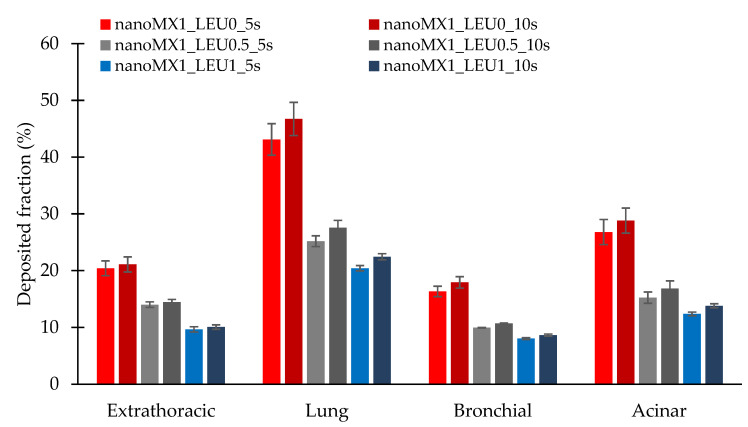
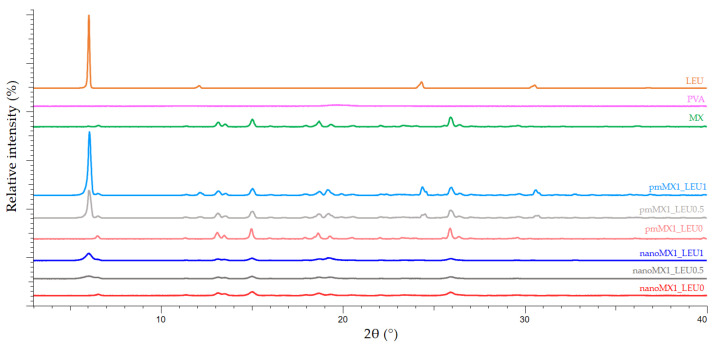
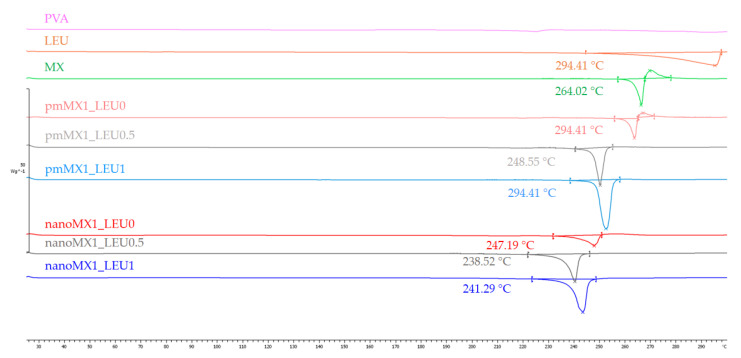
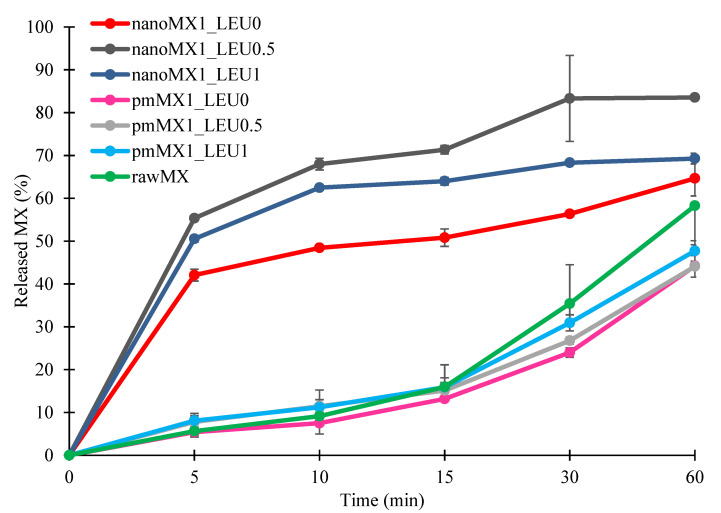
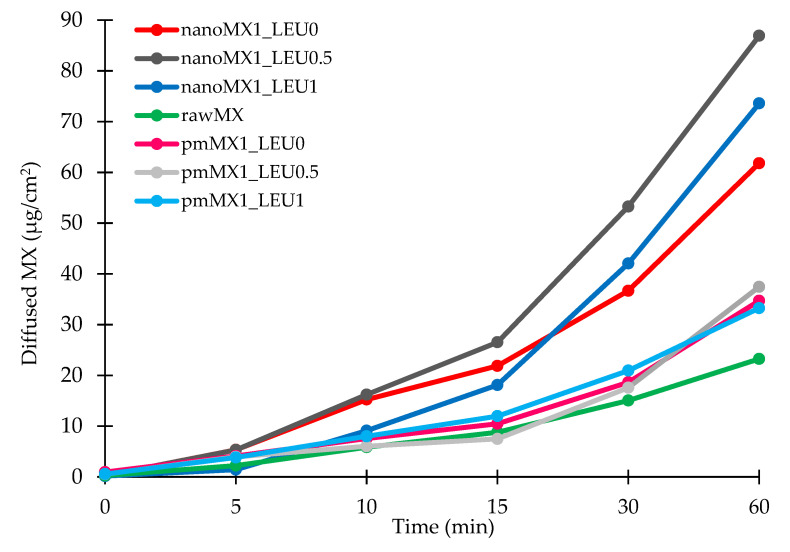
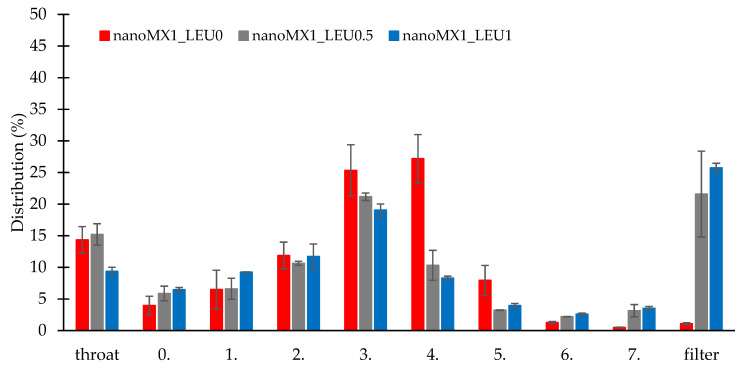
Pulmonary delivery has high bioavailability, a large surface area for absorption, and limited drug degradation. Particle engineering is important to develop inhalable formulations to improve the therapeutic effect. In our work, the poorly water-soluble meloxicam (MX) was used as an active ingredient, which could be useful for the treatment of non-small cell lung cancer, cystic fibrosis, and chronic obstructive pulmonary disease. We aimed to produce inhalable "nano-in-micro" dry powder inhalers (DPIs) containing MX and additives (poly-vinyl-alcohol, leucine). We targeted the respiratory zone with the microcomposites and reached a higher drug concentration with the nanonized active ingredient. We did the following investigations: particle size analysis, morphology, density, interparticular interactions, crystallinity, in vitro dissolution, in vitro permeability, in vitro aerodynamics (Andersen cascade impactor), and in silico aerodynamics (stochastic lung model). We worked out a preparation method by combining wet milling and spray-drying. We produced spherical, 3-4 µm sized particles built up by MX nanoparticles. The increased surface area and amorphization improved the dissolution and diffusion of the MX. The formulations showed appropriate aerodynamical properties: 1.5-2.4 µm MMAD and 72-76% fine particle fraction (FPF) values. The in silico measurements proved the deposition in the deeper airways. The samples were suitable for the treatment of local lung diseases.
肺部给药具有高生物利用度、大吸收表面积和有限的药物降解。颗粒工程对于开发可吸入制剂以提高治疗效果很重要。在我们的工作中,难溶性药物美洛昔康(MX)被用作活性成分,它可用于治疗非小细胞肺癌、囊性纤维化和慢性阻塞性肺疾病。我们旨在制备含有MX和添加剂(聚乙烯醇、亮氨酸)的可吸入“纳米包微米”干粉吸入器(DPI)。我们将微复合材料靶向呼吸区,并通过纳米化活性成分达到更高的药物浓度。我们进行了以下研究:粒度分析、形态、密度、颗粒间相互作用、结晶度、体外溶出度、体外渗透性、体外空气动力学(安德森级联撞击器)和计算机模拟空气动力学(随机肺模型)。我们通过结合湿磨和喷雾干燥制定了一种制备方法。我们制备出了由MX纳米颗粒组成的3-4微米大小的球形颗粒。增加的表面积和非晶化改善了MX的溶解和扩散。这些制剂表现出合适的空气动力学性质:质量中值空气动力学直径(MMAD)为1.5-2.4微米,细颗粒分数(FPF)值为72-76%。计算机模拟测量证明了在深部气道的沉积。这些样品适用于治疗局部肺部疾病。