Sipos Bence, Szabó-Révész Piroska, Csóka Ildikó, Pallagi Edina, Dobó Dorina Gabriella, Bélteky Péter, Kónya Zoltán, Deák Ágota, Janovák László, Katona Gábor
Faculty of Pharmacy, Institute of Pharmaceutical Technology and Regulatory Affairs, University of Szeged, H-6720 Szeged, Hungary.
Faculty of Science and Informatics, Department of Applied & Environmental Chemistry, H-6720 Szeged, Hungary.
Pharmaceutics. 2020 Jul 24;12(8):697. doi: 10.3390/pharmaceutics12080697.
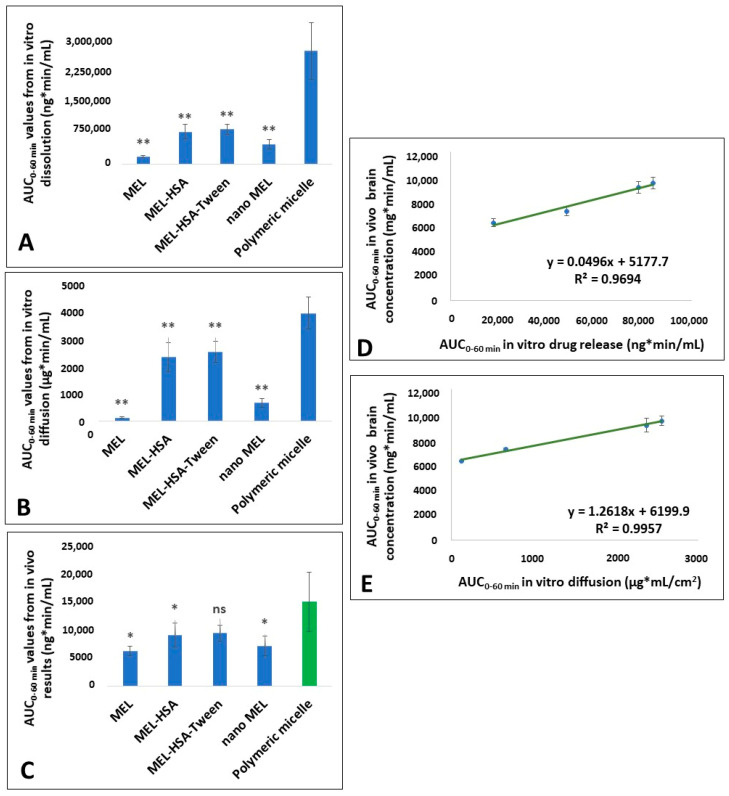
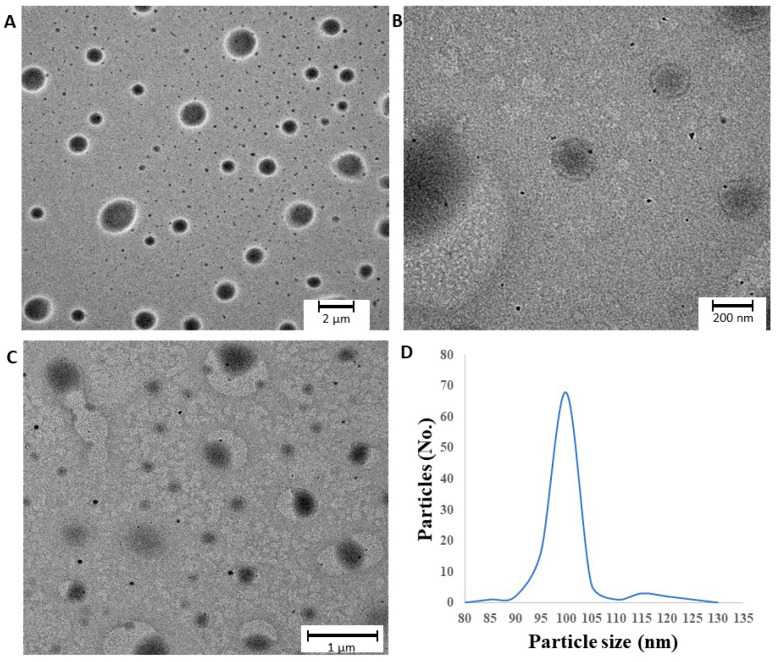
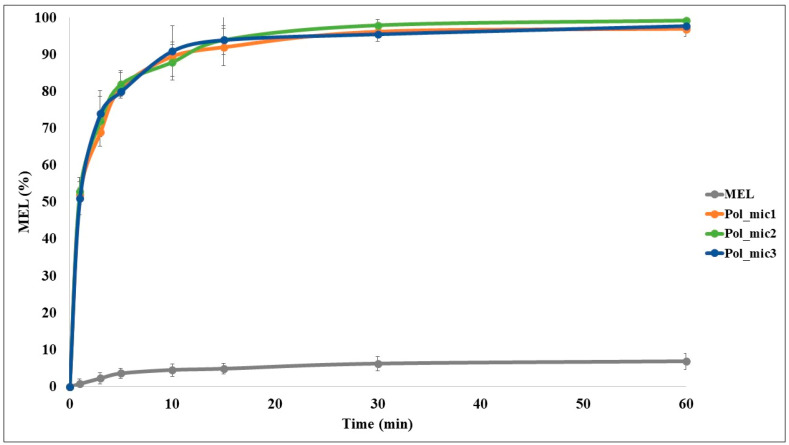
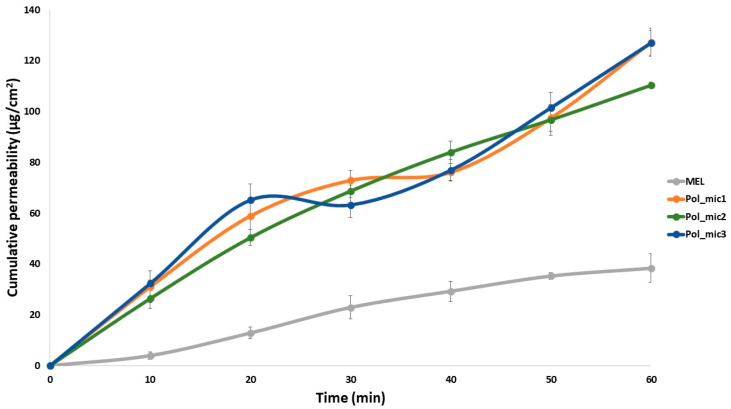
Our study aimed to develop an "ex tempore" reconstitutable, viscosity enhancer- and preservative-free meloxicam (MEL)-loaded polymeric micelle formulation, via Quality by Design (QbD) approach, exploiting the nose-to-brain pathway, as a suitable tool in the treatment of neuroinflammation. The anti-neuroinflammatory effect of nose-to-brain NSAID polymeric micelles was not studied previously, therefore its investigation is promising. Critical product parameters, encapsulation efficiency (89.4%), Z-average (101.22 ± 2.8 nm) and polydispersity index (0.149 ± 0.7) and zeta potential (-25.2 ± 0.4 mV) met the requirements of the intranasal drug delivery system (nanoDDS) and the targeted profile liquid formulation was transformed into a solid preservative-free product by freeze-drying. The viscosity (32.5 ± 0.28 mPas) and hypotonic osmolality (240 mOsmol/L) of the reconstituted formulation provides proper and enhanced absorption and probably guarantees the administration of the liquid dosage form (nasal drop and spray). The developed formulation resulted in more than 20 times faster MEL dissolution rate and five-fold higher nasal permeability compared to starting MEL. The prediction of IVIVC confirmed the great potential for in vivo brain distribution of MEL. The nose-to-brain delivery of NSAIDs such as MEL by means of nanoDDS as polymeric micelles offers an innovative opportunity to treat neuroinflammation more effectively.
我们的研究旨在通过质量源于设计(QbD)方法,开发一种可“即时”重构、不含粘度增强剂和防腐剂的载美洛昔康(MEL)聚合物胶束制剂,利用鼻脑通路,作为治疗神经炎症的合适工具。此前尚未研究过鼻脑非甾体抗炎药聚合物胶束的抗神经炎症作用,因此对其进行研究很有前景。关键产品参数,包封率(89.4%)、Z-平均粒径(101.22±2.8nm)、多分散指数(0.149±0.7)和zeta电位(-25.2±0.4mV)符合鼻内给药系统(纳米药物递送系统,nanoDDS)的要求,通过冷冻干燥将靶向型液体制剂转化为不含防腐剂的固体产品。重构制剂的粘度(32.5±0.28mPas)和低渗渗透压(240mOsmol/L)可提供适当且增强的吸收,并可能保证液体剂型(滴鼻剂和喷雾剂)的给药。与起始美洛昔康相比,所开发的制剂使美洛昔康的溶解速率加快了20多倍,鼻通透性提高了五倍。体内体外相关性(IVIVC)预测证实了美洛昔康在体内脑分布方面具有巨大潜力。通过纳米药物递送系统以聚合物胶束形式实现美洛昔康等非甾体抗炎药的鼻脑递送,为更有效地治疗神经炎症提供了一个创新机会。