Bai Fan, Zhang Hongna, Li Xiaobin, Li Fengchen, Joo Sang Woo
School of Mechanical Engineering, Tianjin University, Tianjin 300072, China.
School of Mechanical Engineering, Yeungnam University, Gyeongsan 38541, Korea.
Micromachines (Basel). 2021 Feb 3;12(2):149. doi: 10.3390/mi12020149.
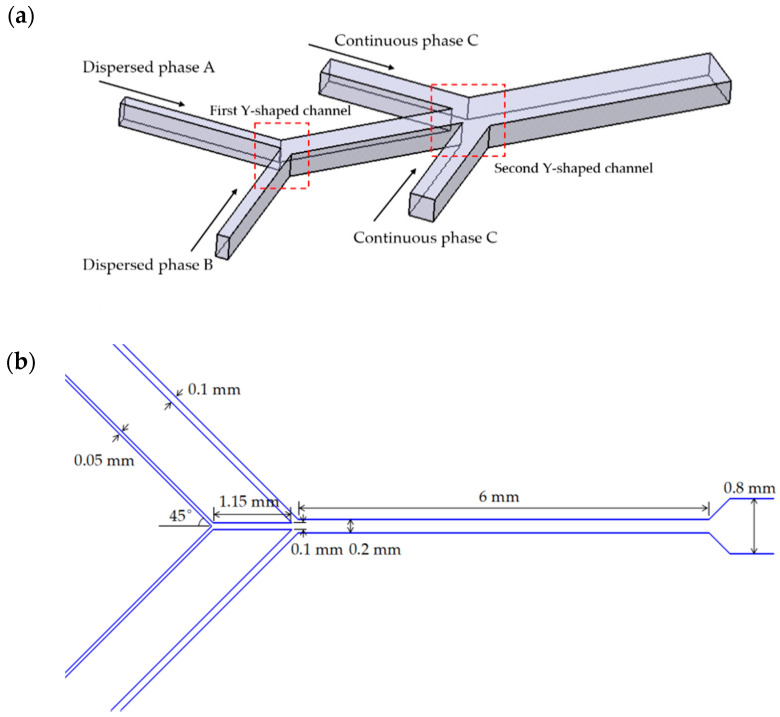
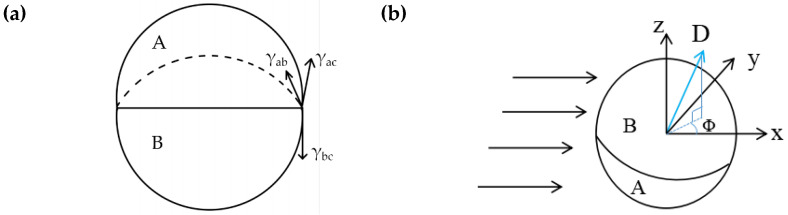
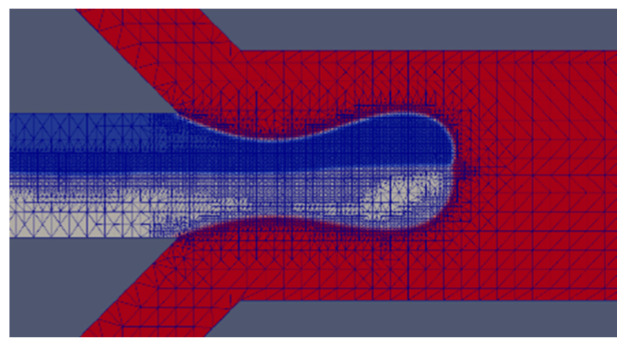
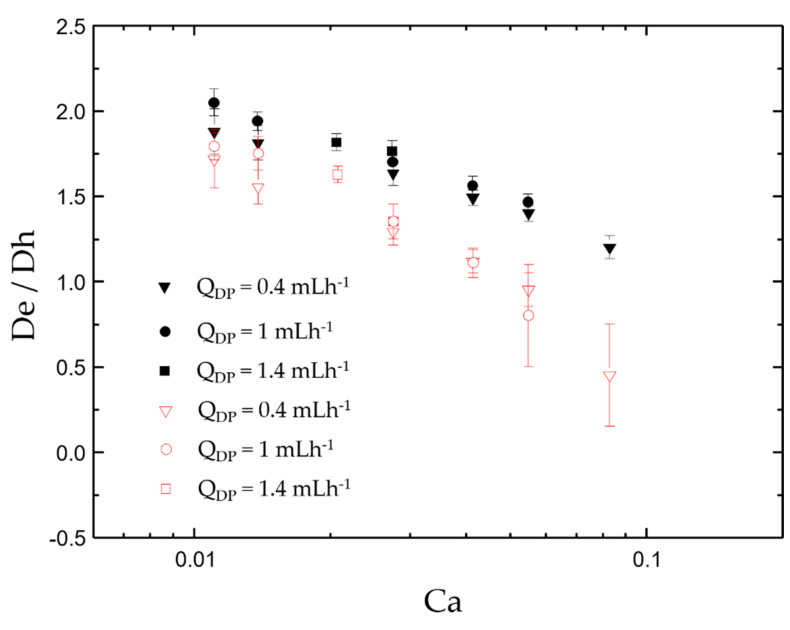
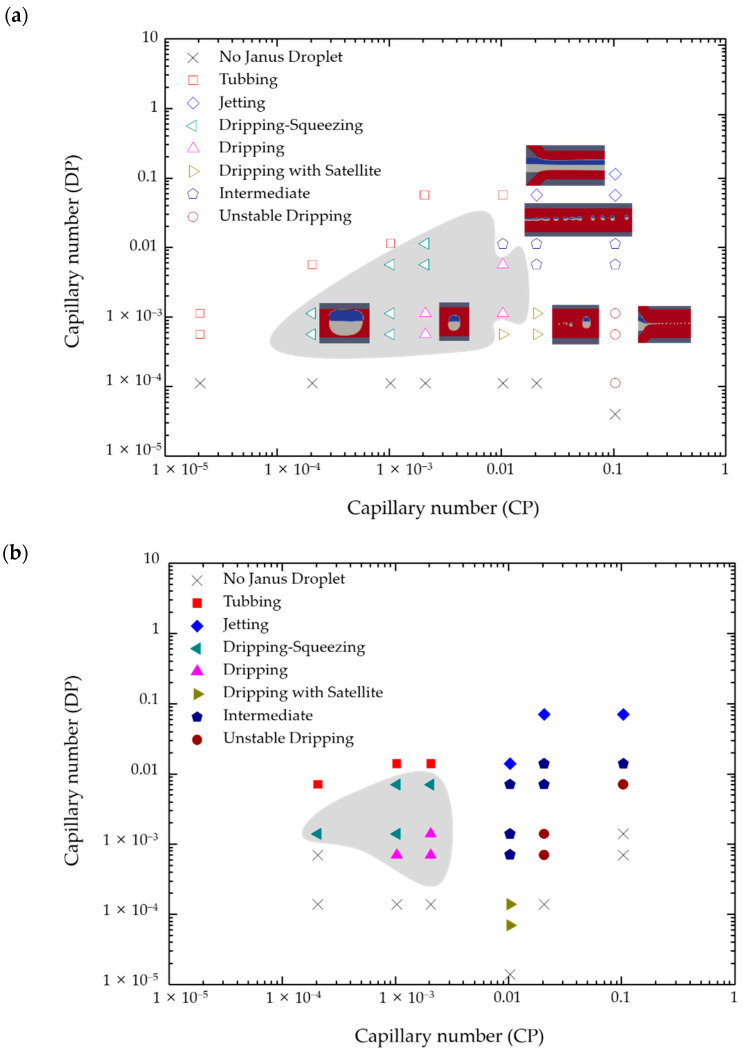
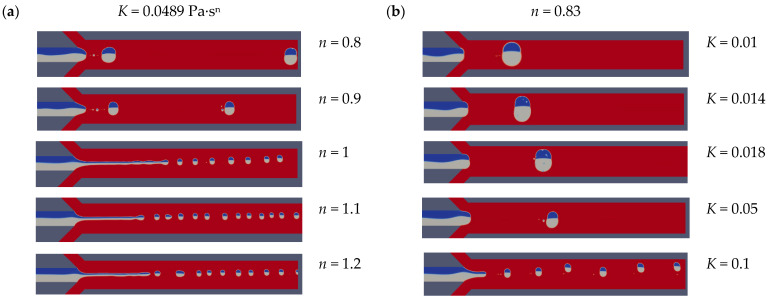
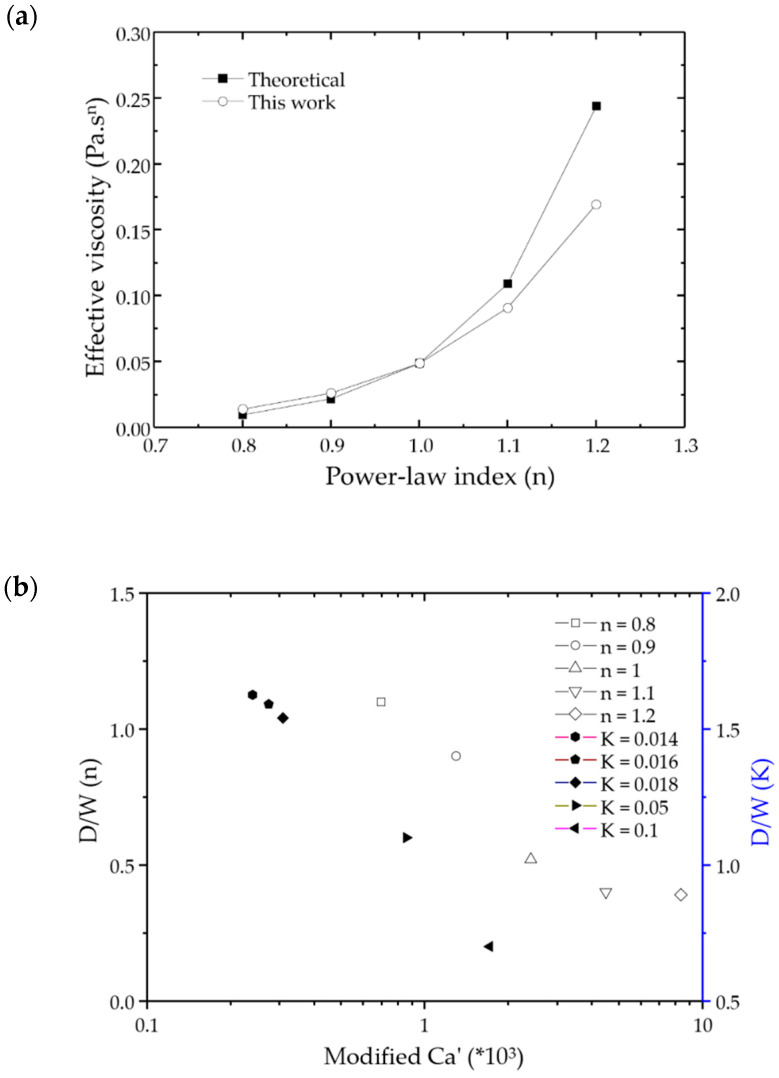
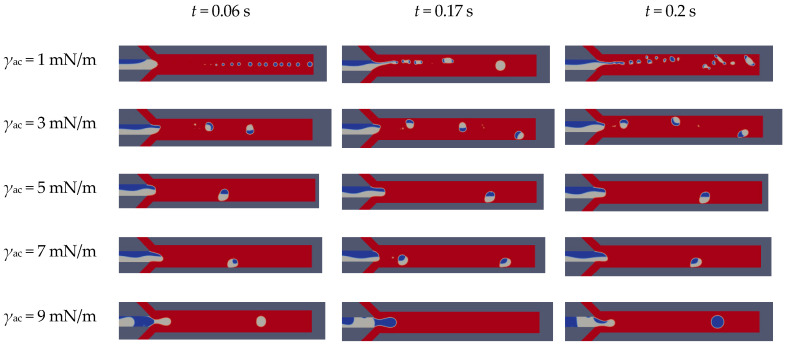
Droplets composed of two different materials, or Janus droplets, have diverse applications, including microfluidic digital laboratory systems, DNA chips, and self-assembly systems. A three-dimensional computational study of Janus droplet formation in a double Y-type microfluidic device filled with a shear-thinning fluid is performed by using the multiphaseInterDyMFoam solver of the OpenFOAM, based on a finite-volume method. The bi-phase volume-of-fluid method is adopted to track the interface with an adaptive dynamic mesh refinement for moving interfaces. The formation of Janus droplets in the shear-thinning fluid is characterized in five different states of tubbing, jetting, intermediate, dripping and unstable dripping in a multiphase microsystem under various flow conditions. The formation mechanism of Janus droplets is understood by analyzing the influencing factors, including the flow rates of the continuous phase and of the dispersed phase, surface tension, and non-Newtonian rheological parameters. Studies have found that the formation of the Janus droplets and their sizes are related to the flow rate at the inlet under low capillary numbers. The rheological parameters of shear-thinning fluid have a significant impact on the size of Janus droplets and their formation mechanism. As the apparent viscosity increases, the frequency of Janus droplet formation increases, while the droplet volume decreases. Compared with Newtonian fluid, the Janus droplet is more readily generated in shear-thinning fluid due to the interlay of diminishing viscous force, surface tension, and pressure drop.
由两种不同材料组成的液滴,即双面液滴,具有多种应用,包括微流控数字实验室系统、DNA芯片和自组装系统。基于有限体积法,使用OpenFOAM的多相InterDyMFoam求解器,对填充有剪切变稀流体的双Y型微流控装置中双面液滴的形成进行了三维计算研究。采用双相流体体积法来跟踪界面,并对移动界面进行自适应动态网格细化。在多相微系统中,在各种流动条件下,剪切变稀流体中双面液滴的形成具有五种不同的状态,即管状、喷射状、中间态、滴状和不稳定滴状。通过分析包括连续相和分散相的流速、表面张力和非牛顿流变参数等影响因素,理解了双面液滴的形成机制。研究发现,在低毛细管数下,双面液滴的形成及其尺寸与入口处的流速有关。剪切变稀流体的流变参数对双面液滴的尺寸及其形成机制有显著影响。随着表观粘度的增加,双面液滴形成的频率增加,而液滴体积减小。与牛顿流体相比,由于粘性力、表面张力和压降的相互作用,在剪切变稀流体中更容易产生双面液滴。